Safety note: Admin approval is an initial review, not a guarantee that every detail is correct. Check important or urgent claims with official sources and report anything inaccurate or unsafe.
Bad News for Terry the Seal as Shark Net Goes Up at Terrigal
Smart summary
A shark net has returned to Terrigal Beach on the Central Coast as part of the NSW Government’s seasonal shark-mitigation program. The installation has sparked renewed concern among local residents, environmental advo...
A shark net has returned to Terrigal Beach on the Central Coast as part of the NSW Government’s seasonal shark-mitigation program. The installation has sparked renewed concern among local residents, environmental advocates and representatives who oppose the use of nets at the popular beach.
The net was reinstated on September 1 as shark-mitigation measures resumed along NSW beaches. Terrigal has become a particular focus because of concerns about the effect the net may have on marine animals, including a local seal known as Terry.
Critics argue that the net provides limited coverage compared with the length of the beach and say alternative technologies could provide a better approach to protecting swimmers while reducing the risk to marine wildlife. Suggested alternatives include drone surveillance and SMART drum lines, which are already being used at some other Central Coast locations.
The issue has also attracted political attention, with the Member for Terrigal and Central Coast Council opposing the return of the net and calling for alternative approaches to be considered. According to reports, requests for a trial removal have not received the response local representatives were seeking from the NSW Government.
Environmental concerns are central to the debate. Shark nets are intended to reduce the likelihood of sharks reaching swimming areas, but they can also capture animals that are not the intended target. Data cited by campaigners indicates that a large majority of marine animals caught in NSW shark nets during the 2024–25 season were non-target species.
Supporters of shark-mitigation programs maintain that measures are necessary to help protect people using NSW beaches. The debate therefore involves balancing public safety with marine conservation and finding methods that can reduce the risk of shark encounters without unnecessarily harming wildlife.
For Terrigal and the wider Central Coast, the return of the shark net is likely to remain a local environmental and beach-safety issue throughout the season. Residents and beach users are now watching closely to see whether authorities will reconsider the current approach.
SharkCentralTerrigalBeachCoast
A shark net has returned to Terrigal Beach on the Central Coast as part of the NSW Government’s seasonal shark-mitigation program. The installation has sparked renewed concern among local residents, environmental advocates and representatives who oppose the use of nets at the popular beach.
The net was reinstated on September 1 as shark-mitigation measures resumed along NSW beaches. Terrigal has become a particular focus because of concerns about the effect the net may have on marine animals, including a local seal known as Terry.
Critics argue that the net provides limited coverage compared with the length of the beach and say alternative technologies could provide a better approach to protecting swimmers while reducing the risk to marine wildlife. Suggested alternatives include drone surveillance and SMART drum lines, which are already being used at some other Central Coast locations.
The issue has also attracted political attention, with the Member for Terrigal and Central Coast Council opposing the return of the net and calling for alternative approaches to be considered. According to reports, requests for a trial removal have not received the response local representatives were seeking from the NSW Government.
Environmental concerns are central to the debate. Shark nets are intended to reduce the likelihood of sharks reaching swimming areas, but they can also capture animals that are not the intended target. Data cited by campaigners indicates that a large majority of marine animals caught in NSW shark nets during the 2024–25 season were non-target species.
Supporters of shark-mitigation programs maintain that measures are necessary to help protect people using NSW beaches. The debate therefore involves balancing public safety with marine conservation and finding methods that can reduce the risk of shark encounters without unnecessarily harming wildlife.
For Terrigal and the wider Central Coast, the return of the shark net is likely to remain a local environmental and beach-safety issue throughout the season. Residents and beach users are now watching closely to see whether authorities will reconsider the current approach.
A vehicle has crashed into a house in Albury, prompting police attendance at a residential property near the intersection of Mate and North streets. The incident was reported to...
A high-profile athlete has returned to court and told the hearing that an alleged unwanted kiss by former broadcaster Alan Jones remained difficult to f...
Work on the $150 million Sydney Town Hall Square project has been paused after the NSW Planning Minister referred the development for review by the Inde...
Central Coast New South Wales · Crime News · 15 Sep 2026
A 50-year-old man has been granted bail following allegations that another man was threatened, detained and assaulted at a property in Bateau Bay on the NSW Central Coast. The l...
Central Coast New South Wales · General News · 15 Sep 2026
A teenager accused of negligent driving following a fatal crash on the NSW Central Coast has been refused bail in court today, Tuesday, September 15, 2026. The case follows a se...
Central Coast New South Wales · Health News · 10 Sep 2026
The design for new Key Health Worker Accommodation at Wyong has been released today, with the project aimed at helping address the need for suitable accommodation for healthcare...
Central Coast New South Wales · Crime News · 10 Sep 2026
NSW Police say officers attempted to stop a stolen SUV on the Pacific Highway at Lake Haven shortly after midday on Wednesday, September 9. The driver allegedly failed to stop,...
Bathurst New South Wales · Community News · 17 Sep 2026
Kerry “Pecky” Peck, a long-standing Bathurst radio personality, has been inducted into the Bathurst Business Hall of Fame in recognition of his extensive contribution to the loc...
Orange New South Wales · Community News · 17 Sep 2026
Orange City Council has elected a new Deputy Mayor for the next two years, with the decision announced today, 17 September 2026. The council said the election took place during...
Wagga Wagga New South Wales · Crime News · 17 Sep 2026
Riverina Police have established a specialised task force in Wagga Wagga to investigate a series of aggravated break-and-enter offences, home invasions and firearm-related incid...
Albury New South Wales · Business News · 17 Sep 2026
An Australian artificial intelligence company has purchased the former Visy paper mill site at Ettamogah, north of Albury, in a significant local business The company, Sharon AI...
Cairns Regional Council has unanimously voted to seek $400,000 in Queensland Government funding for a program designed to connect local businesses with the region’s growing film...
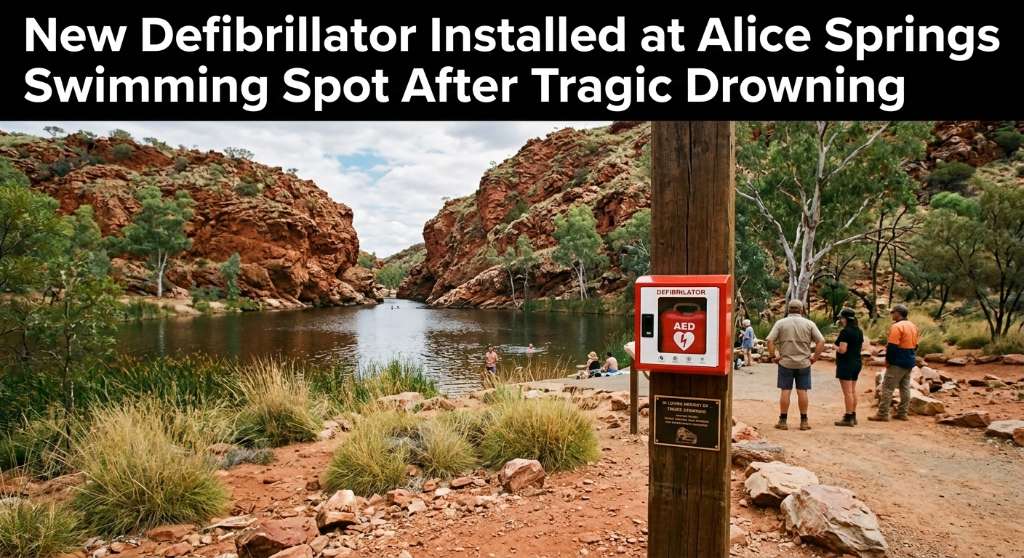
An automated external defibrillator and memorial plaque have been installed at Ellery Creek Big Hole following the death of disability advocate Ellen Fr...
Queensland firefighters spent several hours monitoring a significant grass fire at Mary Kinross Park in Bargara, near Bundaberg, after the blaze broke out on Wednesday evening....