Safety note: Admin approval is an initial review, not a guarantee that every detail is correct. Check important or urgent claims with official sources and report anything inaccurate or unsafe.
Australia's famous white humpback whale Migaloo is believed to be making his annual journey along the Queensland coast, with whale enthusiasts hopeful the rare marine icon could soon be seen off Bundaberg as the humpb...
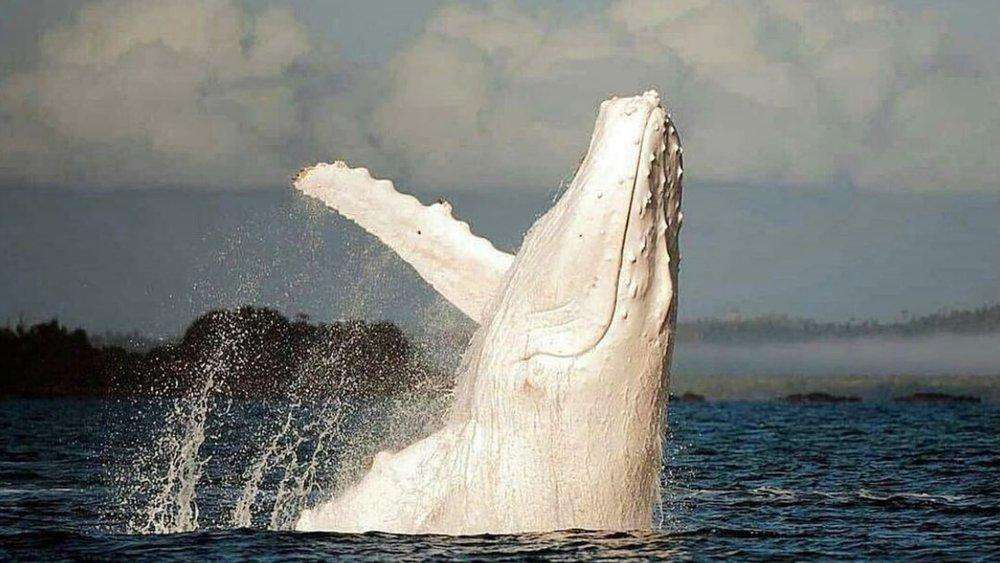
One of Australia's most famous marine animals is once again capturing attention as the legendary white humpback whale Migaloo is believed to be travelling north during the annual humpback whale migration. Whale watchers across Queensland are eagerly anticipating sightings of the rare all-white whale, whose appearance has fascinated Australians for more than three decades.
Migaloo, whose name means "white fellow" in an Aboriginal language, was first recorded off the Queensland coast in 1991. Since then, he has become one of the world's most recognisable humpback whales because of his distinctive white colouring, believed to result from albinism or leucism. Unlike typical humpback whales, Migaloo's almost completely white body makes him instantly recognisable whenever he surfaces.
Each winter, thousands of humpback whales migrate from the cold feeding grounds of Antarctica to the warmer waters of Queensland, where they breed and give birth before returning south in spring. Bundaberg and the nearby Southern Great Barrier Reef lie along this migration route, making the region one of Queensland's most popular whale-watching destinations during the season.
Marine tourism operators and wildlife enthusiasts are closely monitoring reports from further south, hoping Migaloo will again travel past the Bundaberg coastline. Although sightings of the famous whale are never guaranteed, his migration has become an annual event eagerly followed by photographers, researchers and nature lovers throughout eastern Australia. His appearances often generate significant public interest whenever confirmed.
Authorities remind boat operators and recreational water users that special protections apply whenever Migaloo is sighted. Under Queensland and Commonwealth regulations, vessels and aircraft must maintain greater exclusion distances around the whale than those required for ordinary humpback whales. These additional protections are designed to minimise disturbance and ensure the iconic whale can migrate safely through Australian waters.
Scientists continue to study humpback whale migration to better understand breeding behaviour, population recovery and long-term conservation. Australia's east coast humpback whale population has recovered strongly since commercial whaling ended, with tens of thousands of whales now making the annual migration. Migaloo has become an important ambassador for whale conservation, helping raise public awareness about protecting marine wildlife and ocean habitats.
Tourism operators say even if Migaloo does not appear, visitors to Bundaberg still have an excellent chance of seeing humpback whales throughout the migration season. Whale-watching cruises departing from the Bundaberg region and nearby Hervey Bay attract thousands of visitors each year, contributing significantly to the local tourism economy.
For now, whale enthusiasts remain hopeful that Australia's most celebrated humpback whale will once again make an appearance along the Queensland coastline, adding another memorable chapter to the remarkable story of Migaloo's annual migration.
WhaleHumpbackMigalooMigrationQueensland
One of Australia's most famous marine animals is once again capturing attention as the legendary white humpback whale Migaloo is believed to be travelling north during the annual humpback whale migration. Whale watchers across Queensland are eagerly anticipating sightings of the rare all-white whale, whose appearance has fascinated Australians for more than three decades.
Migaloo, whose name means "white fellow" in an Aboriginal language, was first recorded off the Queensland coast in 1991. Since then, he has become one of the world's most recognisable humpback whales because of his distinctive white colouring, believed to result from albinism or leucism. Unlike typical humpback whales, Migaloo's almost completely white body makes him instantly recognisable whenever he surfaces.
Each winter, thousands of humpback whales migrate from the cold feeding grounds of Antarctica to the warmer waters of Queensland, where they breed and give birth before returning south in spring. Bundaberg and the nearby Southern Great Barrier Reef lie along this migration route, making the region one of Queensland's most popular whale-watching destinations during the season.
Marine tourism operators and wildlife enthusiasts are closely monitoring reports from further south, hoping Migaloo will again travel past the Bundaberg coastline. Although sightings of the famous whale are never guaranteed, his migration has become an annual event eagerly followed by photographers, researchers and nature lovers throughout eastern Australia. His appearances often generate significant public interest whenever confirmed.
Authorities remind boat operators and recreational water users that special protections apply whenever Migaloo is sighted. Under Queensland and Commonwealth regulations, vessels and aircraft must maintain greater exclusion distances around the whale than those required for ordinary humpback whales. These additional protections are designed to minimise disturbance and ensure the iconic whale can migrate safely through Australian waters.
Scientists continue to study humpback whale migration to better understand breeding behaviour, population recovery and long-term conservation. Australia's east coast humpback whale population has recovered strongly since commercial whaling ended, with tens of thousands of whales now making the annual migration. Migaloo has become an important ambassador for whale conservation, helping raise public awareness about protecting marine wildlife and ocean habitats.
Tourism operators say even if Migaloo does not appear, visitors to Bundaberg still have an excellent chance of seeing humpback whales throughout the migration season. Whale-watching cruises departing from the Bundaberg region and nearby Hervey Bay attract thousands of visitors each year, contributing significantly to the local tourism economy.
For now, whale enthusiasts remain hopeful that Australia's most celebrated humpback whale will once again make an appearance along the Queensland coastline, adding another memorable chapter to the remarkable story of Migaloo's annual migration.
Armidale Regional Council will replace an ageing cast-iron water main in Ampol and Miller Streets with a modern system, with construction scheduled to b...
Community and education representatives have raised concerns that the initial $500,000 allocation may not cover the infrastructure upgrades needed for t...
Four public swimming pools across the Central Darling Shire are being opened for unsupervised access this season, with residents required to complete sa...
Ballarat’s redeveloped Mars Stadium has unveiled its expanded seating capacity and upgraded facilities ahead of the return of major AFLW events to the r...
A Queensland government audit has identified gaps in record-keeping around social housing applications cancelled because applicants could not be contact...
BESIX Watpac and John Holland have been selected as the sole finalist to progress contract negotiations for Brisbane’s planned 63,000-seat Victoria Park...
Gold Coast Mayor Tom Tate has renewed his proposal for a separate daylight-saving arrangement in southeast Queensland as daylight saving begins in sever...
Authorities have crushed 23 confiscated electric bikes in Blacktown under new laws targeting non-compliant e-bikes, following a joint enforcement operat...
Thousands of Victorian doctors and allied health professionals have begun industrial action over stalled negotiations on pay and working conditions, wit...