Safety note: Admin approval is an initial review, not a guarantee that every detail is correct. Check important or urgent claims with official sources and report anything inaccurate or unsafe.
Source and credit: Contributor's own report
Communities Push Back Against Australia’s Rapid Data Centre Expansion
Smart summary
Australia’s booming digital economy is driving a rapid increase in the construction of data centres, but the expansion is facing growing resistance from communities concerned about the environmental, visual and infras...
Australia’s booming digital economy is driving a rapid increase in the construction of data centres, but the expansion is facing growing resistance from communities concerned about the environmental, visual and infrastructure impacts of these large-scale facilities. Data centres are critical components of the modern internet, housing the servers and networking equipment that support cloud computing, artificial intelligence, online services, banking systems, streaming platforms and government operations. Demand for digital services has increased significantly in recent years, leading technology companies and infrastructure providers to invest heavily in new facilities across Australia.
However, residents in suburbs including Lane Cove in Sydney and Footscray in Melbourne have voiced concerns about the pace and scale of proposed developments. Community groups argue that existing planning frameworks have struggled to keep up with the rapid growth of the sector. One of the primary concerns relates to energy consumption. Data centres require substantial amounts of electricity to power servers and cooling systems, leading some residents to question how future facilities will affect local energy infrastructure and Australia's broader environmental goals. Industry experts acknowledge that energy demand is significant but note that operators are increasingly investing in renewable energy agreements and more efficient cooling technologies.
Water use has also become a point of debate. Some modern data centres rely on water-based cooling systems to manage heat generated by computing equipment. In areas already facing pressure on water resources, residents have called for greater transparency regarding expected consumption and environmental impacts.
Noise generated by cooling systems and backup generators is another issue raised by nearby communities. Residents living close to proposed sites have expressed concerns that continuous operational noise could affect quality of life, particularly in mixed-use urban areas where residential and industrial developments coexist.
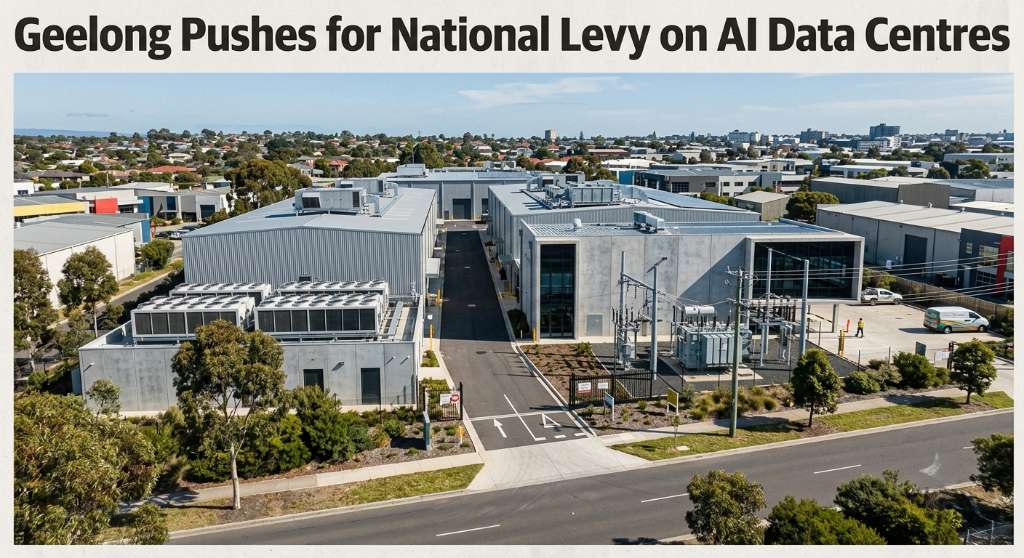
Visual impacts and land-use planning have further contributed to opposition. Data centres are often large, warehouse-style structures that can dominate local landscapes. Critics argue that some developments have been approved without sufficient community consultation, while supporters contend that the facilities are essential infrastructure needed to support Australia's growing digital economy. Industry representatives emphasise that data centres play a vital role in supporting modern communications, business operations and emerging technologies such as artificial intelligence. Australia has become an increasingly attractive location for data centre investment due to its stable economy, reliable infrastructure and growing demand for cloud services.
The sector is expected to continue expanding as businesses and government agencies increase their reliance on digital systems. Analysts predict that demand for data storage and processing capacity will grow substantially over the next decade, requiring additional facilities across major population centres.
Community groups are calling for stronger planning regulations, improved environmental assessments and greater public consultation before new developments are approved. Some local councils have also sought clearer guidelines regarding the placement and operation of data centres in urban environments.
Technology experts argue that balancing economic growth with community expectations will be essential as the industry evolves. While data centres are increasingly important to everyday life, they say public confidence depends on ensuring developments are environmentally sustainable and appropriately integrated into surrounding communities.
As Australia continues its digital transformation, debates surrounding data centre expansion are likely to intensify. Policymakers, industry leaders and local residents will face the challenge of determining how best to accommodate future technological infrastructure while addressing concerns about environmental impacts, urban planning and community wellbeing.
DataCentresInfrastructureCommunityDevelopments
Australia’s booming digital economy is driving a rapid increase in the construction of data centres, but the expansion is facing growing resistance from communities concerned about the environmental, visual and infrastructure impacts of these large-scale facilities. Data centres are critical components of the modern internet, housing the servers and networking equipment that support cloud computing, artificial intelligence, online services, banking systems, streaming platforms and government operations. Demand for digital services has increased significantly in recent years, leading technology companies and infrastructure providers to invest heavily in new facilities across Australia.
However, residents in suburbs including Lane Cove in Sydney and Footscray in Melbourne have voiced concerns about the pace and scale of proposed developments. Community groups argue that existing planning frameworks have struggled to keep up with the rapid growth of the sector. One of the primary concerns relates to energy consumption. Data centres require substantial amounts of electricity to power servers and cooling systems, leading some residents to question how future facilities will affect local energy infrastructure and Australia's broader environmental goals. Industry experts acknowledge that energy demand is significant but note that operators are increasingly investing in renewable energy agreements and more efficient cooling technologies.
Water use has also become a point of debate. Some modern data centres rely on water-based cooling systems to manage heat generated by computing equipment. In areas already facing pressure on water resources, residents have called for greater transparency regarding expected consumption and environmental impacts.
Noise generated by cooling systems and backup generators is another issue raised by nearby communities. Residents living close to proposed sites have expressed concerns that continuous operational noise could affect quality of life, particularly in mixed-use urban areas where residential and industrial developments coexist.
Visual impacts and land-use planning have further contributed to opposition. Data centres are often large, warehouse-style structures that can dominate local landscapes. Critics argue that some developments have been approved without sufficient community consultation, while supporters contend that the facilities are essential infrastructure needed to support Australia's growing digital economy. Industry representatives emphasise that data centres play a vital role in supporting modern communications, business operations and emerging technologies such as artificial intelligence. Australia has become an increasingly attractive location for data centre investment due to its stable economy, reliable infrastructure and growing demand for cloud services.
The sector is expected to continue expanding as businesses and government agencies increase their reliance on digital systems. Analysts predict that demand for data storage and processing capacity will grow substantially over the next decade, requiring additional facilities across major population centres.
Community groups are calling for stronger planning regulations, improved environmental assessments and greater public consultation before new developments are approved. Some local councils have also sought clearer guidelines regarding the placement and operation of data centres in urban environments.
Technology experts argue that balancing economic growth with community expectations will be essential as the industry evolves. While data centres are increasingly important to everyday life, they say public confidence depends on ensuring developments are environmentally sustainable and appropriately integrated into surrounding communities.
As Australia continues its digital transformation, debates surrounding data centre expansion are likely to intensify. Policymakers, industry leaders and local residents will face the challenge of determining how best to accommodate future technological infrastructure while addressing concerns about environmental impacts, urban planning and community wellbeing.
Tesla is preparing to bring its driverless Cybercab to Australia for a preview, giving Australians an early look at the company’s autonomous vehicle tec...
A 15-year-old Pacific Lutheran College student has developed a privacy-first women’s health app and presented her work at a major national cyber event.
Greater Geelong Council wants data-centre operators to contribute to local infrastructure as community concerns grow over energy, water use and developm...
A 36-year-old man has been charged after investigators allegedly found fraudulent identification documents, cloned number plates, cash and drug-manufact...
A Sydney court has heard that a man sent 249 messages to a former partner within 24 hours, with the messages treated as a single alleged breach of an ap...
A high-profile athlete has returned to court and told the hearing that an alleged unwanted kiss by former broadcaster Alan Jones remained difficult to f...
Work on the $150 million Sydney Town Hall Square project has been paused after the NSW Planning Minister referred the development for review by the Inde...
Cairns Regional Council has unanimously voted to seek $400,000 in Queensland Government funding for a program designed to connect local businesses with the region’s growing film...
An automated external defibrillator and memorial plaque have been installed at Ellery Creek Big Hole following the death of disability advocate Ellen Fr...
Queensland firefighters spent several hours monitoring a significant grass fire at Mary Kinross Park in Bargara, near Bundaberg, after the blaze broke out on Wednesday evening....