Safety note: Admin approval is an initial review, not a guarantee that every detail is correct. Check important or urgent claims with official sources and report anything inaccurate or unsafe.
Source and credit: Contributor's own report
AI Growth Drives Demand for Skilled Workers as New Data Centres Create Job Opportunities - Canberra, ACT
Smart summary
New data shows the rise of artificial intelligence is increasing demand for skilled workers, with major growth expected in construction, engineering and technology roles linked to expanding AI infrastructure.
The rapid expansion of artificial intelligence (AI) is creating new opportunities for skilled workers across Australia, with new data highlighting increased demand for jobs supporting the growth of AI infrastructure.
As companies invest heavily in AI systems and data centres, industries beyond traditional technology roles are experiencing increased demand for workers with specialised skills. The growth of AI infrastructure requires thousands of workers across areas including construction, electrical services, engineering, project management and technical operations.
While much of the public discussion around AI has focused on automation and the possibility of job losses, industry data suggests the technology is also creating new employment opportunities. The construction and maintenance of AI data centres require a large workforce to design, build and operate these complex facilities.
Experts say AI adoption is changing the types of skills employers are looking for. Workers with technical knowledge, problem-solving abilities and experience using digital tools are becoming increasingly valuable across multiple industries.
The demand is not limited to software developers or artificial intelligence specialists. Traditional industries such as construction, electrical trades and engineering are also benefiting from AI-related investment. Data centres require specialised infrastructure, including high-capacity power systems, cooling technology, security systems and advanced networking equipment.
The growth of AI-related projects is expected to create opportunities for both highly skilled professionals and trade workers. Electricians, engineers, technicians and construction specialists are becoming increasingly important as Australia expands its digital infrastructure.
A recent Australian Government report examining AI and employment found that there is currently no evidence of broad AI-driven job losses across the labour market. However, the report noted that occupations exposed to generative AI are changing, with some roles experiencing slower growth compared with others.
The changing employment landscape means workers may need to continue developing new skills to remain competitive. Digital literacy, AI knowledge and the ability to work alongside emerging technologies are becoming important across many careers.
Businesses are increasingly looking for employees who can combine industry experience with technology skills. Rather than replacing all workers, AI is expected to transform how many jobs are performed by improving productivity and allowing people to focus on higher-value tasks.
The expansion of AI infrastructure also highlights the importance of education and training programs that prepare Australians for future jobs. Universities, vocational education providers and industry groups are expected to play a key role in helping workers adapt to changing employment demands.
For regional communities, investment in AI infrastructure could bring new economic opportunities through construction projects, supply chains and technical employment. Data centres and related developments may support local businesses while creating pathways into emerging industries.
However, experts also highlight the need for careful planning, including access to energy, infrastructure capacity and skilled workers to support long-term AI growth.
As artificial intelligence continues to expand, Australia’s workforce is entering a period of significant change. The future of work is likely to involve closer collaboration between people and technology, with skilled workers positioned to benefit from new opportunities created by the AI economy.
WorkersDataInfrastructureGrowthOpportunities
The rapid expansion of artificial intelligence (AI) is creating new opportunities for skilled workers across Australia, with new data highlighting increased demand for jobs supporting the growth of AI infrastructure.
As companies invest heavily in AI systems and data centres, industries beyond traditional technology roles are experiencing increased demand for workers with specialised skills. The growth of AI infrastructure requires thousands of workers across areas including construction, electrical services, engineering, project management and technical operations.
While much of the public discussion around AI has focused on automation and the possibility of job losses, industry data suggests the technology is also creating new employment opportunities. The construction and maintenance of AI data centres require a large workforce to design, build and operate these complex facilities.
Experts say AI adoption is changing the types of skills employers are looking for. Workers with technical knowledge, problem-solving abilities and experience using digital tools are becoming increasingly valuable across multiple industries.
The demand is not limited to software developers or artificial intelligence specialists. Traditional industries such as construction, electrical trades and engineering are also benefiting from AI-related investment. Data centres require specialised infrastructure, including high-capacity power systems, cooling technology, security systems and advanced networking equipment.
The growth of AI-related projects is expected to create opportunities for both highly skilled professionals and trade workers. Electricians, engineers, technicians and construction specialists are becoming increasingly important as Australia expands its digital infrastructure.
A recent Australian Government report examining AI and employment found that there is currently no evidence of broad AI-driven job losses across the labour market. However, the report noted that occupations exposed to generative AI are changing, with some roles experiencing slower growth compared with others.
The changing employment landscape means workers may need to continue developing new skills to remain competitive. Digital literacy, AI knowledge and the ability to work alongside emerging technologies are becoming important across many careers.
Businesses are increasingly looking for employees who can combine industry experience with technology skills. Rather than replacing all workers, AI is expected to transform how many jobs are performed by improving productivity and allowing people to focus on higher-value tasks.
The expansion of AI infrastructure also highlights the importance of education and training programs that prepare Australians for future jobs. Universities, vocational education providers and industry groups are expected to play a key role in helping workers adapt to changing employment demands.
For regional communities, investment in AI infrastructure could bring new economic opportunities through construction projects, supply chains and technical employment. Data centres and related developments may support local businesses while creating pathways into emerging industries.
However, experts also highlight the need for careful planning, including access to energy, infrastructure capacity and skilled workers to support long-term AI growth.
As artificial intelligence continues to expand, Australia’s workforce is entering a period of significant change. The future of work is likely to involve closer collaboration between people and technology, with skilled workers positioned to benefit from new opportunities created by the AI economy.
Tesla is preparing to bring its driverless Cybercab to Australia for a preview, giving Australians an early look at the company’s autonomous vehicle tec...
A 15-year-old Pacific Lutheran College student has developed a privacy-first women’s health app and presented her work at a major national cyber event.
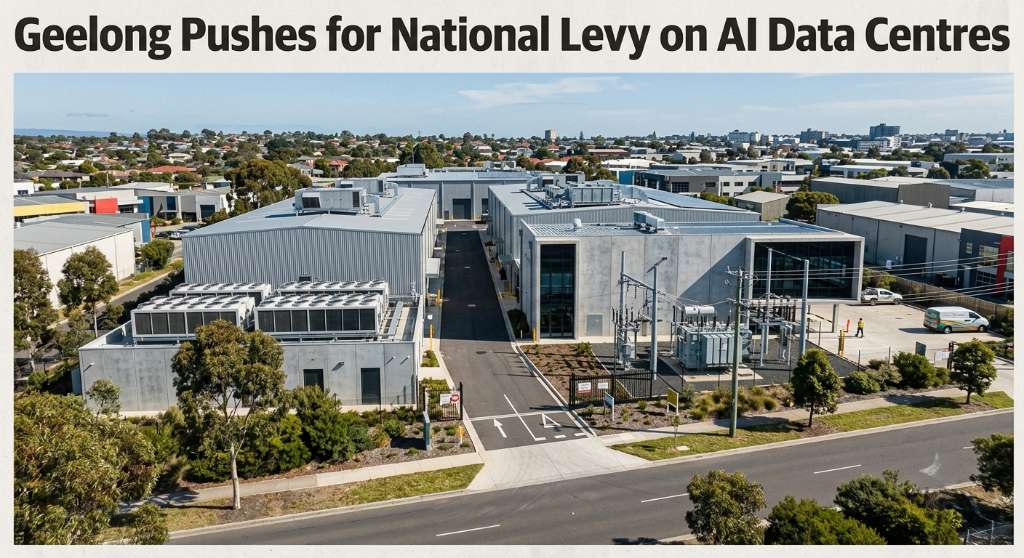
Greater Geelong Council wants data-centre operators to contribute to local infrastructure as community concerns grow over energy, water use and developm...
The Federal Government is preparing new measures targeting temporary visas, visa overstayers, international students and visa-hopping, while maintaining...
One Nation’s proposed major reduction in migration has triggered warnings that a sharp cut to population growth could weaken Australia’s economy and cre...
A Canberra woman has become the first person in the ACT whose death has been linked to a highly potent synthetic opioid, prompting renewed concern about...
Canberra’s Commonwealth Park has welcomed visitors for the annual Floriade festival, bringing flowers, entertainment and spring activities to the city.
Cairns Regional Council has unanimously voted to seek $400,000 in Queensland Government funding for a program designed to connect local businesses with the region’s growing film...
An automated external defibrillator and memorial plaque have been installed at Ellery Creek Big Hole following the death of disability advocate Ellen Fr...
Queensland firefighters spent several hours monitoring a significant grass fire at Mary Kinross Park in Bargara, near Bundaberg, after the blaze broke out on Wednesday evening....