Coroner Finds Supervision Failures Contributed to Death of Detainee in Canberra Prison
By Chloe · Published 30 Oct 2026 · Updated 30 Oct 2026
Canberra, ACT · ACT News
Safety note: Admin approval is an initial review, not a guarantee that every detail is correct. Check important or urgent claims with official sources and report anything inaccurate or unsafe.
Source and credit: Contributor's own report
Coroner Finds Supervision Failures Contributed to Death of Detainee in Canberra Prison - Canberra, ACT
Smart summary
An ACT coronial inquest has identified serious gaps in prison supervision and mental health support following the death of a 34-year-old detainee.
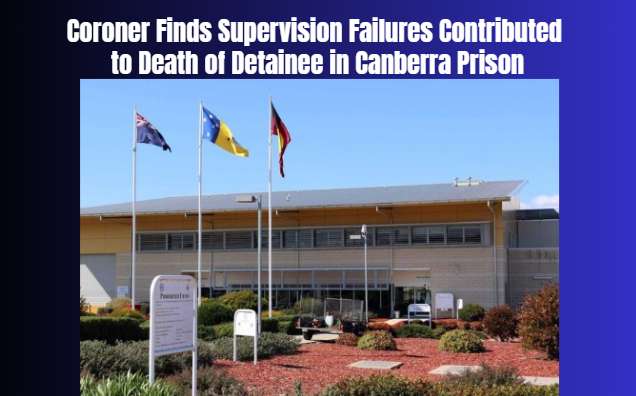
An ACT coroner has found that inadequate supervision and weaknesses in prison procedures contributed to the death of a detainee at Canberra's Alexander Maconochie Centre (AMC). The findings have renewed concerns about how correctional facilities monitor people experiencing mental health difficulties.
The inquest examined the death of Justin James Cordy, who died on 26 February 2023, shortly after being transferred to Canberra's only prison. He was 34 years old.
Mr Cordy had been arrested by ACT Policing two days earlier and transferred to the Alexander Maconochie Centre on 25 February after appearing before a court. The inquest examined the care he received from police, his mental health assessments and the monitoring arrangements in place after he entered custody.
Coroner Lucinda Wilson found that Mr Cordy had a history of substance use and previous convictions. He had also experienced mental health difficulties and had previously attempted suicide while in custody in 2020.
In the days before his arrest, police had received information that he had expressed suicidal thoughts and was worried about returning to prison. The inquest examined whether this information was properly communicated and whether the appropriate steps were taken to protect him.
One of the major concerns identified by the coroner involved supervision inside the prison. The findings stated that Mr Cordy had access to items that he later used to take his own life. Correctional officers also failed to adequately observe him during the hours before his death.
CCTV footage showed an officer looking through the flap of his cell door at 11:40am without opening it. No further checks were visible before 1:03pm, despite an observation form recording a check at midday.
The coroner concluded that adequate supervision could potentially have identified preparations and allowed staff to intervene. The report also found that the prison's cell-checking arrangements were inadequate at the time.
The coroner recommended changes requiring correctional officers to enter cells when conducting visual checks. She also recommended that officers carry out and document spot checks of procedures for storing and tracking cleaning equipment.
The inquiry identified additional problems in the way Mr Cordy's mental health and physical condition were handled following his arrest. He had sustained injuries before being taken into custody, and concerns were raised about the communication of relevant health information between police, paramedics and hospital staff.
Although the coroner found shortcomings in aspects of police custody, she concluded that those failures did not contribute to his death.
Another important recommendation concerned mental health support at the ACT Magistrates Court. The court's Mental Health Court Assessment and Liaison Service operated on weekdays but was unavailable during Saturday bail hearings. The coroner recommended extending the service to weekends and public holidays when bail hearings take place.
The findings highlight the importance of consistent monitoring, timely medical assessments and better communication between police, courts and correctional services.
The ACT authorities now face pressure to consider the recommendations and improve procedures to prevent similar incidents. The coroner said she hoped the failures identified in the case would not happen again, so another family would not experience the same loss.
The report has brought renewed attention to the responsibility of correctional institutions to protect people in their custody, particularly those with known mental health vulnerabilities.
CoronerHealthMentalPrisonCordy
An ACT coroner has found that inadequate supervision and weaknesses in prison procedures contributed to the death of a detainee at Canberra's Alexander Maconochie Centre (AMC). The findings have renewed concerns about how correctional facilities monitor people experiencing mental health difficulties.
The inquest examined the death of Justin James Cordy, who died on 26 February 2023, shortly after being transferred to Canberra's only prison. He was 34 years old.
Mr Cordy had been arrested by ACT Policing two days earlier and transferred to the Alexander Maconochie Centre on 25 February after appearing before a court. The inquest examined the care he received from police, his mental health assessments and the monitoring arrangements in place after he entered custody.
Coroner Lucinda Wilson found that Mr Cordy had a history of substance use and previous convictions. He had also experienced mental health difficulties and had previously attempted suicide while in custody in 2020.
In the days before his arrest, police had received information that he had expressed suicidal thoughts and was worried about returning to prison. The inquest examined whether this information was properly communicated and whether the appropriate steps were taken to protect him.
One of the major concerns identified by the coroner involved supervision inside the prison. The findings stated that Mr Cordy had access to items that he later used to take his own life. Correctional officers also failed to adequately observe him during the hours before his death.
CCTV footage showed an officer looking through the flap of his cell door at 11:40am without opening it. No further checks were visible before 1:03pm, despite an observation form recording a check at midday.
The coroner concluded that adequate supervision could potentially have identified preparations and allowed staff to intervene. The report also found that the prison's cell-checking arrangements were inadequate at the time.
The coroner recommended changes requiring correctional officers to enter cells when conducting visual checks. She also recommended that officers carry out and document spot checks of procedures for storing and tracking cleaning equipment.
The inquiry identified additional problems in the way Mr Cordy's mental health and physical condition were handled following his arrest. He had sustained injuries before being taken into custody, and concerns were raised about the communication of relevant health information between police, paramedics and hospital staff.
Although the coroner found shortcomings in aspects of police custody, she concluded that those failures did not contribute to his death.
Another important recommendation concerned mental health support at the ACT Magistrates Court. The court's Mental Health Court Assessment and Liaison Service operated on weekdays but was unavailable during Saturday bail hearings. The coroner recommended extending the service to weekends and public holidays when bail hearings take place.
The findings highlight the importance of consistent monitoring, timely medical assessments and better communication between police, courts and correctional services.
The ACT authorities now face pressure to consider the recommendations and improve procedures to prevent similar incidents. The coroner said she hoped the failures identified in the case would not happen again, so another family would not experience the same loss.
The report has brought renewed attention to the responsibility of correctional institutions to protect people in their custody, particularly those with known mental health vulnerabilities.
Eight people have died in separate road crashes across Victoria during the Melbourne Cup long weekend, with four of the fatal incidents involving motorc...
New South Wales has begun accepting firearms under the national gun buyback scheme, but limited appointment availability has created an early challenge...
A 59-year-old convicted sex offender is scheduled for release in December despite remaining classified as a high-risk offender. The Supreme Court has im...
New figures reveal more than $3 million in government spending on promotional merchandise, including unusual items such as condoms and lollies, raising...
Australia's antisemitism envoy has recommended stronger protest rules, additional visa checks and independent oversight of public broadcasters as part o...
The Australian government has launched a parliamentary investigation into whether Australia Post is keeping up with changing customer needs as tradition...
The federal government is seeking Senate support for legislation intended to make major digital platforms more accountable for content circulated online...
A freedom of information request has revealed that Gold Coast Council does not hold a copy of the invoice for Mayor Tom Tate's three-day stay at Donald...
Eight people have died in separate road crashes across Victoria during the Melbourne Cup long weekend, with four of the fatal incidents involving motorc...
A fisherman escaped unharmed after a large crocodile climbed onto his boat while he was fishing alone on the Mary River, prompting renewed safety warnin...