Australian Parliament Advances Digital Duty of Care Bill to Strengthen Online Platform Accountability
By Chloe · Published 29 Oct 2026 · Updated 29 Oct 2026
Canberra, ACT · ACT News
Safety note: Admin approval is an initial review, not a guarantee that every detail is correct. Check important or urgent claims with official sources and report anything inaccurate or unsafe.
Source and credit: Contributor's own report
Australian Parliament Advances Digital Duty of Care Bill to Strengthen Online Platform Accountability - Canberra, ACT
Smart summary
The federal government is seeking Senate support for legislation intended to make major digital platforms more accountable for content circulated online and give Australians greater control over what they see on their...
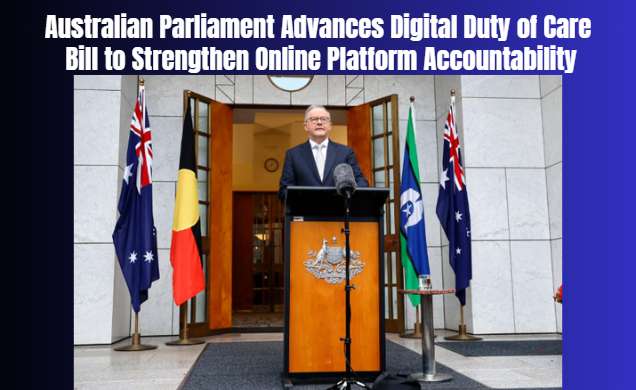
Australia's federal government is seeking further parliamentary support for its proposed Digital Duty of Care legislation, following the passage of the bill through the House of Representatives on Wednesday, 28 October 2026. The legislation was discussed by the Prime Minister during a press conference at Parliament House in Canberra on Thursday, 29 October.
The proposed law is intended to increase the accountability of major technology companies for the content distributed through their platforms. The government argues that digital platforms have a significant influence on what Australians encounter online, including the information, videos and other material promoted through automated recommendation systems.
Speaking to journalists, Prime Minister Anthony Albanese said the legislation would establish greater accountability for technology companies and give individuals more control over the content they receive on their devices. The government believes users should have a stronger say in how digital services determine which material is presented to them.
A central issue in the debate is the influence of algorithms, which can recommend content based on users' previous activity, interests and interactions. These systems play an important role in shaping the online experience, but concerns have been raised about how recommendations can amplify harmful or misleading material.
The government's proposed approach seeks to address these concerns by changing the responsibilities of digital platforms and strengthening the position of users. The precise obligations and practical effects will depend on the final legislation and the arrangements established for its implementation.
The bill's passage through the House of Representatives represents a parliamentary milestone, but it does not by itself mean that the legislation has become law. The government is seeking support in the Senate, where the proposal must progress through the remaining parliamentary stages before it can take effect.
The debate comes amid wider discussions in Australia about online safety, digital regulation and the responsibilities of technology companies. Governments internationally are considering how existing laws should respond to rapidly changing online services, particularly where digital platforms have substantial influence over public communication and access to information.
Australia has already taken steps to regulate young people's access to social media. The federal government is presenting the Digital Duty of Care proposal as part of its broader effort to respond to the social and economic effects of emerging technologies.
Supporters of stronger platform accountability argue that companies should take greater responsibility for the consequences of their services and provide users with meaningful control over their online experiences. Questions about implementation, compliance and the balance between platform responsibilities and individual choice will remain important as the proposal proceeds.
The legislation could have implications for technology businesses operating in Australia, depending on the requirements ultimately adopted. Companies may need to review their platform policies, content recommendation practices and user-control features if new legal obligations are introduced.
For Australian users, the potential changes centre on how online content is distributed and the degree of control individuals have over what appears on their screens. However, the specific features and protections that users would receive cannot be confirmed until the final legal framework is established.
As of 29 October 2026, the government was seeking further parliamentary support for the bill. Its next steps depended on the Senate process and any subsequent legislative changes.
DigitalGovernmentOnlineLegislationUsers
Australia's federal government is seeking further parliamentary support for its proposed Digital Duty of Care legislation, following the passage of the bill through the House of Representatives on Wednesday, 28 October 2026. The legislation was discussed by the Prime Minister during a press conference at Parliament House in Canberra on Thursday, 29 October.
The proposed law is intended to increase the accountability of major technology companies for the content distributed through their platforms. The government argues that digital platforms have a significant influence on what Australians encounter online, including the information, videos and other material promoted through automated recommendation systems.
Speaking to journalists, Prime Minister Anthony Albanese said the legislation would establish greater accountability for technology companies and give individuals more control over the content they receive on their devices. The government believes users should have a stronger say in how digital services determine which material is presented to them.
A central issue in the debate is the influence of algorithms, which can recommend content based on users' previous activity, interests and interactions. These systems play an important role in shaping the online experience, but concerns have been raised about how recommendations can amplify harmful or misleading material.
The government's proposed approach seeks to address these concerns by changing the responsibilities of digital platforms and strengthening the position of users. The precise obligations and practical effects will depend on the final legislation and the arrangements established for its implementation.
The bill's passage through the House of Representatives represents a parliamentary milestone, but it does not by itself mean that the legislation has become law. The government is seeking support in the Senate, where the proposal must progress through the remaining parliamentary stages before it can take effect.
The debate comes amid wider discussions in Australia about online safety, digital regulation and the responsibilities of technology companies. Governments internationally are considering how existing laws should respond to rapidly changing online services, particularly where digital platforms have substantial influence over public communication and access to information.
Australia has already taken steps to regulate young people's access to social media. The federal government is presenting the Digital Duty of Care proposal as part of its broader effort to respond to the social and economic effects of emerging technologies.
Supporters of stronger platform accountability argue that companies should take greater responsibility for the consequences of their services and provide users with meaningful control over their online experiences. Questions about implementation, compliance and the balance between platform responsibilities and individual choice will remain important as the proposal proceeds.
The legislation could have implications for technology businesses operating in Australia, depending on the requirements ultimately adopted. Companies may need to review their platform policies, content recommendation practices and user-control features if new legal obligations are introduced.
For Australian users, the potential changes centre on how online content is distributed and the degree of control individuals have over what appears on their screens. However, the specific features and protections that users would receive cannot be confirmed until the final legal framework is established.
As of 29 October 2026, the government was seeking further parliamentary support for the bill. Its next steps depended on the Senate process and any subsequent legislative changes.
A freedom of information request has revealed that Gold Coast Council does not hold a copy of the invoice for Mayor Tom Tate's three-day stay at Donald...
A nationwide survey of 4,000 Australians reveals declining confidence in politicians, growing dissatisfaction with democracy and significant differences...
New figures reveal more than $3 million in government spending on promotional merchandise, including unusual items such as condoms and lollies, raising...
Australia's antisemitism envoy has recommended stronger protest rules, additional visa checks and independent oversight of public broadcasters as part o...
The Australian government has launched a parliamentary investigation into whether Australia Post is keeping up with changing customer needs as tradition...
A psychiatric report presented to South Australia's Supreme Court has raised questions about Tamika Chesser's mental competence in the case involving th...
A freedom of information request has revealed that Gold Coast Council does not hold a copy of the invoice for Mayor Tom Tate's three-day stay at Donald...