Copper Thefts Leave More Than 100 Kilometres of Perth Roads and Paths in Darkness
By Neha · Published 17 Oct 2026 · Updated 17 Oct 2026
Perth, WA · Western Australia News
Safety note: Admin approval is an initial review, not a guarantee that every detail is correct. Check important or urgent claims with official sources and report anything inaccurate or unsafe.
Source and credit: Contributor's own report
Copper Thefts Leave More Than 100 Kilometres of Perth Roads and Paths in Darkness - Perth, WA
Smart summary
Stolen electrical cables have disabled street lighting across Perth, raising road-safety concerns as police investigate alleged thefts and the Western Australian government allocates millions of dollars for repairs.
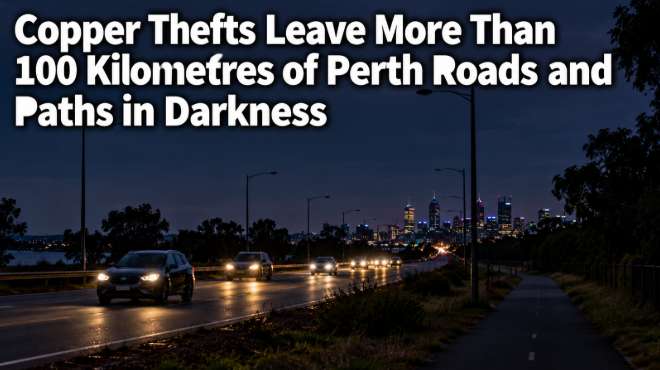
More than 100 kilometres of major roads and pedestrian and cycling paths across Perth remain without functioning street lighting following widespread copper cable theft, creating safety concerns for motorists, cyclists and pedestrians. The thefts have also placed a substantial financial burden on Western Australia's transport authorities, which are working to restore lighting and strengthen security at vulnerable locations.
The problem has become increasingly serious because underground copper wiring is valuable on the scrap-metal market. Thieves can remove cables from transport infrastructure and attempt to sell the recovered metal, leaving streetlights unable to operate. The consequences extend beyond damaged equipment, affecting road visibility, public safety and the reliability of essential infrastructure.
Police recently charged three people in connection with alleged copper theft and related offending. In one case, a 31-year-old man was accused of stealing more than 190 metres of telecommunications cable from a site at Gidgegannup before allegedly selling the recovered copper to a scrap-metal recycler. The incident reportedly occurred during the King's Birthday long weekend in September.
Investigators said approximately 500 kilograms of copper had been removed from the ground at a telecommunications site. Police indicated that the theft had a significant impact on Gidgegannup and surrounding communities. Authorities are also examining the role of scrap-metal businesses in the resale of stolen materials. Under applicable rules, second-hand dealers must record relevant copper transactions. Police have raised concerns about compliance and say organised criminal groups may use alternative methods to move stolen metal, including sending large quantities overseas.
Street lighting infrastructure has also been targeted along Perth's road network. Police arrested a 41-year-old man and a 50-year-old woman this week after a member of the public reported suspicious activity near Tonkin Highway in Ellenbrook. Officers subsequently stopped a vehicle and allegedly discovered a substantial quantity of stolen insulated copper wiring. These allegations remain subject to the legal process.
The scale of the damage is significant. According to Main Roads WA figures cited in the report, more than 1,400 kilometres of cable had been stolen from its network as of October 2. The losses had taken more than 100 kilometres of street lighting and nearly 30 kilometres of pedestrian and cycling path lighting out of service.
The Western Australian government has allocated nearly $12 million in its 2026–27 state budget to replace stolen street-lighting cable and improve security. Main Roads WA is prioritising repairs and protective measures along major routes, including Kwinana Freeway, Tonkin Highway and Reid Highway. Work is also planned at several other important roads across the metropolitan area.
Replacing the stolen wiring is a complicated process. Repair crews must make damaged electrical installations safe before installing replacement cables. Authorities are also introducing measures intended to make underground wiring more difficult to access and remove.
Officials expect the restoration program to take several years, reflecting the scale of the affected network and the need to protect repaired infrastructure against further theft. For road users, the missing lighting can make it harder to see hazards, pedestrians and cyclists after dark. Motorists should drive cautiously through poorly lit sections, while pedestrians and cyclists should take extra care when travelling at night.
Police are encouraging members of the public to report suspicious activity near telecommunications facilities and street-lighting infrastructure. The investigation and repair program remain important steps towards restoring safer roads and preventing further losses to public infrastructure.
CopperInfrastructureLightingRoadsStolen
More than 100 kilometres of major roads and pedestrian and cycling paths across Perth remain without functioning street lighting following widespread copper cable theft, creating safety concerns for motorists, cyclists and pedestrians. The thefts have also placed a substantial financial burden on Western Australia's transport authorities, which are working to restore lighting and strengthen security at vulnerable locations.
The problem has become increasingly serious because underground copper wiring is valuable on the scrap-metal market. Thieves can remove cables from transport infrastructure and attempt to sell the recovered metal, leaving streetlights unable to operate. The consequences extend beyond damaged equipment, affecting road visibility, public safety and the reliability of essential infrastructure.
Police recently charged three people in connection with alleged copper theft and related offending. In one case, a 31-year-old man was accused of stealing more than 190 metres of telecommunications cable from a site at Gidgegannup before allegedly selling the recovered copper to a scrap-metal recycler. The incident reportedly occurred during the King's Birthday long weekend in September.
Investigators said approximately 500 kilograms of copper had been removed from the ground at a telecommunications site. Police indicated that the theft had a significant impact on Gidgegannup and surrounding communities. Authorities are also examining the role of scrap-metal businesses in the resale of stolen materials. Under applicable rules, second-hand dealers must record relevant copper transactions. Police have raised concerns about compliance and say organised criminal groups may use alternative methods to move stolen metal, including sending large quantities overseas.
Street lighting infrastructure has also been targeted along Perth's road network. Police arrested a 41-year-old man and a 50-year-old woman this week after a member of the public reported suspicious activity near Tonkin Highway in Ellenbrook. Officers subsequently stopped a vehicle and allegedly discovered a substantial quantity of stolen insulated copper wiring. These allegations remain subject to the legal process.
The scale of the damage is significant. According to Main Roads WA figures cited in the report, more than 1,400 kilometres of cable had been stolen from its network as of October 2. The losses had taken more than 100 kilometres of street lighting and nearly 30 kilometres of pedestrian and cycling path lighting out of service.
The Western Australian government has allocated nearly $12 million in its 2026–27 state budget to replace stolen street-lighting cable and improve security. Main Roads WA is prioritising repairs and protective measures along major routes, including Kwinana Freeway, Tonkin Highway and Reid Highway. Work is also planned at several other important roads across the metropolitan area.
Replacing the stolen wiring is a complicated process. Repair crews must make damaged electrical installations safe before installing replacement cables. Authorities are also introducing measures intended to make underground wiring more difficult to access and remove.
Officials expect the restoration program to take several years, reflecting the scale of the affected network and the need to protect repaired infrastructure against further theft. For road users, the missing lighting can make it harder to see hazards, pedestrians and cyclists after dark. Motorists should drive cautiously through poorly lit sections, while pedestrians and cyclists should take extra care when travelling at night.
Police are encouraging members of the public to report suspicious activity near telecommunications facilities and street-lighting infrastructure. The investigation and repair program remain important steps towards restoring safer roads and preventing further losses to public infrastructure.
Emergency services are searching for a 39-year-old man who went fishing in a small boat near the Murray River after he could not be contacted. Police an...
Police have released CCTV footage showing a person of interest outside a home in Cobden, south-west Victoria, before a suspected deliberate fire threate...
A tribunal has upheld an indefinite ban on Adrian Fabio Mangini after findings concerning misleading health claims and inappropriate conduct towards vul...
An 18-year-old man from Dianella has been charged over alleged firebombings and an extortion scheme targeting illicit tobacco stores in Perth, with poli...
The Australian Greens say the concerns are being taken seriously and call for a fair, independent review of allegations concerning the Western Australia...
A Western Australian police officer has been sentenced after pleading guilty to shaking his infant daughter at the family home in Perth. The court heard...
Emergency services are searching for a 39-year-old man who went fishing in a small boat near the Murray River after he could not be contacted. Police an...
Police have released CCTV footage showing a person of interest outside a home in Cobden, south-west Victoria, before a suspected deliberate fire threate...
A tribunal has upheld an indefinite ban on Adrian Fabio Mangini after findings concerning misleading health claims and inappropriate conduct towards vul...