Safety note: Admin approval is an initial review, not a guarantee that every detail is correct. Check important or urgent claims with official sources and report anything inaccurate or unsafe.
Source and credit: Contributor's own report
Dingo debate reaches WA farmland as farmers and conservationists clash - Perth, WA
Smart summary
A growing debate over the role of dingoes in Western Australia's agricultural regions has intensified, with farmers calling for stronger livestock protections while conservationists argue the native predator plays a v...
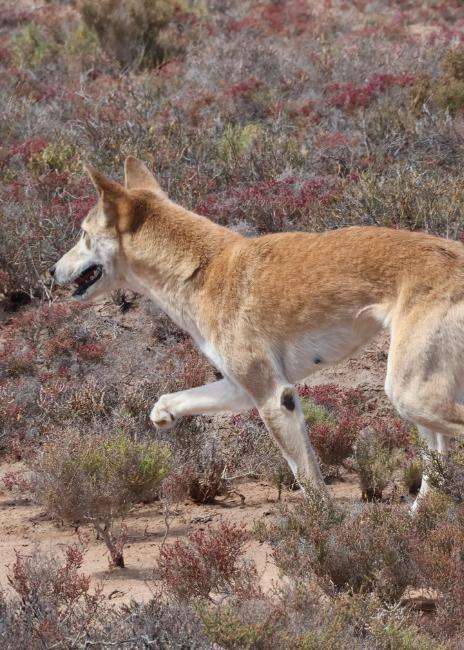
The long-running debate over the management of dingoes in Western Australia has expanded beyond conservation areas and into the state's farming districts, highlighting the challenge of balancing environmental protection with the livelihoods of livestock producers.
For decades, dingoes have been regarded by many pastoralists as a serious threat to sheep and cattle operations, particularly in regional areas where livestock graze over vast properties. Farmers say attacks by wild dogs and dingoes can result in significant financial losses through livestock deaths, injuries and reduced breeding success. As a result, many landholders have traditionally supported measures such as exclusion fencing, trapping and baiting to protect their animals.
At the same time, ecologists and wildlife advocates argue that dingoes are Australia's largest remaining land predator and play an important role in maintaining healthy ecosystems. They contend that dingoes help regulate populations of invasive species such as foxes, feral cats and rabbits, which in turn can benefit native wildlife and vegetation. Researchers say removing apex predators may create unintended ecological consequences, making long-term management more complex than simply reducing dingo numbers.
The issue has become increasingly prominent as dingoes have been recorded closer to farming districts where interactions with livestock are more common. Some producers say attacks have become more frequent and are calling for governments to provide greater flexibility in managing problem animals while continuing investment in exclusion fencing and compensation programs.
Conservation groups, however, caution against broad-scale culling, arguing that management should be based on scientific evidence and targeted at specific problem animals rather than reducing entire populations. They also note that dingoes are culturally significant to many Aboriginal communities and remain an important part of Australia's natural heritage.
The debate reflects broader questions about how Australia manages native wildlife in landscapes increasingly shared by agriculture, conservation and tourism. Governments must balance biodiversity objectives with the economic importance of the livestock industry, particularly in regional Western Australia where farming remains a major employer.
Many farmers support practical solutions that reduce conflict without eliminating dingoes altogether. These include improved fencing, guardian animals, better livestock management practices and rapid responses to confirmed attacks. Wildlife experts similarly support evidence-based management that protects both agricultural productivity and ecological health.
Researchers continue studying dingo behaviour, movement patterns and ecological impacts to better inform future policy. They say understanding where conflicts occur and why they happen is essential to developing management strategies that minimise livestock losses while maintaining healthy ecosystems.
As Western Australia reviews wildlife management approaches, the discussion is expected to continue among farmers, scientists, Indigenous groups and policymakers. While opinions remain divided, there is broad agreement that effective solutions will require cooperation, scientific research and locally tailored management rather than a one-size-fits-all approach.
DingoesManagementLivestockWildlifeAnimals
The long-running debate over the management of dingoes in Western Australia has expanded beyond conservation areas and into the state's farming districts, highlighting the challenge of balancing environmental protection with the livelihoods of livestock producers.
For decades, dingoes have been regarded by many pastoralists as a serious threat to sheep and cattle operations, particularly in regional areas where livestock graze over vast properties. Farmers say attacks by wild dogs and dingoes can result in significant financial losses through livestock deaths, injuries and reduced breeding success. As a result, many landholders have traditionally supported measures such as exclusion fencing, trapping and baiting to protect their animals.
At the same time, ecologists and wildlife advocates argue that dingoes are Australia's largest remaining land predator and play an important role in maintaining healthy ecosystems. They contend that dingoes help regulate populations of invasive species such as foxes, feral cats and rabbits, which in turn can benefit native wildlife and vegetation. Researchers say removing apex predators may create unintended ecological consequences, making long-term management more complex than simply reducing dingo numbers.
The issue has become increasingly prominent as dingoes have been recorded closer to farming districts where interactions with livestock are more common. Some producers say attacks have become more frequent and are calling for governments to provide greater flexibility in managing problem animals while continuing investment in exclusion fencing and compensation programs.
Conservation groups, however, caution against broad-scale culling, arguing that management should be based on scientific evidence and targeted at specific problem animals rather than reducing entire populations. They also note that dingoes are culturally significant to many Aboriginal communities and remain an important part of Australia's natural heritage.
The debate reflects broader questions about how Australia manages native wildlife in landscapes increasingly shared by agriculture, conservation and tourism. Governments must balance biodiversity objectives with the economic importance of the livestock industry, particularly in regional Western Australia where farming remains a major employer.
Many farmers support practical solutions that reduce conflict without eliminating dingoes altogether. These include improved fencing, guardian animals, better livestock management practices and rapid responses to confirmed attacks. Wildlife experts similarly support evidence-based management that protects both agricultural productivity and ecological health.
Researchers continue studying dingo behaviour, movement patterns and ecological impacts to better inform future policy. They say understanding where conflicts occur and why they happen is essential to developing management strategies that minimise livestock losses while maintaining healthy ecosystems.
As Western Australia reviews wildlife management approaches, the discussion is expected to continue among farmers, scientists, Indigenous groups and policymakers. While opinions remain divided, there is broad agreement that effective solutions will require cooperation, scientific research and locally tailored management rather than a one-size-fits-all approach.
Armidale Regional Council will replace an ageing cast-iron water main in Ampol and Miller Streets with a modern system, with construction scheduled to b...
Community and education representatives have raised concerns that the initial $500,000 allocation may not cover the infrastructure upgrades needed for t...
Four public swimming pools across the Central Darling Shire are being opened for unsupervised access this season, with residents required to complete sa...
Ballarat’s redeveloped Mars Stadium has unveiled its expanded seating capacity and upgraded facilities ahead of the return of major AFLW events to the r...
A 59-year-old rubbish-truck driver has been charged with dangerous driving causing death after a 70-year-old man was fatally struck in Queens Park earli...
Police have arrested five people after a man was taken to hospital with a gunshot wound following a serious incident at Moonyoonooka, east of Geraldton,...
Authorities have crushed 23 confiscated electric bikes in Blacktown under new laws targeting non-compliant e-bikes, following a joint enforcement operat...
Thousands of Victorian doctors and allied health professionals have begun industrial action over stalled negotiations on pay and working conditions, wit...