Safety note: Admin approval is an initial review, not a guarantee that every detail is correct. Check important or urgent claims with official sources and report anything inaccurate or unsafe.
Source and credit: Contributor's own report
Drones deployed to protect rare migratory birds from invasive mice on remote Kimberley island - Broome, WA
Smart summary
Conservation officers are using drone technology to spread bait across Browse Island off Western Australia's Kimberley coast in a bid to eradicate invasive mice that are threatening internationally significant migrato...
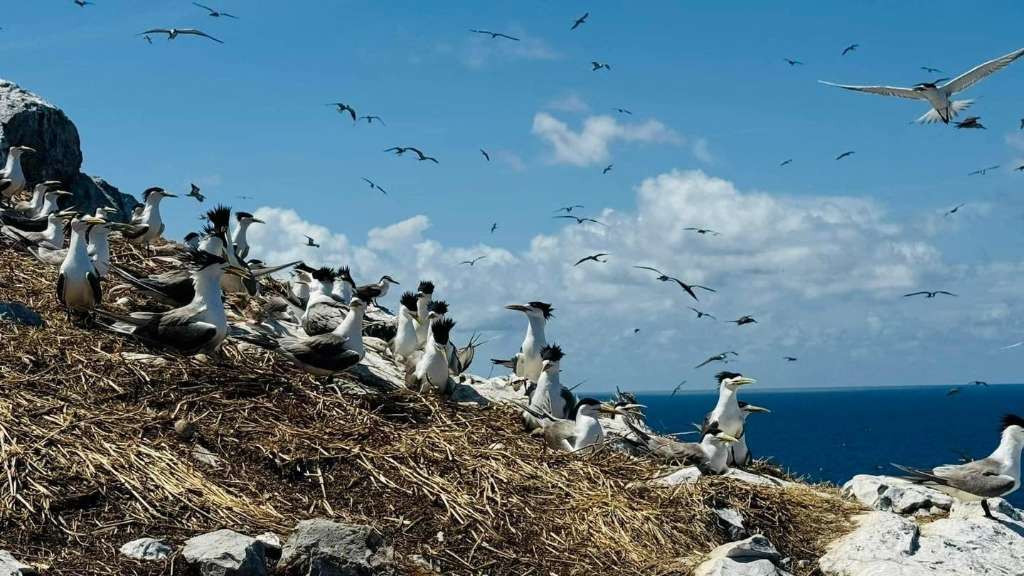
Conservation authorities have launched an innovative drone-based baiting program on the remote Browse Island off the Kimberley coast in an effort to eliminate invasive mice that are placing one of Australia's most important seabird breeding sites at risk.
The operation is being led by Western Australia's Department of Biodiversity, Conservation and Attractions (DBCA), which says mice have become a serious threat to nesting seabirds and migratory bird populations that rely on the island each year. Browse Island is internationally recognised as a significant breeding and resting habitat for several protected bird species, making its long-term conservation a priority.
Unlike larger islands where helicopters are commonly used to distribute bait, Browse Island's rugged terrain and environmental sensitivity have prompted authorities to adopt drones. The unmanned aircraft can accurately deliver bait pellets across difficult-to-access sections of the island while reducing disturbance to wildlife and improving operational safety for conservation staff. The approach also allows for highly targeted bait placement, improving the likelihood of successfully eradicating the invasive rodents.
DBCA scientists say even relatively small mouse populations can have devastating ecological impacts. Mice consume eggs, attack newly hatched chicks and compete with native wildlife for food. On isolated islands where birds have evolved without mammalian predators, these impacts can rapidly reduce breeding success and threaten long-term population survival.
The eradication effort has been carefully timed outside the peak nesting periods of vulnerable bird species to minimise unintended impacts. Before the operation began, environmental assessments were undertaken to evaluate potential risks to native wildlife and determine the safest baiting methods. Monitoring teams will continue surveying the island after the baiting program to determine whether any mice remain and to measure improvements in bird breeding success over coming seasons.
Browse Island supports numerous migratory birds protected under international agreements between Australia and neighbouring countries along the East Asian–Australasian Flyway. Many species travel thousands of kilometres annually between Australia and breeding grounds in Asia and the Arctic, making healthy nesting and resting sites critical to their survival. Conservation managers say protecting these habitats benefits bird populations across the broader region, not just Western Australia.
The project forms part of a broader strategy to remove invasive species from offshore islands, where successful eradication programs have previously resulted in significant recoveries of native wildlife. Similar initiatives elsewhere in Australia have demonstrated that once rodents are eliminated, seabird populations often rebound as nesting success improves and ecological balance is restored.
If successful, the Browse Island program could become a model for future conservation work on remote islands throughout Australia. DBCA says advances in drone technology are creating new opportunities to protect fragile ecosystems while reducing costs, improving precision and limiting disturbance to wildlife during large-scale environmental management operations.
IslandConservationBirdBreedingBrowse
Conservation authorities have launched an innovative drone-based baiting program on the remote Browse Island off the Kimberley coast in an effort to eliminate invasive mice that are placing one of Australia's most important seabird breeding sites at risk.
The operation is being led by Western Australia's Department of Biodiversity, Conservation and Attractions (DBCA), which says mice have become a serious threat to nesting seabirds and migratory bird populations that rely on the island each year. Browse Island is internationally recognised as a significant breeding and resting habitat for several protected bird species, making its long-term conservation a priority.
Unlike larger islands where helicopters are commonly used to distribute bait, Browse Island's rugged terrain and environmental sensitivity have prompted authorities to adopt drones. The unmanned aircraft can accurately deliver bait pellets across difficult-to-access sections of the island while reducing disturbance to wildlife and improving operational safety for conservation staff. The approach also allows for highly targeted bait placement, improving the likelihood of successfully eradicating the invasive rodents.
DBCA scientists say even relatively small mouse populations can have devastating ecological impacts. Mice consume eggs, attack newly hatched chicks and compete with native wildlife for food. On isolated islands where birds have evolved without mammalian predators, these impacts can rapidly reduce breeding success and threaten long-term population survival.
The eradication effort has been carefully timed outside the peak nesting periods of vulnerable bird species to minimise unintended impacts. Before the operation began, environmental assessments were undertaken to evaluate potential risks to native wildlife and determine the safest baiting methods. Monitoring teams will continue surveying the island after the baiting program to determine whether any mice remain and to measure improvements in bird breeding success over coming seasons.
Browse Island supports numerous migratory birds protected under international agreements between Australia and neighbouring countries along the East Asian–Australasian Flyway. Many species travel thousands of kilometres annually between Australia and breeding grounds in Asia and the Arctic, making healthy nesting and resting sites critical to their survival. Conservation managers say protecting these habitats benefits bird populations across the broader region, not just Western Australia.
The project forms part of a broader strategy to remove invasive species from offshore islands, where successful eradication programs have previously resulted in significant recoveries of native wildlife. Similar initiatives elsewhere in Australia have demonstrated that once rodents are eliminated, seabird populations often rebound as nesting success improves and ecological balance is restored.
If successful, the Browse Island program could become a model for future conservation work on remote islands throughout Australia. DBCA says advances in drone technology are creating new opportunities to protect fragile ecosystems while reducing costs, improving precision and limiting disturbance to wildlife during large-scale environmental management operations.
A flood watch is in place across parts of Victoria, with Ballarat and surrounding Central Victorian catchments facing the risk of minor to moderate floo...
Researchers are warning communities along South Australia's Lower Murray to prepare for more frequent flash droughts, with above-average temperatures fo...
Heavy and near-record rainfall has inundated parts of Western Australia's Goldfields and Esperance region, damaging pastoral properties and forcing the...
A 48-hour burst of heavy rain has brought almost 100 millimetres to parts of Western Australia, damaging some crops while providing welcome moisture bef...
A 59-year-old rubbish-truck driver has been charged with dangerous driving causing death after a 70-year-old man was fatally struck in Queens Park earli...
Police have arrested five people after a man was taken to hospital with a gunshot wound following a serious incident at Moonyoonooka, east of Geraldton,...
Authorities have crushed 23 confiscated electric bikes in Blacktown under new laws targeting non-compliant e-bikes, following a joint enforcement operat...
Thousands of Victorian doctors and allied health professionals have begun industrial action over stalled negotiations on pay and working conditions, wit...