Safety note: Admin approval is an initial review, not a guarantee that every detail is correct. Check important or urgent claims with official sources and report anything inaccurate or unsafe.
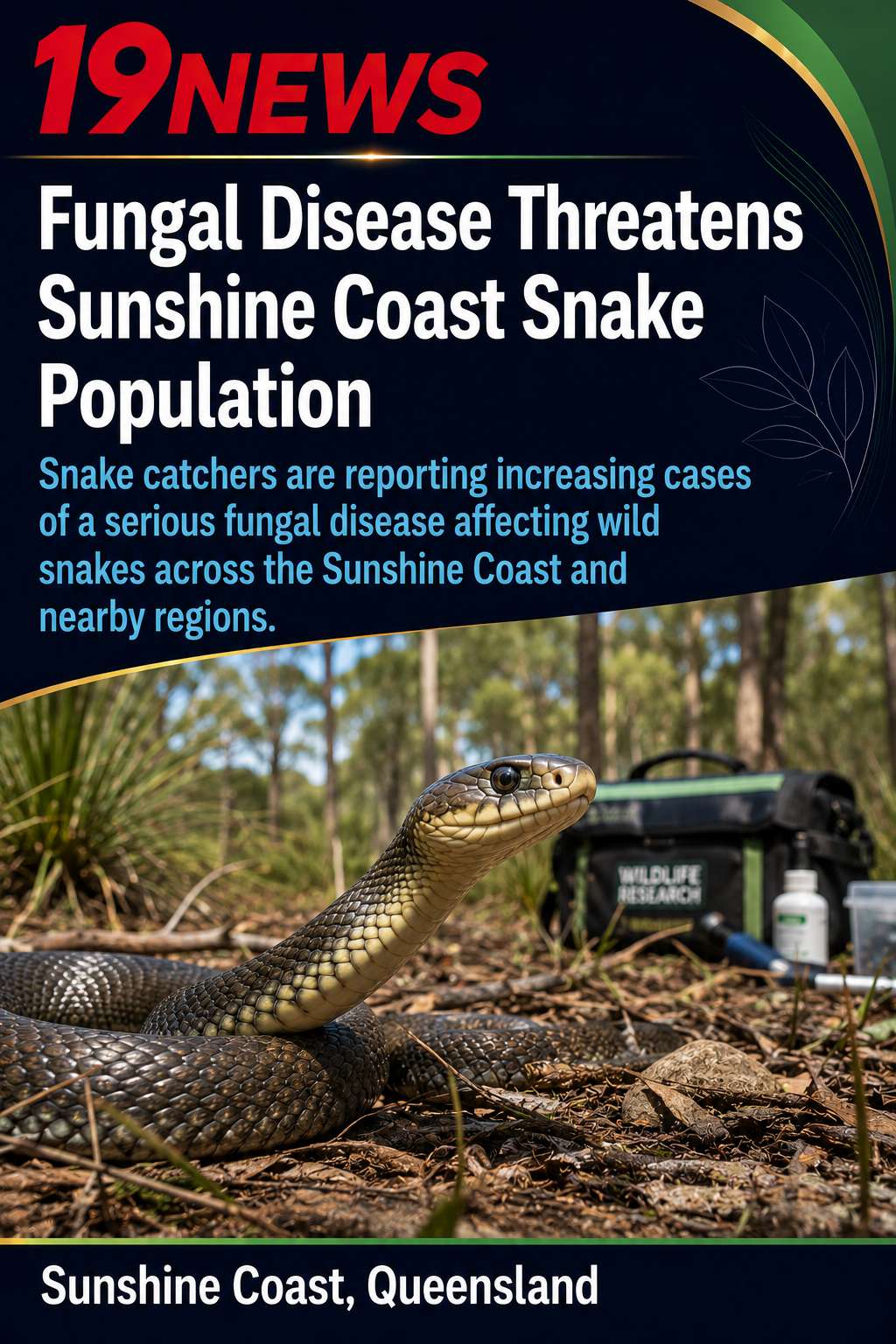
Snake catchers are reporting increasing cases of a serious fungal disease affecting wild snakes across the Sunshine Coast and nearby regions.
A serious fungal disease is affecting wild snake populations across the Sunshine Coast, with local snake catchers reporting that they are encountering infected animals almost every day.
The disease, known as ophidiomycosis, can cause severe symptoms including swelling, lesions, ulcers and other abnormalities on affected snakes.
Local snake catcher Stuart McKenzie said the disease is being observed particularly frequently on the Sunshine Coast and in the Moreton Bay region, with some cases also reported around Brisbane and the Gold Coast.
In severe cases, infected snakes can develop significant swelling around their mouths and other parts of their bodies. The disease can eventually be fatal, although reptiles can sometimes survive with symptoms for extended periods.
Ophidiomycosis is not limited to snakes. The fungal disease can also affect lizards and other reptiles.
The disease was initially identified in eastern water dragons before being observed in other reptile populations.
The origin of the disease in Australia is believed to be connected to the exotic pet trade, although researchers continue to study its spread and impact.
The outbreak is raising concerns because snakes play an important role in the local ecosystem. They help control populations of rodents, frogs and other animals and therefore contribute to maintaining ecological balance.
A decline in healthy snake populations could potentially affect that natural balance.
Local snake catchers are asking residents to pay attention to unusual marks, swelling or other visible problems on snakes they encounter.
Members of the public are being encouraged to contact an appropriate snake catcher or wildlife rescue organisation if they find a snake displaying unusual symptoms.
People should not attempt to handle or capture snakes themselves, particularly when dealing with potentially sick or stressed wildlife.
The reports highlight the importance of monitoring wildlife diseases and understanding how infections can spread through native animal populations.
The Sunshine Coast is home to a wide variety of native reptiles, making wildlife health an important part of protecting the region's natural environment.
Researchers and wildlife specialists will continue monitoring affected animals to better understand the disease and its potential impact on local reptile populations.
DiseaseSnakeOtherPopulationsSnakes
A serious fungal disease is affecting wild snake populations across the Sunshine Coast, with local snake catchers reporting that they are encountering infected animals almost every day.
The disease, known as ophidiomycosis, can cause severe symptoms including swelling, lesions, ulcers and other abnormalities on affected snakes.
Local snake catcher Stuart McKenzie said the disease is being observed particularly frequently on the Sunshine Coast and in the Moreton Bay region, with some cases also reported around Brisbane and the Gold Coast.
In severe cases, infected snakes can develop significant swelling around their mouths and other parts of their bodies. The disease can eventually be fatal, although reptiles can sometimes survive with symptoms for extended periods.
Ophidiomycosis is not limited to snakes. The fungal disease can also affect lizards and other reptiles.
The disease was initially identified in eastern water dragons before being observed in other reptile populations.
The origin of the disease in Australia is believed to be connected to the exotic pet trade, although researchers continue to study its spread and impact.
The outbreak is raising concerns because snakes play an important role in the local ecosystem. They help control populations of rodents, frogs and other animals and therefore contribute to maintaining ecological balance.
A decline in healthy snake populations could potentially affect that natural balance.
Local snake catchers are asking residents to pay attention to unusual marks, swelling or other visible problems on snakes they encounter.
Members of the public are being encouraged to contact an appropriate snake catcher or wildlife rescue organisation if they find a snake displaying unusual symptoms.
People should not attempt to handle or capture snakes themselves, particularly when dealing with potentially sick or stressed wildlife.
The reports highlight the importance of monitoring wildlife diseases and understanding how infections can spread through native animal populations.
The Sunshine Coast is home to a wide variety of native reptiles, making wildlife health an important part of protecting the region's natural environment.
Researchers and wildlife specialists will continue monitoring affected animals to better understand the disease and its potential impact on local reptile populations.
A 48-hour burst of heavy rain has brought almost 100 millimetres to parts of Western Australia, damaging some crops while providing welcome moisture bef...
Three separate earthquakes were recorded near Port Hedland in Western Australia over the weekend, with more than 100 reports submitted to Geoscience Aus...
A 50-year-old man has died after being struck by a vehicle in Fernvale, west of Brisbane, with police launching a homicide investigation and arresting a...
Amateur astronomers are using new telescope technology to photograph the Moon, planets and distant galaxies from Brisbane homes, showing that city skies...
Severe weather in Melbourne has caused flight disruptions from Brisbane, with at least one flight cancelled and other services delayed as passengers tra...
Treasurer Jim Chalmers says the federal budget bottom line has improved by $6 billion compared with the May forecast, while the government faces pressur...
Northern Territory Police are investigating a series of alleged aggravated burglaries in Alice Springs after up to seven homes in the Araluen area were...