Safety note: Admin approval is an initial review, not a guarantee that every detail is correct. Check important or urgent claims with official sources and report anything inaccurate or unsafe.
Source and credit: Contributor's own report
First Batch of Illegal E-Bikes Crushed in New South Wales - Blacktown, NSW
Smart summary
Authorities have crushed 23 confiscated electric bikes in Blacktown under new laws targeting non-compliant e-bikes, following a joint enforcement operation on Sydney’s Northern Beaches.
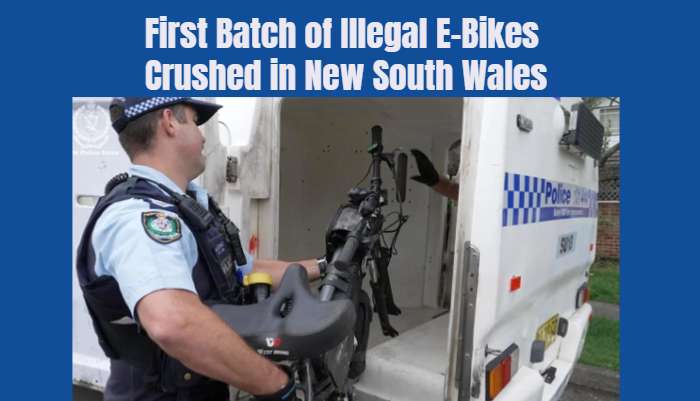
Authorities in New South Wales have begun destroying confiscated illegal electric bikes, with the first batch of 23 e-bikes crushed at a wrecking yard in Blacktown on 1 October 2026. The action follows new state laws that give police and transport authorities the power to seize and dispose of certain non-compliant electric bikes.
The bikes were seized during a joint operation by NSW Police and Transport for NSW on the Northern Beaches in mid-September. A total of 36 e-bikes were confiscated during the operation. Authorities said applications for the return of 13 of those bikes were still being assessed by police, while the remaining 23 were being processed for destruction.
Among the confiscated bikes was one capable of reaching speeds of more than 90 kilometres per hour, which was reportedly seized from a 14-year-old rider. Other bikes included modified models with speed restrictions overridden, as well as a bike used for food delivery.
Before crushing, batteries are being removed for safe disposal and recycling. The process is intended to ensure that hazardous battery components are handled separately from the remaining materials.
Under the NSW requirements outlined by the government, compliant e-bikes must have power assistance that cuts out at 25 kilometres per hour and a maximum continuous power output of 250 watts, although 500-watt models will be tolerated until 1 March 2029. Bikes must also have a maximum speed of 6 kilometres per hour when operating without pedalling. Buyers are encouraged to check that their bikes meet the EN 15194 standard.
The new legislation, known as the Road Transport Amendment (Non-registrable Motor Vehicles) Act 2026, introduced powers for police and transport authorities to confiscate and dispose of prohibited e-bikes. The government says the measures are intended to address safety risks associated with high-powered or modified bikes being used on roads and shared paths.
Electric bikes remain a transport option for commuting, deliveries and recreation, but the distinction between compliant pedal-assisted bicycles and more powerful motorised vehicles is central to the new enforcement approach. Riders and owners are expected to ensure their equipment meets applicable requirements and that they follow road rules.
The destruction of the first batch marks a further stage in the state’s enforcement of its e-bike regulations. Authorities have indicated that confiscated bikes found to be illegal may not be returned to the roads, while some seized vehicles may remain under assessment before a final decision is made.
The operation highlights the practical consequences of the new rules for owners of modified and high-powered e-bikes across NSW.
BikesE-BikesAuthoritiesTransportConfiscated
Authorities in New South Wales have begun destroying confiscated illegal electric bikes, with the first batch of 23 e-bikes crushed at a wrecking yard in Blacktown on 1 October 2026. The action follows new state laws that give police and transport authorities the power to seize and dispose of certain non-compliant electric bikes.
The bikes were seized during a joint operation by NSW Police and Transport for NSW on the Northern Beaches in mid-September. A total of 36 e-bikes were confiscated during the operation. Authorities said applications for the return of 13 of those bikes were still being assessed by police, while the remaining 23 were being processed for destruction.
Among the confiscated bikes was one capable of reaching speeds of more than 90 kilometres per hour, which was reportedly seized from a 14-year-old rider. Other bikes included modified models with speed restrictions overridden, as well as a bike used for food delivery.
Before crushing, batteries are being removed for safe disposal and recycling. The process is intended to ensure that hazardous battery components are handled separately from the remaining materials.
Under the NSW requirements outlined by the government, compliant e-bikes must have power assistance that cuts out at 25 kilometres per hour and a maximum continuous power output of 250 watts, although 500-watt models will be tolerated until 1 March 2029. Bikes must also have a maximum speed of 6 kilometres per hour when operating without pedalling. Buyers are encouraged to check that their bikes meet the EN 15194 standard.
The new legislation, known as the Road Transport Amendment (Non-registrable Motor Vehicles) Act 2026, introduced powers for police and transport authorities to confiscate and dispose of prohibited e-bikes. The government says the measures are intended to address safety risks associated with high-powered or modified bikes being used on roads and shared paths.
Electric bikes remain a transport option for commuting, deliveries and recreation, but the distinction between compliant pedal-assisted bicycles and more powerful motorised vehicles is central to the new enforcement approach. Riders and owners are expected to ensure their equipment meets applicable requirements and that they follow road rules.
The destruction of the first batch marks a further stage in the state’s enforcement of its e-bike regulations. Authorities have indicated that confiscated bikes found to be illegal may not be returned to the roads, while some seized vehicles may remain under assessment before a final decision is made.
The operation highlights the practical consequences of the new rules for owners of modified and high-powered e-bikes across NSW.
The Victorian Government has announced an $80 million study into duplicating Melbourne's Upfield railway line while delaying eight planned level-crossin...
Severe weather in Melbourne has caused flight disruptions from Brisbane, with at least one flight cancelled and other services delayed as passengers tra...
Passengers travelling through Sydney Airport on September 24 are being warned to allow extra time as separate strikes involving airport security and gro...
A 15-year-old boy has been charged after police allege a woman was threatened during an early-morning home break-in before another woman was confronted...
NSW Police are seeking public assistance to locate a 14-year-old girl reported missing from the Central Coast, with officers and family holding serious...
Police allege four people have been charged after an investigation into drug supply across the NSW–Queensland border led to the seizure of illicit drugs...
Thousands of Victorian doctors and allied health professionals have begun industrial action over stalled negotiations on pay and working conditions, wit...
A 15-year-old boy has been charged after police allege a woman was threatened during an early-morning home break-in before another woman was confronted...