Former police officer found guilty of 2006 cold-case murder in Victoria
By Chloe · Published 23 Oct 2026 · Updated 23 Oct 2026
Warrnambool, VIC · Victoria News
Safety note: Admin approval is an initial review, not a guarantee that every detail is correct. Check important or urgent claims with official sources and report anything inaccurate or unsafe.
Source and credit: Contributor's own report
Former police officer found guilty of 2006 cold-case murder in Victoria - Warrnambool, VIC
Smart summary
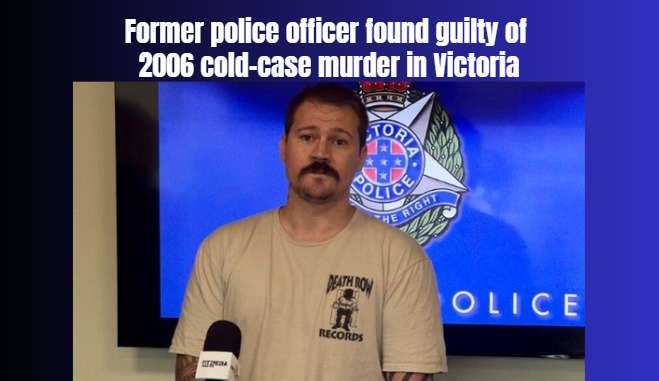
A Supreme Court jury has found former police officer Steven Frederick Johnson guilty of murdering Christopher Jarvis, a father who disappeared near Warrnambool more than 20 years ago.
A long-running murder investigation in south-west Victoria has reached a significant milestone after a Supreme Court jury found 74-year-old Steven Frederick Johnson guilty of murdering Christopher Jarvis, who disappeared in June 2006. Jarvis was 38 when he was last seen at his home in Wangoom, near Warrnambool. His body has never been found.
Johnson, a former police officer, had pleaded not guilty to one count of murder. The verdict followed a lengthy trial examining the circumstances surrounding Jarvis's disappearance, the relationship between the two men and evidence presented by the prosecution and defence.
Jarvis disappeared on 13 June 2006. He had been living at a property in Wangoom and was involved in a dispute with Johnson, who had been his landlord. Prosecutors argued that the disagreement over unpaid rent was central to the events leading up to his disappearance.
During the trial, the prosecution alleged that Johnson arranged an attack on Jarvis before taking him away from his home. Prosecutors also presented evidence relating to Jarvis's car, which was later found burnt out at Thunder Point, a coastal location near Warrnambool. The Crown argued that actions taken after Jarvis vanished were consistent with an attempt to conceal the crime. These were prosecution allegations considered during the trial.
The defence disputed the prosecution's interpretation of the evidence. Johnson's lawyers argued that the case relied on circumstantial evidence and challenged the reliability of witness accounts, the proposed timeline and the prosecution's explanation of what happened. Johnson maintained his not-guilty plea throughout the proceedings.
The jury ultimately returned a guilty verdict on 23 October 2026. According to the ABC, Jarvis's family and friends cheered and celebrated in court when the decision was delivered, reflecting the significance of the outcome after years of uncertainty surrounding his disappearance.
The case is notable because it demonstrates how investigators and prosecutors can pursue a suspected homicide even when a victim's remains have not been recovered. Such cases can depend on a combination of witness testimony, forensic findings, timelines, circumstantial evidence and the examination of events before and after a person disappeared.
Although the verdict establishes Johnson's guilt in the murder under the court's finding, important questions for Jarvis's loved ones remain, particularly because his body has not been located. The court did not announce a sentence alongside the verdict.
No bail application was made, and Johnson is expected to be sentenced at a later date. The sentencing hearing will determine the penalty imposed following the conviction.
JarvisJohnsonBeenEvidenceProsecution
A long-running murder investigation in south-west Victoria has reached a significant milestone after a Supreme Court jury found 74-year-old Steven Frederick Johnson guilty of murdering Christopher Jarvis, who disappeared in June 2006. Jarvis was 38 when he was last seen at his home in Wangoom, near Warrnambool. His body has never been found.
Johnson, a former police officer, had pleaded not guilty to one count of murder. The verdict followed a lengthy trial examining the circumstances surrounding Jarvis's disappearance, the relationship between the two men and evidence presented by the prosecution and defence.
Jarvis disappeared on 13 June 2006. He had been living at a property in Wangoom and was involved in a dispute with Johnson, who had been his landlord. Prosecutors argued that the disagreement over unpaid rent was central to the events leading up to his disappearance.
During the trial, the prosecution alleged that Johnson arranged an attack on Jarvis before taking him away from his home. Prosecutors also presented evidence relating to Jarvis's car, which was later found burnt out at Thunder Point, a coastal location near Warrnambool. The Crown argued that actions taken after Jarvis vanished were consistent with an attempt to conceal the crime. These were prosecution allegations considered during the trial.
The defence disputed the prosecution's interpretation of the evidence. Johnson's lawyers argued that the case relied on circumstantial evidence and challenged the reliability of witness accounts, the proposed timeline and the prosecution's explanation of what happened. Johnson maintained his not-guilty plea throughout the proceedings.
The jury ultimately returned a guilty verdict on 23 October 2026. According to the ABC, Jarvis's family and friends cheered and celebrated in court when the decision was delivered, reflecting the significance of the outcome after years of uncertainty surrounding his disappearance.
The case is notable because it demonstrates how investigators and prosecutors can pursue a suspected homicide even when a victim's remains have not been recovered. Such cases can depend on a combination of witness testimony, forensic findings, timelines, circumstantial evidence and the examination of events before and after a person disappeared.
Although the verdict establishes Johnson's guilt in the murder under the court's finding, important questions for Jarvis's loved ones remain, particularly because his body has not been located. The court did not announce a sentence alongside the verdict.
No bail application was made, and Johnson is expected to be sentenced at a later date. The sentencing hearing will determine the penalty imposed following the conviction.
A 14-year-old student has faced court after allegedly stabbing another student at Lanyon High School, while a cybersecurity-related system outage delaye...
Two of the three teenagers responsible for the fatal machete attack on 14-year-old Ethan Hoac have received prison sentences of 17 years and 18-and-a-ha...
South Australia's civil and administrative tribunal has upheld a prohibition preventing a disability support worker from working with children and peopl...
Property offences and crimes against people have fallen across the Northern Territory overall, but recent increases in Darwin and continuing challenges...
Two of the three teenagers responsible for the fatal machete attack on 14-year-old Ethan Hoac have received prison sentences of 17 years and 18-and-a-ha...
A major investigation into alleged drug manufacturing has led to arrests, the discovery of illegal gambling venues and the seizure of drugs, weapons, to...
A new agreement between the Victorian and federal governments sets a pathway towards fully funding public schools by 2034, with education leaders cautio...
The Victorian government says the proposed restriction aims to protect student privacy, reduce classroom distractions and help students focus on learning.
Political leaders are urging the federal Attorney-General to organise an independent investigation after revelations that sensitive court records were a...
An unconventional mosaic featuring sequins, high heels and discarded beauty items is bringing a celebrated Australian drag performer’s image into the wo...
The Australian government has targeted two North Korean companies and two individuals accused of helping generate revenue for Pyongyang through fraudule...
A 14-year-old student has faced court after allegedly stabbing another student at Lanyon High School, while a cybersecurity-related system outage delaye...