Former UOW Chancellor Defends Role in Korda Mentha Deal at ICAC Inquiry
By Neha Maurya · Published 07 Jul 2026 · Updated 07 Jul 2026
Wollongong, NSW · New South Wales News
Safety note: Admin approval is an initial review, not a guarantee that every detail is correct. Check important or urgent claims with official sources and report anything inaccurate or unsafe.
Source and credit: Contributor's own report
Former UOW Chancellor Defends Role in Korda Mentha Deal at ICAC Inquiry - Wollongong, NSW
Smart summary
Former University of Wollongong (UOW) Chancellor Michael Still has defended his actions before the NSW Independent Commission Against Corruption (ICAC), rejecting claims that conflicts of interest were ignored during...
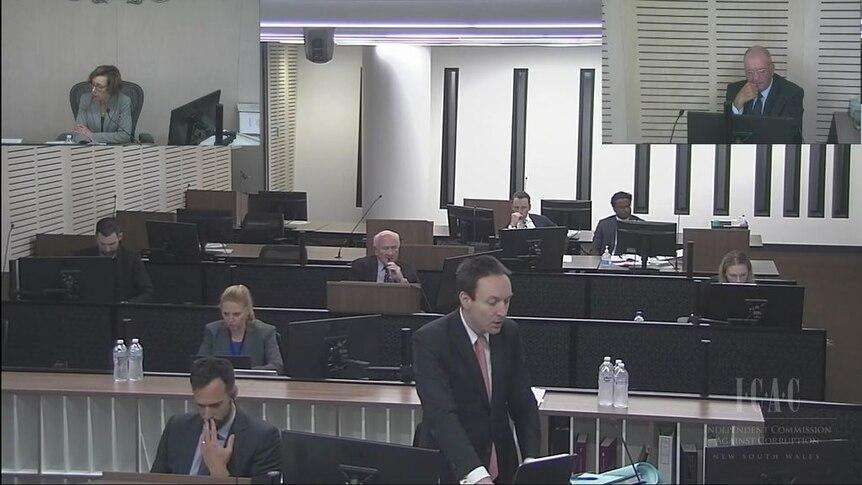
The NSW Independent Commission Against Corruption (ICAC) has continued its public inquiry into governance and procurement practices at the University of Wollongong (UOW), with former Chancellor Michael Still spending a second day giving evidence. The inquiry is examining how consultancy contracts were awarded and whether conflicts of interest were appropriately managed.
A major focus of the hearing was the appointment of consultancy firm Korda Mentha to undertake a university-wide operational review that ultimately resulted in consultancy work worth about $3.8 million. ICAC is investigating whether incoming Vice-Chancellor Professor John Dewar, who was still a partner at Korda Mentha while negotiating his appointment to UOW, had an unfair advantage in shaping the review before the tender process began.
Counsel assisting the commission presented evidence suggesting Professor Dewar was involved in discussions about the scope of the review while his employment arrangements with the university were still being finalised. The inquiry heard that draft documents prepared by Professor Dewar closely resembled the later Request for Proposal (RFP) issued by the university to seek consultancy bids.
Mr Still rejected suggestions that he had acted improperly. He told the commission that he had not linked the discussions with Professor Dewar to potential conflict-of-interest concerns, repeatedly stating, "I didn't connect them." He maintained that the concept for a university-wide review had been his own idea and denied allegations that the tender process had been designed to favour Korda Mentha.
ICAC Commissioner Paul Lakatos questioned Mr Still about governance and oversight responsibilities, asking how conflicts could have been overlooked despite legal advice recommending that Professor Dewar's recruitment remain separate from any future consultancy work involving Korda Mentha. Mr Still acknowledged that, in hindsight, some decisions "could have" been handled better but largely defended his conduct throughout the hearing.
The inquiry also examined consultancy work awarded to another firm, Aspiral, which received contracts connected to the recruitment of the university's vice-chancellor. Mr Still said decisions relating to procurement and funding were matters for university management rather than the chancellor, although the commissioner questioned whether stronger leadership oversight should have been exercised.
Earlier in the hearing, Mr Still corrected evidence he had previously given regarding when he first became aware of concerns involving a senior university executive. Commissioner Lakatos questioned how such a significant mistake had occurred, with Mr Still acknowledging it was " an error."
The ICAC inquiry is continuing to investigate governance, recruitment practices, procurement processes and the management of conflicts of interest at the University of Wollongong. Additional witnesses, including former senior university executives, are expected to give evidence before the commission completes its hearings. It is important to note that the inquiry is investigative in nature, and no findings of corrupt conduct have been made at this stage.
StillUniversityInquiryBeenConsultancy
The NSW Independent Commission Against Corruption (ICAC) has continued its public inquiry into governance and procurement practices at the University of Wollongong (UOW), with former Chancellor Michael Still spending a second day giving evidence. The inquiry is examining how consultancy contracts were awarded and whether conflicts of interest were appropriately managed.
A major focus of the hearing was the appointment of consultancy firm Korda Mentha to undertake a university-wide operational review that ultimately resulted in consultancy work worth about $3.8 million. ICAC is investigating whether incoming Vice-Chancellor Professor John Dewar, who was still a partner at Korda Mentha while negotiating his appointment to UOW, had an unfair advantage in shaping the review before the tender process began.
Counsel assisting the commission presented evidence suggesting Professor Dewar was involved in discussions about the scope of the review while his employment arrangements with the university were still being finalised. The inquiry heard that draft documents prepared by Professor Dewar closely resembled the later Request for Proposal (RFP) issued by the university to seek consultancy bids.
Mr Still rejected suggestions that he had acted improperly. He told the commission that he had not linked the discussions with Professor Dewar to potential conflict-of-interest concerns, repeatedly stating, "I didn't connect them." He maintained that the concept for a university-wide review had been his own idea and denied allegations that the tender process had been designed to favour Korda Mentha.
ICAC Commissioner Paul Lakatos questioned Mr Still about governance and oversight responsibilities, asking how conflicts could have been overlooked despite legal advice recommending that Professor Dewar's recruitment remain separate from any future consultancy work involving Korda Mentha. Mr Still acknowledged that, in hindsight, some decisions "could have" been handled better but largely defended his conduct throughout the hearing.
The inquiry also examined consultancy work awarded to another firm, Aspiral, which received contracts connected to the recruitment of the university's vice-chancellor. Mr Still said decisions relating to procurement and funding were matters for university management rather than the chancellor, although the commissioner questioned whether stronger leadership oversight should have been exercised.
Earlier in the hearing, Mr Still corrected evidence he had previously given regarding when he first became aware of concerns involving a senior university executive. Commissioner Lakatos questioned how such a significant mistake had occurred, with Mr Still acknowledging it was " an error."
The ICAC inquiry is continuing to investigate governance, recruitment practices, procurement processes and the management of conflicts of interest at the University of Wollongong. Additional witnesses, including former senior university executives, are expected to give evidence before the commission completes its hearings. It is important to note that the inquiry is investigative in nature, and no findings of corrupt conduct have been made at this stage.
A Queensland government department has lost approximately $800,000 in a cyberattack, prompting a review that found no government data or sensitive infor...
New evidence indicates autonomous Open AI agents attempted to access information from several Australian government and public-sector websites, expanding...
A new Cooperative Research Centre based at the University of Queensland's Brisbane city campus will bring researchers, industry and government together...
Residents in Gisborne South can now access improved mobile phone coverage after a new Telstra tower was installed at I R Robertson Reserve following yea...
A 16-year-old girl remains in a critical but stable condition after being struck by an e-bike at Barrack Heights, while police allege the rider who rema...
A 27-year-old woman has been arrested after a 48-year-old man was allegedly stabbed in the hand outside a cinema in Sydney’s Newtown on Monday, with pol...
A 33-year-old man has been charged with six offences following a police pursuit and arrest on the NSW Central Coast. Police say the incident began with...
An 88-year-old Perth woman has returned to court after being charged over the alleged attempted murder of her 90-year-old husband at an aged-care facili...