Safety note: Admin approval is an initial review, not a guarantee that every detail is correct. Check important or urgent claims with official sources and report anything inaccurate or unsafe.
Source and credit: Contributor's own report
Mastercard Payments Restored After Global Outage Hits Australian Shoppers - Canberra, ACT
Smart summary
A temporary Mastercard outage disrupted tap-and-go and digital-wallet payments across Australia before the card provider confirmed services had been restored.
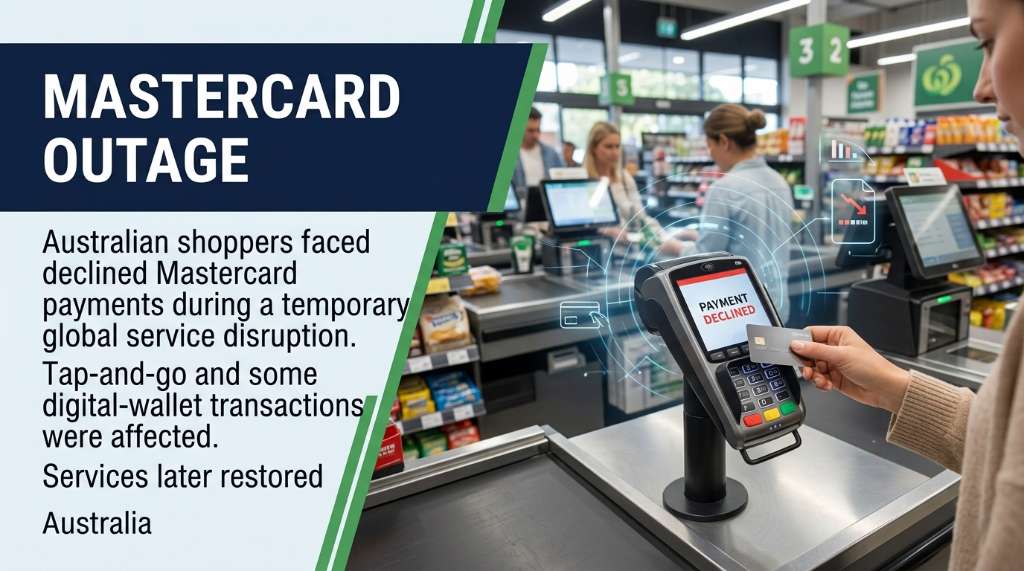
A temporary Mastercard payment outage disrupted transactions for Australian shoppers on 15 August 2026, with customers reporting problems using Mastercard cards for everyday purchases.
The disruption affected payment methods including tap-and-go transactions and digital wallets, leaving some shoppers unable to complete purchases at retailers. The incident created inconvenience for customers who rely on Mastercard for routine payments such as groceries, food, transport and other essential purchases.
According to Mastercard, the disruption was connected to a scheduled system update. During the update, some transactions were declined, resulting in customers receiving failed-payment messages when attempting to use their cards.
The incident was particularly noticeable because Mastercard is widely used across Australia and is supported by many major financial institutions. Customers from several Australian banks reported difficulties completing transactions, creating uncertainty for shoppers and retailers during the outage.
Among the financial institutions affected were customers of Commonwealth Bank, Westpac, Bankwest and Macquarie, according to the report. The impact varied depending on the payment method being used and the individual banking service.
For customers experiencing problems with contactless payments, using an alternative payment method became an important temporary option. Commonwealth Bank indicated that customers could use their physical cards through EFTPOS as an alternative in situations where tap-and-go payments were not working.
The disruption also highlighted the growing dependence on digital payment systems. Many Australians now use contactless cards, smartphones and digital wallets instead of carrying cash or using physical cards for every transaction.
When a large payment network experiences an outage, even a short interruption can affect customers across multiple businesses because the payment infrastructure connects banks, cardholders and retailers.
The outage also created challenges for businesses. Retailers depend on reliable electronic payment systems to process customer purchases quickly. When transactions are declined unexpectedly, customers may need to retry payments, switch cards or use another method.
In some cases, shoppers may initially believe the problem is related to their individual bank account or card. However, network-level outages can affect multiple customers simultaneously, even when their accounts are operating normally.
Mastercard later confirmed that the issue had been resolved, allowing affected payment services to return to normal operation.
The company said the disruption was related to its scheduled system activity rather than an indication that individual customers' cards had been cancelled or permanently blocked.
For Australian consumers, the incident served as a reminder of the importance of having an alternative payment option available, particularly when travelling or making essential purchases.
The outage also demonstrates how interconnected Australia's financial infrastructure has become. A technical problem involving a major card network can potentially affect customers across different banks and retailers at the same time.
Although the disruption was temporary, it attracted significant attention because of the number of people who encountered declined transactions.
Customers who experienced failed payments were advised to try alternative payment methods while services were being restored. Physical card payments through available EFTPOS facilities provided one possible alternative for some Commonwealth Bank customers.
The Mastercard incident also reinforces the importance of maintaining reliable payment infrastructure as Australia continues moving toward a predominantly digital-payment economy.
For shoppers, the most immediate concern was whether their payments would successfully process. For banks and retailers, the event demonstrated the need for contingency arrangements that allow transactions to continue during short-term disruptions.
Mastercard's confirmation that the problem had been resolved brought the outage to an end, although the incident may prompt further attention to system reliability and the management of scheduled technical updates.
CustomersPaymentMastercardPaymentsCards
A temporary Mastercard payment outage disrupted transactions for Australian shoppers on 15 August 2026, with customers reporting problems using Mastercard cards for everyday purchases.
The disruption affected payment methods including tap-and-go transactions and digital wallets, leaving some shoppers unable to complete purchases at retailers. The incident created inconvenience for customers who rely on Mastercard for routine payments such as groceries, food, transport and other essential purchases.
According to Mastercard, the disruption was connected to a scheduled system update. During the update, some transactions were declined, resulting in customers receiving failed-payment messages when attempting to use their cards.
The incident was particularly noticeable because Mastercard is widely used across Australia and is supported by many major financial institutions. Customers from several Australian banks reported difficulties completing transactions, creating uncertainty for shoppers and retailers during the outage.
Among the financial institutions affected were customers of Commonwealth Bank, Westpac, Bankwest and Macquarie, according to the report. The impact varied depending on the payment method being used and the individual banking service.
For customers experiencing problems with contactless payments, using an alternative payment method became an important temporary option. Commonwealth Bank indicated that customers could use their physical cards through EFTPOS as an alternative in situations where tap-and-go payments were not working.
The disruption also highlighted the growing dependence on digital payment systems. Many Australians now use contactless cards, smartphones and digital wallets instead of carrying cash or using physical cards for every transaction.
When a large payment network experiences an outage, even a short interruption can affect customers across multiple businesses because the payment infrastructure connects banks, cardholders and retailers.
The outage also created challenges for businesses. Retailers depend on reliable electronic payment systems to process customer purchases quickly. When transactions are declined unexpectedly, customers may need to retry payments, switch cards or use another method.
In some cases, shoppers may initially believe the problem is related to their individual bank account or card. However, network-level outages can affect multiple customers simultaneously, even when their accounts are operating normally.
Mastercard later confirmed that the issue had been resolved, allowing affected payment services to return to normal operation.
The company said the disruption was related to its scheduled system activity rather than an indication that individual customers' cards had been cancelled or permanently blocked.
For Australian consumers, the incident served as a reminder of the importance of having an alternative payment option available, particularly when travelling or making essential purchases.
The outage also demonstrates how interconnected Australia's financial infrastructure has become. A technical problem involving a major card network can potentially affect customers across different banks and retailers at the same time.
Although the disruption was temporary, it attracted significant attention because of the number of people who encountered declined transactions.
Customers who experienced failed payments were advised to try alternative payment methods while services were being restored. Physical card payments through available EFTPOS facilities provided one possible alternative for some Commonwealth Bank customers.
The Mastercard incident also reinforces the importance of maintaining reliable payment infrastructure as Australia continues moving toward a predominantly digital-payment economy.
For shoppers, the most immediate concern was whether their payments would successfully process. For banks and retailers, the event demonstrated the need for contingency arrangements that allow transactions to continue during short-term disruptions.
Mastercard's confirmation that the problem had been resolved brought the outage to an end, although the incident may prompt further attention to system reliability and the management of scheduled technical updates.
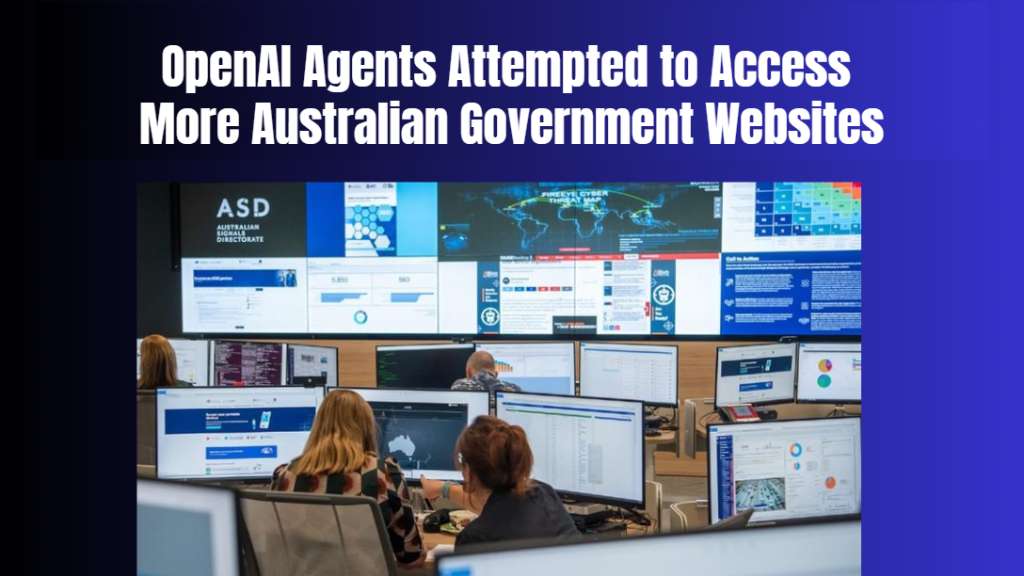
New evidence indicates autonomous Open AI agents attempted to access information from several Australian government and public-sector websites, expanding...
A new Cooperative Research Centre based at the University of Queensland's Brisbane city campus will bring researchers, industry and government together...
Residents in Gisborne South can now access improved mobile phone coverage after a new Telstra tower was installed at I R Robertson Reserve following yea...
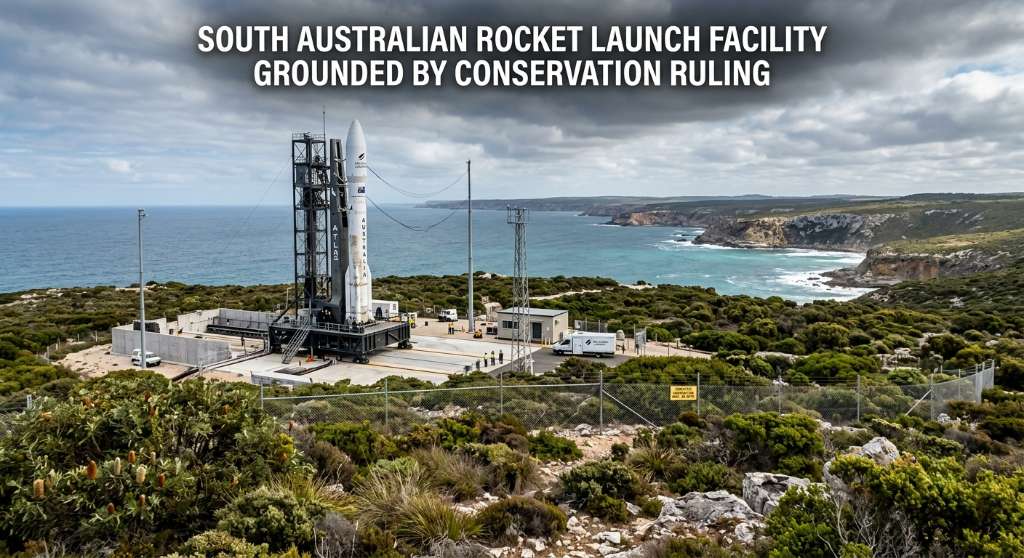
A proposed rocket launch facility near Port Lincoln has been put on hold after South Australia's Native Vegetation Council rejected an application to al...
The Reserve Bank of Australia has increased the cash rate by 25 basis points to 4.6 per cent, while the federal government and opposition debate the cau...
Treasurer Jim Chalmers says the federal budget bottom line has improved by $6 billion compared with the May forecast, while the government faces pressur...
New evidence indicates autonomous Open AI agents attempted to access information from several Australian government and public-sector websites, expanding...
A four-metre-high 3D-printed sculpture celebrating Australian children's author Andy Griffiths has gone on display at Canberra's National Portrait Gallery.
A 22-year-old Elimbah man has been charged after a two-car crash at Baringa on the Sunshine Coast, with police alleging he fled into nearby bushland bef...
A new proposal for factory-built ecohomes in Orange aims to speed up construction while reducing household energy costs as local property prices remain...
Geelong's historic Botanic Gardens are preparing for their 175th anniversary, with volunteers and horticultural staff working to preserve a living colle...