Safety note: Admin approval is an initial review, not a guarantee that every detail is correct. Check important or urgent claims with official sources and report anything inaccurate or unsafe.
Source and credit: Contributor's own report
‘Freedom Day’ for Hantavirus Cruise Passengers as Bullsbrook Quarantine Ends - Perth, WA
Smart summary
Six travellers quarantined in Western Australia after exposure to a deadly hantavirus outbreak aboard the cruise ship MV Hondius have been released after completing a 42-day isolation period without testing positive.
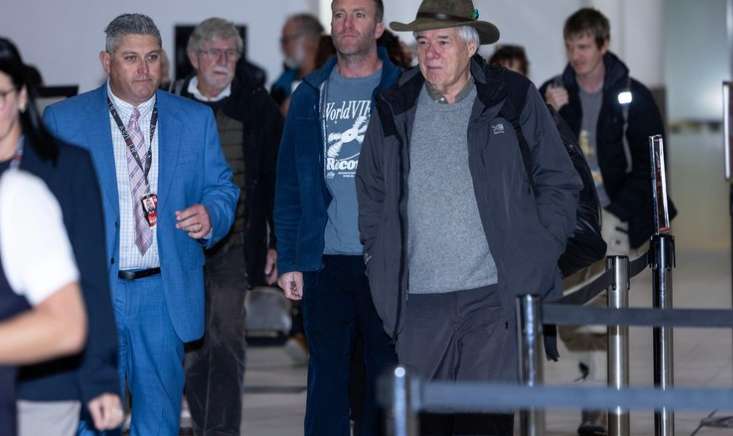
Six passengers quarantined at the Centre for National Resilience in Bullsbrook, north-east of Perth, have been cleared to return home after completing one of Australia's strictest recent quarantine operations. The group had been exposed to a hantavirus outbreak linked to the expedition cruise ship MV Hondius.
The travellers — five Australians and one New Zealander — arrived at the quarantine facility on May 15 after being evacuated from the cruise ship, which was affected by an outbreak of the rare Andes hantavirus strain. Health authorities initially planned a shorter quarantine period but later extended it to June 23 after additional infections were detected among other passengers overseas.
The outbreak aboard the ship resulted in multiple infections and three deaths internationally, prompting an extensive global public health response. The World Health Organization identified the outbreak as involving the Andes strain of hantavirus, a rare form capable of limited person-to-person transmission.
Australian health authorities adopted a cautious approach, requiring the six travellers to complete the full 42-day incubation period in quarantine. Throughout their stay, the passengers underwent repeated testing and medical monitoring, with all tests returning negative results.
Federal Health Minister Mark Butler previously described the operation as one of the strongest responses undertaken globally to the outbreak. The Bullsbrook facility, originally established during the COVID-19 pandemic, was used to ensure there was no risk of community transmission.
Australia's Chief Medical Officer Michael Kidd formally cleared the passengers for travel after the quarantine period ended. The group was transported to Perth Airport and allowed to return home without any further isolation requirements. Health officials confirmed no additional monitoring would be necessary.
The release marks the conclusion of Australia's direct quarantine response to the cruise ship outbreak. Similar monitoring programs were conducted in other countries, including the United States, where exposed passengers also completed 42-day quarantine periods before being released.
Health authorities say the successful completion of quarantine without any infections among the Australian group demonstrates the effectiveness of the country's biosecurity and public health systems. The operation was closely watched internationally because of the rarity of the virus and concerns about potential human-to-human transmission.
QuarantineHealthOutbreakPassengersCruise
Six passengers quarantined at the Centre for National Resilience in Bullsbrook, north-east of Perth, have been cleared to return home after completing one of Australia's strictest recent quarantine operations. The group had been exposed to a hantavirus outbreak linked to the expedition cruise ship MV Hondius.
The travellers — five Australians and one New Zealander — arrived at the quarantine facility on May 15 after being evacuated from the cruise ship, which was affected by an outbreak of the rare Andes hantavirus strain. Health authorities initially planned a shorter quarantine period but later extended it to June 23 after additional infections were detected among other passengers overseas.
The outbreak aboard the ship resulted in multiple infections and three deaths internationally, prompting an extensive global public health response. The World Health Organization identified the outbreak as involving the Andes strain of hantavirus, a rare form capable of limited person-to-person transmission.
Australian health authorities adopted a cautious approach, requiring the six travellers to complete the full 42-day incubation period in quarantine. Throughout their stay, the passengers underwent repeated testing and medical monitoring, with all tests returning negative results.
Federal Health Minister Mark Butler previously described the operation as one of the strongest responses undertaken globally to the outbreak. The Bullsbrook facility, originally established during the COVID-19 pandemic, was used to ensure there was no risk of community transmission.
Australia's Chief Medical Officer Michael Kidd formally cleared the passengers for travel after the quarantine period ended. The group was transported to Perth Airport and allowed to return home without any further isolation requirements. Health officials confirmed no additional monitoring would be necessary.
The release marks the conclusion of Australia's direct quarantine response to the cruise ship outbreak. Similar monitoring programs were conducted in other countries, including the United States, where exposed passengers also completed 42-day quarantine periods before being released.
Health authorities say the successful completion of quarantine without any infections among the Australian group demonstrates the effectiveness of the country's biosecurity and public health systems. The operation was closely watched internationally because of the rarity of the virus and concerns about potential human-to-human transmission.
A Chinese private processor has purchased 68,000 tonnes of new-season Australian canola for shipment in March, marking the first known private-sector pu...
Darwin Northern Territory · Other News · 01 Sep 2026
A scenic hike through Butterfly Gorge in the Northern Territory turned into a frightening experience when a buffalo charged at two hikers. ABC Darwin reported the story today, 1...
Coffs Harbour New South Wales · Other News · 01 Sep 2026
A Safe Work NSW inspection blitz across the Coffs Harbour region has uncovered dozens of workplace-safety issues in the horticulture industry. The operation followed concerns ab...
Australian tennis player Talia Gibson has reached her first WTA Tour-level singles final at the Singapore Open after Tatiana Prozorova withdrew from the...
Drivers stopping to pick or photograph colourful everlasting wildflowers along Western Australia’s Bussell Highway are being warned about serious road-s...
Three separate earthquakes were recorded near Port Hedland in Western Australia over the weekend, with more than 100 reports submitted to Geoscience Aus...
A growing number of young Australians are taking up birdwatching, bringing fresh interest to the Broome Bird Observatory and the migratory shorebirds of...
A Sydney patient says he spent 23 hours waiting on a chair at Westmead Hospital's emergency department, while new figures show continuing pressure on th...
Three people, including a 14-year-old girl, have died following a multi-vehicle collision on the Western Highway near Ledcourt in Victoria's north-west.
A 50-year-old man has died after being struck by a vehicle in Fernvale, west of Brisbane, with police launching a homicide investigation and arresting a...
Multiple Rural Fire Service trucks were damaged after a planned hazard reduction burn at Wedderburn in Sydney's south-west escaped containment on Saturday.