Green Ammonia Used to Refuel Ship at Port Hedland in Australian First
By Chloe · Published 04 Nov 2026 · Updated 04 Nov 2026
Port Hedland, WA · Western Australia News
Safety note: Admin approval is an initial review, not a guarantee that every detail is correct. Check important or urgent claims with official sources and report anything inaccurate or unsafe.
Source and credit: Contributor's own report
Green Ammonia Used to Refuel Ship at Port Hedland in Australian First - Port Hedland, WA
Smart summary
A bulk carrier has been refuelled with green ammonia at Port Hedland, marking a major milestone for Australia's emerging alternative marine-fuel industry.
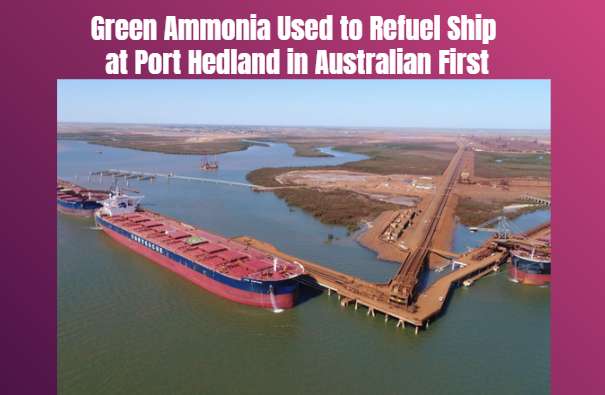
Port Hedland has recorded a significant development in Australia's efforts to explore lower-emission fuels for the shipping industry, with a bulk carrier refuelled using green ammonia for the first time at an Australian port.
The vessel, the 300-metre-long Mineral Europa, received the alternative fuel through a ship-to-ship transfer at Port Hedland. The operation involved transferring fuel from another vessel rather than relying on conventional refuelling infrastructure on the wharf.
The milestone is important because the shipping industry is examining ways to reduce emissions from vessels that transport large quantities of goods and raw materials around the world. Bulk carriers are a major part of international trade, moving commodities such as minerals, agricultural products and other essential materials between countries.
Green ammonia is produced using hydrogen made with renewable electricity and nitrogen separated from the air. Unlike conventional fossil-fuel-based ammonia production, the process aims to reduce emissions associated with manufacturing the fuel.
Ammonia is attracting attention as a possible alternative marine fuel because it can store and transport energy in liquid form under suitable conditions. However, its use also presents technical and safety challenges. Ammonia is toxic, so handling, storage, transfer procedures and crew training are important considerations for any operation involving the substance.
The Port Hedland operation was carried out through a ship-to-ship transfer, demonstrating a method that could become relevant to future alternative-fuel supply arrangements. Developing reliable refuelling systems will be an important part of making new marine fuels practical for commercial shipping.
Pilbara Ports Authority chief executive Samuel McSkimming described the event as an important step for the industry. He said the development could create opportunities not only to reduce emissions from shipping but also to manufacture ammonia domestically.
The Pilbara region is already an important centre for Australia's resources and export industries. Port Hedland handles substantial shipping activity, making it a significant location for testing new approaches to maritime operations. If alternative fuels become more widely adopted, ports such as Port Hedland could play a role in supplying vessels and supporting new industrial investment.
The development may also create opportunities for Australian producers to participate in the growing market for lower-emission fuels. However, wider adoption will depend on production costs, infrastructure, safety requirements, fuel availability and whether shipping operators can use ammonia reliably at commercial scale.
The Mineral Europa was scheduled to depart for China on the day of the report. Its refuelling marks a notable demonstration of green ammonia use at an Australian port, while further work will be needed before the fuel becomes a routine option for international shipping.
AmmoniaPortShippingFuelHedland
Port Hedland has recorded a significant development in Australia's efforts to explore lower-emission fuels for the shipping industry, with a bulk carrier refuelled using green ammonia for the first time at an Australian port.
The vessel, the 300-metre-long Mineral Europa, received the alternative fuel through a ship-to-ship transfer at Port Hedland. The operation involved transferring fuel from another vessel rather than relying on conventional refuelling infrastructure on the wharf.
The milestone is important because the shipping industry is examining ways to reduce emissions from vessels that transport large quantities of goods and raw materials around the world. Bulk carriers are a major part of international trade, moving commodities such as minerals, agricultural products and other essential materials between countries.
Green ammonia is produced using hydrogen made with renewable electricity and nitrogen separated from the air. Unlike conventional fossil-fuel-based ammonia production, the process aims to reduce emissions associated with manufacturing the fuel.
Ammonia is attracting attention as a possible alternative marine fuel because it can store and transport energy in liquid form under suitable conditions. However, its use also presents technical and safety challenges. Ammonia is toxic, so handling, storage, transfer procedures and crew training are important considerations for any operation involving the substance.
The Port Hedland operation was carried out through a ship-to-ship transfer, demonstrating a method that could become relevant to future alternative-fuel supply arrangements. Developing reliable refuelling systems will be an important part of making new marine fuels practical for commercial shipping.
Pilbara Ports Authority chief executive Samuel McSkimming described the event as an important step for the industry. He said the development could create opportunities not only to reduce emissions from shipping but also to manufacture ammonia domestically.
The Pilbara region is already an important centre for Australia's resources and export industries. Port Hedland handles substantial shipping activity, making it a significant location for testing new approaches to maritime operations. If alternative fuels become more widely adopted, ports such as Port Hedland could play a role in supplying vessels and supporting new industrial investment.
The development may also create opportunities for Australian producers to participate in the growing market for lower-emission fuels. However, wider adoption will depend on production costs, infrastructure, safety requirements, fuel availability and whether shipping operators can use ammonia reliably at commercial scale.
The Mineral Europa was scheduled to depart for China on the day of the report. Its refuelling marks a notable demonstration of green ammonia use at an Australian port, while further work will be needed before the fuel becomes a routine option for international shipping.
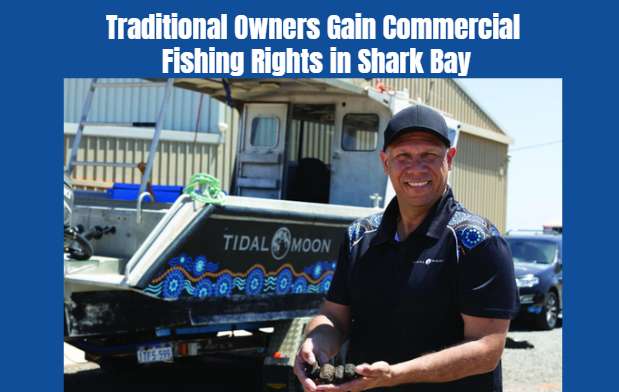
Malgana Traditional Owners have received approval to harvest sea cucumbers in Shark Bay, creating a potential opportunity for a new sustainable fishing...
A fresh warning from Australia’s superannuation regulator has raised concerns about complaints and service problems across the retirement savings industry.
The Reserve Bank of Australia has increased the official cash rate by 0.25 percentage points, adding pressure on mortgage holders and businesses facing...
Western Australian Women's Interests Minister Simone McGurk says online threats and abusive messages directed at female politicians remain widespread, d...
Holidaymakers in Western Australia's Kimberley region have received convincing phishing messages containing genuine accommodation booking details after...
A 59-year-old convicted sex offender is scheduled for release in December despite remaining classified as a high-risk offender. The Supreme Court has im...
Around 8,000 customers in Western Australia's coastal city of Albany will need to replace gas appliances with electric alternatives or switch to bottled...
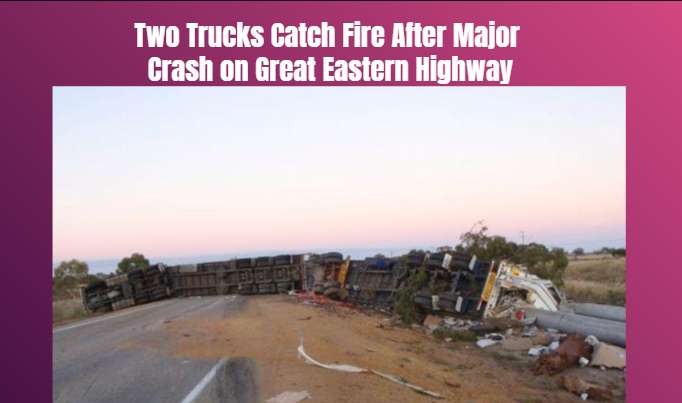
A collision involving two heavy vehicles has closed part of the Great Eastern Highway near Meckering in Western Australia's Wheatbelt, prompting an emer...
Residents are being urged to take precautions as high temperatures affect several regions, with some inland communities expected to experience maximum t...
The Shire of Dundas has approved emergency repairs after runway damage disrupted flights carrying fly-in, fly-out mining workers, forcing many to travel...
Northern Territory Police investigate a violent overnight disturbance involving up to 20 people, with reports of weapons, property damage and a vehicle...