Safety note: Admin approval is an initial review, not a guarantee that every detail is correct. Check important or urgent claims with official sources and report anything inaccurate or unsafe.
Source and credit: Contributor's own report
Landmark Federal Court case challenges approval of North West Shelf gas project extension - Karratha, WA
Smart summary
A landmark Federal Court case is examining whether the federal government's approval of Woodside's North West Shelf gas project extension was made lawfully, with climate impacts, Indigenous heritage and ministerial de...
One of Australia's most significant environmental legal battles is unfolding in the Federal Court, where environmental organisations are seeking to overturn the federal government's approval of Woodside Energy's North West Shelf gas project extension in Western Australia.
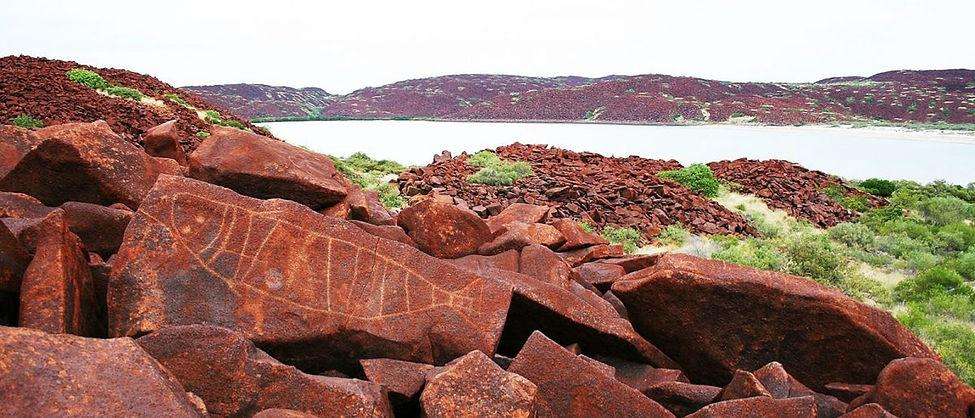
The case centres on the Albanese Government's decision to allow the North West Shelf Project to continue operating until 2070. Environmental groups argue the approval process failed to properly assess the project's climate impacts and potential effects on the internationally significant Aboriginal rock art of Murujuga (Burrup Peninsula).
The challenge has been brought by the Australian Conservation Foundation (ACF) and Friends of Australian Rock Art (FARA). They argue Environment Minister Murray Watt did not properly apply Australia's environmental laws when approving the extension and failed to adequately consider greenhouse gas emissions and cultural heritage impacts.
During several days of Federal Court hearings, lawyers examined whether the minister's decision-making process complied with the Environment Protection and Biodiversity Conservation (EPBC) Act. The proceedings also explored allegations relating to ministerial bias, communications between government officials and Woodside, and whether all relevant environmental factors were properly assessed.
The North West Shelf Project is Australia's largest and longest-running liquefied natural gas (LNG) operation. Located near Karratha, it supplies domestic gas to Western Australia and exports LNG to international markets. Supporters argue the project is vital for energy security, employment and the regional economy.
Opponents describe the extension as one of Australia's most significant fossil fuel decisions. They argue continued operation could contribute billions of tonnes of greenhouse gas emissions over coming decades and increase industrial pressure on the nearby Murujuga Cultural Landscape, home to one of the world's oldest collections of Aboriginal rock art.
The case has also attracted international attention after a United Nations Special Rapporteur was granted permission to provide submissions to the court as a "friend of the court". The intervention argues that Australia's environmental decisions should be consistent with evolving international obligations relating to climate change and human rights.
Woodside maintains that the project received approval following an extensive environmental assessment conducted over several years and says it will continue to defend the approval in court. The company argues the project remains important to Australia's economy and energy supply.
The Federal Court is not deciding whether the project is environmentally good or bad. Instead, it is determining whether the approval process complied with Australian law. If the court finds legal errors occurred, the minister's approval could be set aside and reconsidered. If the challenge fails, the approval allowing operations to continue until 2070 will remain in place.
Legal experts say the outcome could become one of Australia's most influential environmental law decisions, shaping how future major energy projects are assessed, particularly regarding climate change and Indigenous cultural heritage.
ProjectApprovalCourtEnvironmentalFederal
One of Australia's most significant environmental legal battles is unfolding in the Federal Court, where environmental organisations are seeking to overturn the federal government's approval of Woodside Energy's North West Shelf gas project extension in Western Australia.
The case centres on the Albanese Government's decision to allow the North West Shelf Project to continue operating until 2070. Environmental groups argue the approval process failed to properly assess the project's climate impacts and potential effects on the internationally significant Aboriginal rock art of Murujuga (Burrup Peninsula).
The challenge has been brought by the Australian Conservation Foundation (ACF) and Friends of Australian Rock Art (FARA). They argue Environment Minister Murray Watt did not properly apply Australia's environmental laws when approving the extension and failed to adequately consider greenhouse gas emissions and cultural heritage impacts.
During several days of Federal Court hearings, lawyers examined whether the minister's decision-making process complied with the Environment Protection and Biodiversity Conservation (EPBC) Act. The proceedings also explored allegations relating to ministerial bias, communications between government officials and Woodside, and whether all relevant environmental factors were properly assessed.
The North West Shelf Project is Australia's largest and longest-running liquefied natural gas (LNG) operation. Located near Karratha, it supplies domestic gas to Western Australia and exports LNG to international markets. Supporters argue the project is vital for energy security, employment and the regional economy.
Opponents describe the extension as one of Australia's most significant fossil fuel decisions. They argue continued operation could contribute billions of tonnes of greenhouse gas emissions over coming decades and increase industrial pressure on the nearby Murujuga Cultural Landscape, home to one of the world's oldest collections of Aboriginal rock art.
The case has also attracted international attention after a United Nations Special Rapporteur was granted permission to provide submissions to the court as a "friend of the court". The intervention argues that Australia's environmental decisions should be consistent with evolving international obligations relating to climate change and human rights.
Woodside maintains that the project received approval following an extensive environmental assessment conducted over several years and says it will continue to defend the approval in court. The company argues the project remains important to Australia's economy and energy supply.
The Federal Court is not deciding whether the project is environmentally good or bad. Instead, it is determining whether the approval process complied with Australian law. If the court finds legal errors occurred, the minister's approval could be set aside and reconsidered. If the challenge fails, the approval allowing operations to continue until 2070 will remain in place.
Legal experts say the outcome could become one of Australia's most influential environmental law decisions, shaping how future major energy projects are assessed, particularly regarding climate change and Indigenous cultural heritage.
The Federal Government is preparing new measures targeting temporary visas, visa overstayers, international students and visa-hopping, while maintaining...
One Nation’s proposed major reduction in migration has triggered warnings that a sharp cut to population growth could weaken Australia’s economy and cre...
Two teenagers have appeared in a Perth court after allegedly breaking into a crocodile enclosure and attacking the 400-kilogram reptile with a metal pole.
Cairns Regional Council has unanimously voted to seek $400,000 in Queensland Government funding for a program designed to connect local businesses with the region’s growing film...
An automated external defibrillator and memorial plaque have been installed at Ellery Creek Big Hole following the death of disability advocate Ellen Fr...
Queensland firefighters spent several hours monitoring a significant grass fire at Mary Kinross Park in Bargara, near Bundaberg, after the blaze broke out on Wednesday evening....