Safety note: Admin approval is an initial review, not a guarantee that every detail is correct. Check important or urgent claims with official sources and report anything inaccurate or unsafe.
Source and credit: Contributor's own report
Albanese Government Set to Tighten Australia’s Migration System as Net Migration Target Comes Under Pressure - Canberra, ACT
Smart summary
The Federal Government is preparing new measures targeting temporary visas, visa overstayers, international students and visa-hopping, while maintaining the permanent migration program at 185,000 places.
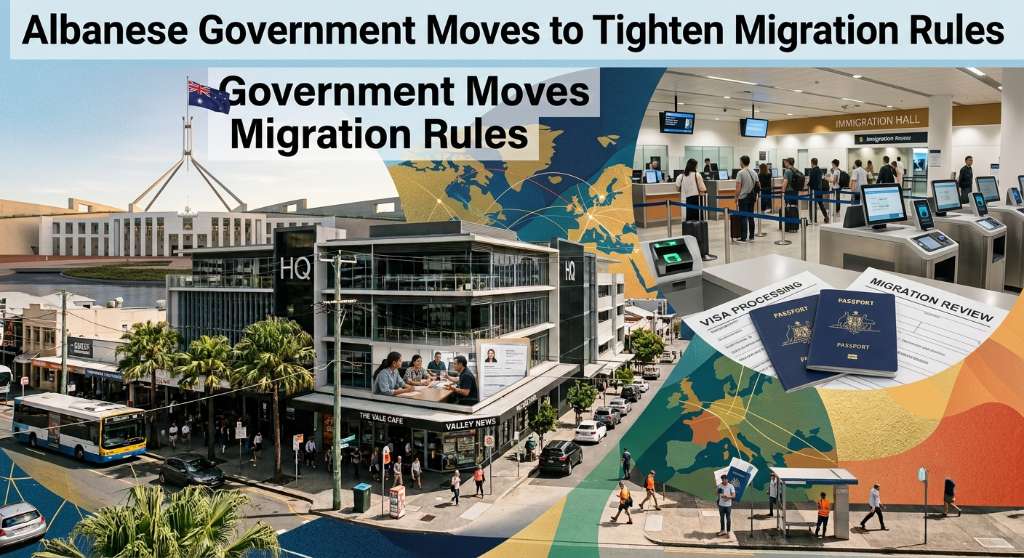
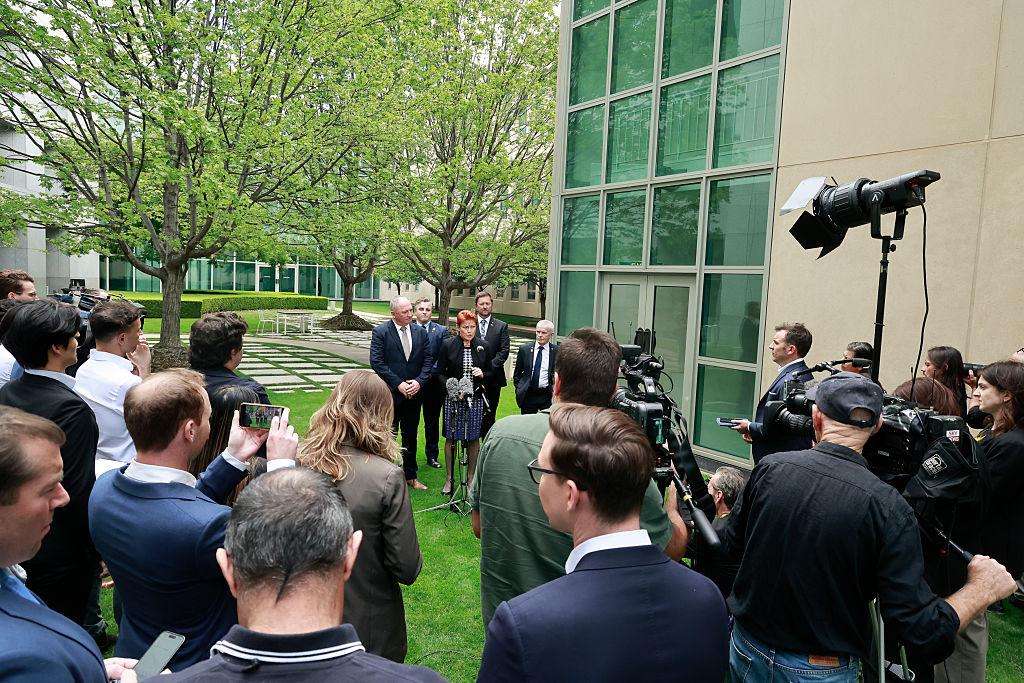
The Albanese Government is preparing a significant overhaul of Australia's migration system, with Home Affairs Minister Tony Burke expected to outline new measures aimed at reducing temporary migration and bringing net overseas migration closer to the government's planned level. The announcement is expected to focus on the question of who enters Australia, who remains in the country and who is required to leave when their visa expires.
One of the central objectives is to reduce net overseas migration (NOM). Current reporting indicates that the government is working towards reducing NOM from around 305,000 to approximately 225,000 over two years, with the longer-term objective of bringing population growth from migration closer to pre-COVID levels by 2027–28.
The proposed changes are expected to concentrate particularly on temporary migration. Among the measures being considered are tighter rules affecting international students and their family members, restrictions on people moving between different visa categories after their original visa expires, and stronger enforcement against visa overstayers.
The government has also been changing the way some visa applications are processed. Recent reporting says that offshore working-holiday visa applications have been slowed while priority has been given to applicants already in Australia and to sectors such as health and construction. This has generated concern from parts of the agricultural and regional business sectors, which rely heavily on temporary workers and working-holiday makers.
The changes come amid a broader political debate about Australia's population growth, housing supply, infrastructure and access to essential services. Supporters of tighter migration controls argue that lower temporary migration could reduce pressure on housing and public services. Critics, including representatives of business and agriculture, have warned that restricting access to overseas workers could create labour shortages and affect economic activity. These are competing policy assessments rather than settled facts.
Importantly, the government's permanent Migration Program remains set at 185,000 places. The government has previously stated that the program is focused strongly on skilled migration.
The migration debate has also intensified because of competing proposals from other political parties. One Nation, for example, has proposed cutting Australia's temporary migrant population by more than 750,000 over three years, while the Albanese Government's approach is substantially different and focuses on reducing migration while maintaining a permanent migration program.
The Coalition has also been pressing the government for tougher measures. Recent discussions between Prime Minister Anthony Albanese and opposition representatives have included demands concerning visa-hopping, deportation of serious criminals, visa eligibility and border security.
Another important point is that refugee and humanitarian migration is a separate part of the debate. In August, Albanese confirmed that Australia's annual refugee intake would not be reduced for the following financial year after reports of a possible reduction.
Overall, the current policy direction is focused on reducing temporary migration, tightening visa compliance, controlling visa switching and managing net overseas migration, while retaining a substantial permanent skilled-migration program. The precise details depend on the government's formal announcement and any legislation or regulations that follow.
MigrationGovernmentVisaTemporaryAlbanese
The Albanese Government is preparing a significant overhaul of Australia's migration system, with Home Affairs Minister Tony Burke expected to outline new measures aimed at reducing temporary migration and bringing net overseas migration closer to the government's planned level. The announcement is expected to focus on the question of who enters Australia, who remains in the country and who is required to leave when their visa expires.
One of the central objectives is to reduce net overseas migration (NOM). Current reporting indicates that the government is working towards reducing NOM from around 305,000 to approximately 225,000 over two years, with the longer-term objective of bringing population growth from migration closer to pre-COVID levels by 2027–28.
The proposed changes are expected to concentrate particularly on temporary migration. Among the measures being considered are tighter rules affecting international students and their family members, restrictions on people moving between different visa categories after their original visa expires, and stronger enforcement against visa overstayers.
The government has also been changing the way some visa applications are processed. Recent reporting says that offshore working-holiday visa applications have been slowed while priority has been given to applicants already in Australia and to sectors such as health and construction. This has generated concern from parts of the agricultural and regional business sectors, which rely heavily on temporary workers and working-holiday makers.
The changes come amid a broader political debate about Australia's population growth, housing supply, infrastructure and access to essential services. Supporters of tighter migration controls argue that lower temporary migration could reduce pressure on housing and public services. Critics, including representatives of business and agriculture, have warned that restricting access to overseas workers could create labour shortages and affect economic activity. These are competing policy assessments rather than settled facts.
Importantly, the government's permanent Migration Program remains set at 185,000 places. The government has previously stated that the program is focused strongly on skilled migration.
The migration debate has also intensified because of competing proposals from other political parties. One Nation, for example, has proposed cutting Australia's temporary migrant population by more than 750,000 over three years, while the Albanese Government's approach is substantially different and focuses on reducing migration while maintaining a permanent migration program.
The Coalition has also been pressing the government for tougher measures. Recent discussions between Prime Minister Anthony Albanese and opposition representatives have included demands concerning visa-hopping, deportation of serious criminals, visa eligibility and border security.
Another important point is that refugee and humanitarian migration is a separate part of the debate. In August, Albanese confirmed that Australia's annual refugee intake would not be reduced for the following financial year after reports of a possible reduction.
Overall, the current policy direction is focused on reducing temporary migration, tightening visa compliance, controlling visa switching and managing net overseas migration, while retaining a substantial permanent skilled-migration program. The precise details depend on the government's formal announcement and any legislation or regulations that follow.
One Nation’s proposed major reduction in migration has triggered warnings that a sharp cut to population growth could weaken Australia’s economy and cre...
Veteran journalist enters the October election race, promising a less partisan approach to housing, transport, tourism and the Macquarie Point stadium.
One Nation’s proposed major reduction in migration has triggered warnings that a sharp cut to population growth could weaken Australia’s economy and cre...
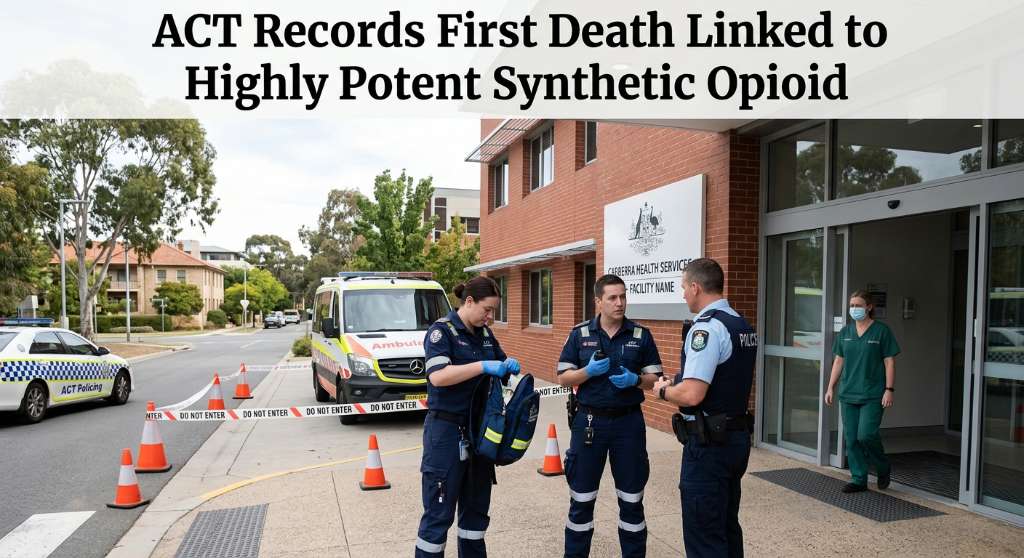
A Canberra woman has become the first person in the ACT whose death has been linked to a highly potent synthetic opioid, prompting renewed concern about...
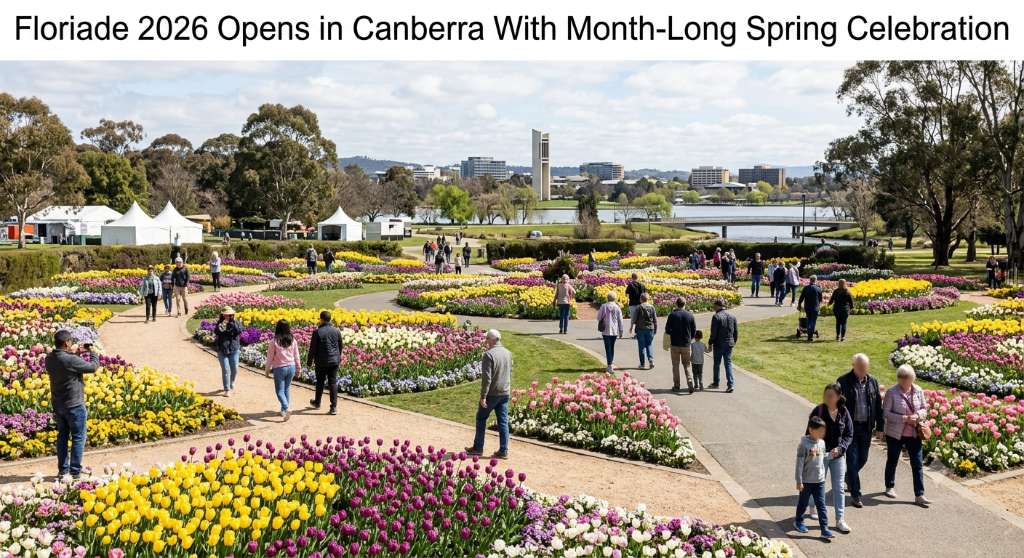
Canberra’s Commonwealth Park has welcomed visitors for the annual Floriade festival, bringing flowers, entertainment and spring activities to the city.
Cairns Regional Council has unanimously voted to seek $400,000 in Queensland Government funding for a program designed to connect local businesses with the region’s growing film...
An automated external defibrillator and memorial plaque have been installed at Ellery Creek Big Hole following the death of disability advocate Ellen Fr...
Queensland firefighters spent several hours monitoring a significant grass fire at Mary Kinross Park in Bargara, near Bundaberg, after the blaze broke out on Wednesday evening....