Safety note: Admin approval is an initial review, not a guarantee that every detail is correct. Check important or urgent claims with official sources and report anything inaccurate or unsafe.
Source and credit: Contributor's own report
One Nation’s Migration Cuts Add Up to a Deep Recession - Canberra, ACT
Smart summary
One Nation’s proposed major reduction in migration has triggered warnings that a sharp cut to population growth could weaken Australia’s economy and create significant pressure across housing, jobs and government fina...
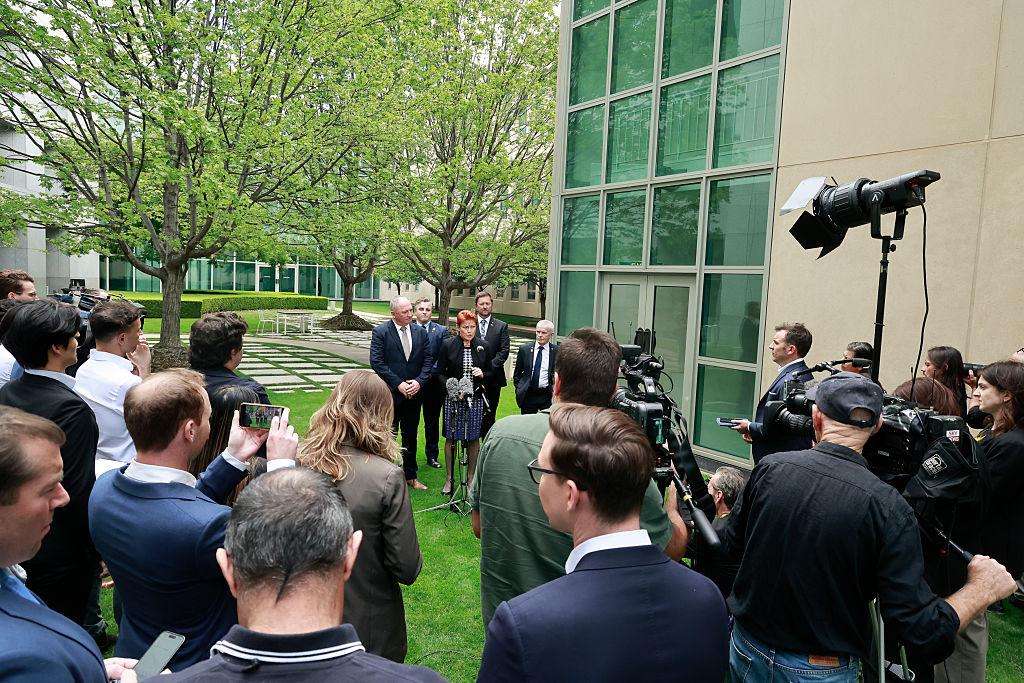
One Nation has stepped up its push for major changes to Australia’s migration system, proposing substantial reductions to immigration as the party seeks to make migration a central issue in national political debate.
The proposal has generated strong criticism from business and economic representatives, who argue that dramatically reducing migration could have consequences extending well beyond population growth. The debate is increasingly focused on whether a sharp reduction in new arrivals could weaken economic activity at a time when Australia is already dealing with significant pressures on productivity, housing affordability and government finances.
Migration has traditionally contributed to Australia's population and workforce growth. New arrivals increase demand for housing, transport, retail, education, health services and other parts of the economy. They also add workers across industries experiencing labour shortages.
One Nation's proposal would substantially change that model. The party argues that lower migration would ease pressure on housing and infrastructure and give governments more time to address shortages and affordability problems. Supporters of the approach say population growth has contributed to competition for homes and increased pressure on public services.
However, critics argue that migration is also an important source of workers and economic demand. A rapid reduction could therefore create problems for industries that depend on skilled and temporary workers.
Business representatives have warned that uncertainty surrounding migration policy could affect investment decisions and economic planning. Companies make long-term decisions based partly on expectations about population growth, available workers and consumer demand.
Housing is another major part of the debate. Lower migration could eventually reduce some demand for housing, particularly in areas experiencing rapid population growth. But economists and industry groups have pointed out that migration is only one factor behind Australia's housing shortage. Construction capacity, planning restrictions, land availability, infrastructure and financing conditions also influence housing supply and prices.
The proposal therefore raises a broader question about how Australia should balance population growth with infrastructure investment and economic capacity.
A major reduction in migration could also affect government revenue. Migrants who enter the workforce contribute through income taxes and other economic activity, while population growth can increase demand for government services. The overall fiscal effect depends on the characteristics of migrants, their employment and how quickly they become established in Australia.
The political debate comes as immigration remains a highly sensitive issue among Australian voters. Concerns about housing costs, population growth and pressure on infrastructure have increased political attention on migration levels.
One Nation's position is expected to put additional pressure on the major political parties to explain their own migration policies and how they intend to manage Australia's population growth.
The economic consequences of the proposed cuts remain a major point of disagreement. Supporters see lower migration as a way to reduce pressure on housing and services, while critics warn that a dramatic reduction could weaken economic growth and deepen existing challenges.
The debate is now likely to continue as the federal government, opposition parties, business groups and economists assess how a significantly different migration policy would affect Australia's economy.
MigrationGrowthHousingPopulationEconomic
One Nation has stepped up its push for major changes to Australia’s migration system, proposing substantial reductions to immigration as the party seeks to make migration a central issue in national political debate.
The proposal has generated strong criticism from business and economic representatives, who argue that dramatically reducing migration could have consequences extending well beyond population growth. The debate is increasingly focused on whether a sharp reduction in new arrivals could weaken economic activity at a time when Australia is already dealing with significant pressures on productivity, housing affordability and government finances.
Migration has traditionally contributed to Australia's population and workforce growth. New arrivals increase demand for housing, transport, retail, education, health services and other parts of the economy. They also add workers across industries experiencing labour shortages.
One Nation's proposal would substantially change that model. The party argues that lower migration would ease pressure on housing and infrastructure and give governments more time to address shortages and affordability problems. Supporters of the approach say population growth has contributed to competition for homes and increased pressure on public services.
However, critics argue that migration is also an important source of workers and economic demand. A rapid reduction could therefore create problems for industries that depend on skilled and temporary workers.
Business representatives have warned that uncertainty surrounding migration policy could affect investment decisions and economic planning. Companies make long-term decisions based partly on expectations about population growth, available workers and consumer demand.
Housing is another major part of the debate. Lower migration could eventually reduce some demand for housing, particularly in areas experiencing rapid population growth. But economists and industry groups have pointed out that migration is only one factor behind Australia's housing shortage. Construction capacity, planning restrictions, land availability, infrastructure and financing conditions also influence housing supply and prices.
The proposal therefore raises a broader question about how Australia should balance population growth with infrastructure investment and economic capacity.
A major reduction in migration could also affect government revenue. Migrants who enter the workforce contribute through income taxes and other economic activity, while population growth can increase demand for government services. The overall fiscal effect depends on the characteristics of migrants, their employment and how quickly they become established in Australia.
The political debate comes as immigration remains a highly sensitive issue among Australian voters. Concerns about housing costs, population growth and pressure on infrastructure have increased political attention on migration levels.
One Nation's position is expected to put additional pressure on the major political parties to explain their own migration policies and how they intend to manage Australia's population growth.
The economic consequences of the proposed cuts remain a major point of disagreement. Supporters see lower migration as a way to reduce pressure on housing and services, while critics warn that a dramatic reduction could weaken economic growth and deepen existing challenges.
The debate is now likely to continue as the federal government, opposition parties, business groups and economists assess how a significantly different migration policy would affect Australia's economy.
The Federal Government is preparing new measures targeting temporary visas, visa overstayers, international students and visa-hopping, while maintaining...
Veteran journalist enters the October election race, promising a less partisan approach to housing, transport, tourism and the Macquarie Point stadium.
The Federal Government is preparing new measures targeting temporary visas, visa overstayers, international students and visa-hopping, while maintaining...
A Canberra woman has become the first person in the ACT whose death has been linked to a highly potent synthetic opioid, prompting renewed concern about...
Canberra’s Commonwealth Park has welcomed visitors for the annual Floriade festival, bringing flowers, entertainment and spring activities to the city.
Cairns Regional Council has unanimously voted to seek $400,000 in Queensland Government funding for a program designed to connect local businesses with the region’s growing film...
An automated external defibrillator and memorial plaque have been installed at Ellery Creek Big Hole following the death of disability advocate Ellen Fr...
Queensland firefighters spent several hours monitoring a significant grass fire at Mary Kinross Park in Bargara, near Bundaberg, after the blaze broke out on Wednesday evening....