Safety note: Admin approval is an initial review, not a guarantee that every detail is correct. Check important or urgent claims with official sources and report anything inaccurate or unsafe.
Large Saltwater Crocodile Captured Near Broome’s Cable Beach
Smart summary
A 3.5-metre saltwater crocodile that had been spotted repeatedly around Broome in recent weeks has been captured and relocated by Parks and Wildlife Kimberley and Yawuru Rangers. The crocodile had prompted periodic cl...
A 3.5-metre saltwater crocodile that had been spotted repeatedly around Broome in recent weeks has been captured and relocated by Parks and Wildlife Kimberley and Yawuru Rangers. The crocodile had prompted periodic closures of beaches around the popular tourist town, including Cable Beach.
The latest sighting occurred on Saturday when the crocodile was seen approximately 100 metres offshore, just north of Cable Beach. Rangers decided that capturing and relocating the animal was the safest option because it was within Broome’s designated crocodile-control area.
Four rangers were involved in the capture operation. Authorities described the process as inherently risky and took precautions to secure the crocodile and reduce risks to both the animal and people involved.
The crocodile was successfully captured and transported to Malcolm Douglas Crocodile Park, located on the outskirts of Broome. Authorities said the nearby location allowed the animal to be relocated quickly while providing a suitable environment for it.
Several beach closures had occurred during the previous weeks because of sightings of the crocodile. The closures were intended to protect swimmers, tourists, boat users and other people using the coastline.
The incident attracted considerable attention from locals and tourists, with people gathering around Cable Beach hoping to see the large reptile during the capture operation.
Authorities have reminded people in northern Western Australia that crocodiles can occur in coastal waters and that visitors should remain vigilant in areas known as crocodile habitat.
The successful capture means Cable Beach has been able to reopen, allowing tourism and beach activities to resume. Local businesses welcomed the reopening because Cable Beach is an important attraction for Broome's tourism industry.
The crocodile was considered relatively large by Kimberley standards, and its repeated presence close to popular recreational areas made authorities concerned about the potential risk to people.
Parks and Wildlife officers said crocodiles occurring within Broome's crocodile-risk management area can be captured and relocated when they are considered likely to encounter people or show behaviour that could pose a threat.
The latest operation highlights the balance authorities must maintain between protecting the public and managing native wildlife. Crocodiles are an important part of the Kimberley environment, but authorities also have responsibilities to reduce risks where wildlife and people come into close contact.
The capture was completed successfully, and the animal was transported to its new home without the need for further beach closures related to this particular crocodile.
For Broome residents, tourism operators and visitors, the reopening of Cable Beach is welcome news. However, authorities continue to advise people to remain cautious around waterways and follow crocodile warnings.
The incident has also demonstrated the importance of cooperation between Parks and Wildlife officers, Yawuru Rangers and local businesses during wildlife-management operations.
With the crocodile now safely relocated, visitors can return to Cable Beach, while authorities continue monitoring the wider Broome coastline for further crocodile sightings.
CrocodileBeachAuthoritiesBroomeCable
A 3.5-metre saltwater crocodile that had been spotted repeatedly around Broome in recent weeks has been captured and relocated by Parks and Wildlife Kimberley and Yawuru Rangers. The crocodile had prompted periodic closures of beaches around the popular tourist town, including Cable Beach.
The latest sighting occurred on Saturday when the crocodile was seen approximately 100 metres offshore, just north of Cable Beach. Rangers decided that capturing and relocating the animal was the safest option because it was within Broome’s designated crocodile-control area.
Four rangers were involved in the capture operation. Authorities described the process as inherently risky and took precautions to secure the crocodile and reduce risks to both the animal and people involved.
The crocodile was successfully captured and transported to Malcolm Douglas Crocodile Park, located on the outskirts of Broome. Authorities said the nearby location allowed the animal to be relocated quickly while providing a suitable environment for it.
Several beach closures had occurred during the previous weeks because of sightings of the crocodile. The closures were intended to protect swimmers, tourists, boat users and other people using the coastline.
The incident attracted considerable attention from locals and tourists, with people gathering around Cable Beach hoping to see the large reptile during the capture operation.
Authorities have reminded people in northern Western Australia that crocodiles can occur in coastal waters and that visitors should remain vigilant in areas known as crocodile habitat.
The successful capture means Cable Beach has been able to reopen, allowing tourism and beach activities to resume. Local businesses welcomed the reopening because Cable Beach is an important attraction for Broome's tourism industry.
The crocodile was considered relatively large by Kimberley standards, and its repeated presence close to popular recreational areas made authorities concerned about the potential risk to people.
Parks and Wildlife officers said crocodiles occurring within Broome's crocodile-risk management area can be captured and relocated when they are considered likely to encounter people or show behaviour that could pose a threat.
The latest operation highlights the balance authorities must maintain between protecting the public and managing native wildlife. Crocodiles are an important part of the Kimberley environment, but authorities also have responsibilities to reduce risks where wildlife and people come into close contact.
The capture was completed successfully, and the animal was transported to its new home without the need for further beach closures related to this particular crocodile.
For Broome residents, tourism operators and visitors, the reopening of Cable Beach is welcome news. However, authorities continue to advise people to remain cautious around waterways and follow crocodile warnings.
The incident has also demonstrated the importance of cooperation between Parks and Wildlife officers, Yawuru Rangers and local businesses during wildlife-management operations.
With the crocodile now safely relocated, visitors can return to Cable Beach, while authorities continue monitoring the wider Broome coastline for further crocodile sightings.
A vehicle has crashed into a house in Albury, prompting police attendance at a residential property near the intersection of Mate and North streets. The incident was reported to...
A high-profile athlete has returned to court and told the hearing that an alleged unwanted kiss by former broadcaster Alan Jones remained difficult to f...
Work on the $150 million Sydney Town Hall Square project has been paused after the NSW Planning Minister referred the development for review by the Inde...
Broome Western Australia · Community News · 31 Aug 2026
Shinju Matsuri’s Final Week in Broome Broome’s annual Shinju Matsuri festival is entering its final week, with residents and visitors continuing to take part in a program celebr...
Broome Western Australia · Crime News · 29 Jul 2026
A review into the 2025 riot at West Kimberley Regional Prison has come under criticism after it failed to address allegations of se*ual assault said to have occurred during the...
Broome Western Australia · Travel News · 28 Jul 2026
Broome Airport has introduced a new digital parking management system designed to provide a faster, more convenient and efficient experience for passengers travelling through on...
Perth Western Australia · General News · 03 Sep 2026
A series of crashes has disrupted Perth roads this morning as motorists faced wet and damp conditions. One of the incidents occurred on North Lake Road in South Lake at about 5:...
Perth Western Australia · Crime News · 03 Sep 2026
Western Australia Police have launched an urgent search for 34-year-old Patryk Kamal Singh across Perth’s southern suburbs. Police say they are seeking information about his whe...
Perth Western Australia · Technology News · 03 Sep 2026
Western Australia Police have announced that hundreds of fines issued through AI-assisted traffic cameras are being dropped following a review of the technology and enforcement...
Perth Western Australia · Crime News · 03 Sep 2026
WA Police are investigating an alleged assault in Perth after a man was seriously injured during an incident outside a Hungry Jack’s. A 14-year-old boy has been charged followin...
Cairns Regional Council has unanimously voted to seek $400,000 in Queensland Government funding for a program designed to connect local businesses with the region’s growing film...
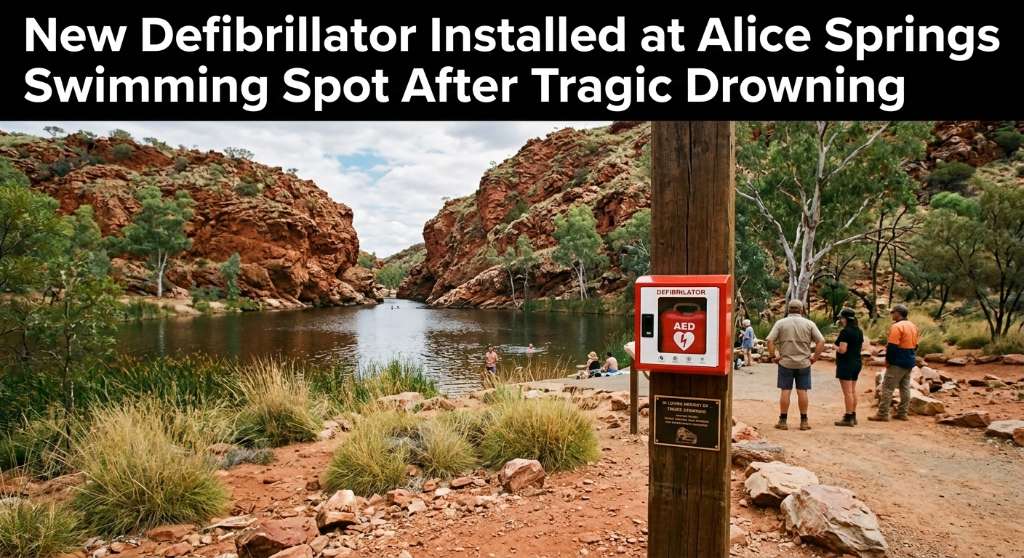
An automated external defibrillator and memorial plaque have been installed at Ellery Creek Big Hole following the death of disability advocate Ellen Fr...
Queensland firefighters spent several hours monitoring a significant grass fire at Mary Kinross Park in Bargara, near Bundaberg, after the blaze broke out on Wednesday evening....