Safety note: Admin approval is an initial review, not a guarantee that every detail is correct. Check important or urgent claims with official sources and report anything inaccurate or unsafe.
Source and credit: Contributor's own report
Li DAR Mapping Uncovers More Than 230,000 Historic Gold Rush Mining Features Across Victoria - Bendigo, VIC
Smart summary
A four-year Geological Survey of Victoria project has revealed hundreds of thousands of previously unrecorded mine shafts and other gold rush relics, improving safety and land management across the state.
A groundbreaking mapping project by the Geological Survey of Victoria (GSV) has dramatically changed understanding of the state's gold rush legacy, identifying an estimated 230,000 historic mining features across Crown land using advanced Li DAR (Light Detection and Ranging) technology. Before the survey, official records listed only about 30,000 mining features, meaning the new project has uncovered around 200,000 previously unmapped sites.
The four-year initiative used aircraft equipped with Li DAR sensors that emit millions of laser pulses toward the ground. By measuring the time taken for the light to return, scientists created highly detailed three-dimensional maps of the landscape. The technology can digitally remove vegetation and buildings, exposing subtle changes in the terrain that reveal hidden mining features dating back to Victoria's gold rush era.
The survey focused on major historic goldfields, including the Golden Plains, Central Goldfields, Greater Melbourne and High Country regions. It identified a wide variety of mining remnants, including vertical mine shafts, horizontal tunnels (adits), open stopes, surface excavations, pits, mullock heaps and other infrastructure left behind by miners during the 19th century. Field teams verified many of the findings, with the automated detection system achieving around 90 per cent accuracy in identifying mining features.
According to Geological Survey of Victoria Director Louise Goldie Divko, the mapping project provides a far clearer picture of the scale of historical mining activity across Victoria. She noted that the actual number of mining features is likely even higher because the project covered only Crown land, with many additional sites believed to exist on private property.
The new mapping has practical benefits beyond preserving history. Hidden mine shafts have been responsible for numerous accidents over the years, including vehicle incidents, animal rescues and land collapses following heavy rainfall. Authorities say the updated information will help emergency services, firefighters, land managers and local councils better assess hazards, plan infrastructure projects and reduce public safety risks.
Historians also welcomed the findings, saying they reinforce the enormous scale of Victoria's gold rush. Researchers have documented thousands of accidents involving abandoned mine shafts during the 19th century, particularly involving children living near mining settlements. The new data will improve historical research while helping authorities protect culturally significant mining landscapes.
Recreational gold prospectors are also expected to benefit from the improved mapping. Many already use Li DAR-based terrain data to locate historic workings, and the expanded database is expected to assist in identifying previously overlooked mining sites. Experts stress, however, that abandoned mine workings remain dangerous and should only be approached with appropriate knowledge, equipment and caution.
The Geological Survey of Victoria is expected to release its final report in the coming weeks. Officials believe the project represents one of the most comprehensive digital surveys ever undertaken of Victoria's historic goldfields and will become an important resource for conservation, emergency planning, historical research and future land management across the state.
MiningVictoriaFeaturesGoldHistoric
A groundbreaking mapping project by the Geological Survey of Victoria (GSV) has dramatically changed understanding of the state's gold rush legacy, identifying an estimated 230,000 historic mining features across Crown land using advanced Li DAR (Light Detection and Ranging) technology. Before the survey, official records listed only about 30,000 mining features, meaning the new project has uncovered around 200,000 previously unmapped sites.
The four-year initiative used aircraft equipped with Li DAR sensors that emit millions of laser pulses toward the ground. By measuring the time taken for the light to return, scientists created highly detailed three-dimensional maps of the landscape. The technology can digitally remove vegetation and buildings, exposing subtle changes in the terrain that reveal hidden mining features dating back to Victoria's gold rush era.
The survey focused on major historic goldfields, including the Golden Plains, Central Goldfields, Greater Melbourne and High Country regions. It identified a wide variety of mining remnants, including vertical mine shafts, horizontal tunnels (adits), open stopes, surface excavations, pits, mullock heaps and other infrastructure left behind by miners during the 19th century. Field teams verified many of the findings, with the automated detection system achieving around 90 per cent accuracy in identifying mining features.
According to Geological Survey of Victoria Director Louise Goldie Divko, the mapping project provides a far clearer picture of the scale of historical mining activity across Victoria. She noted that the actual number of mining features is likely even higher because the project covered only Crown land, with many additional sites believed to exist on private property.
The new mapping has practical benefits beyond preserving history. Hidden mine shafts have been responsible for numerous accidents over the years, including vehicle incidents, animal rescues and land collapses following heavy rainfall. Authorities say the updated information will help emergency services, firefighters, land managers and local councils better assess hazards, plan infrastructure projects and reduce public safety risks.
Historians also welcomed the findings, saying they reinforce the enormous scale of Victoria's gold rush. Researchers have documented thousands of accidents involving abandoned mine shafts during the 19th century, particularly involving children living near mining settlements. The new data will improve historical research while helping authorities protect culturally significant mining landscapes.
Recreational gold prospectors are also expected to benefit from the improved mapping. Many already use Li DAR-based terrain data to locate historic workings, and the expanded database is expected to assist in identifying previously overlooked mining sites. Experts stress, however, that abandoned mine workings remain dangerous and should only be approached with appropriate knowledge, equipment and caution.
The Geological Survey of Victoria is expected to release its final report in the coming weeks. Officials believe the project represents one of the most comprehensive digital surveys ever undertaken of Victoria's historic goldfields and will become an important resource for conservation, emergency planning, historical research and future land management across the state.
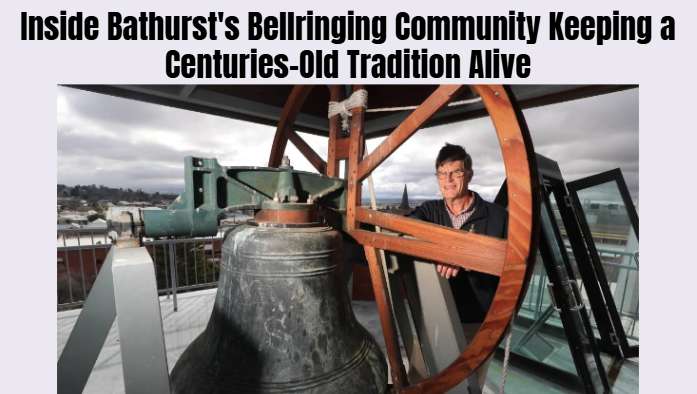
Bathurst bellringers are preparing to gather to celebrate a historic tradition dating back to 17th-century England, bringing together a community dedica...
Changes to Australia’s working holiday visa program have raised concerns among tourism and hospitality businesses in Far North Queensland, where backpac...
Bluebottles measuring up to three times the usual size have been washing onto Gold Coast beaches earlier than expected, prompting questions from scienti...
A high-tech greenhouse at Pacific Pines State High School is giving students hands-on experience in growing fresh produce, learning science and developi...
A man has died after being hit by a car on the Midland Highway near Magpie, south of Ballarat. Police are investigating the circumstances of the collisi...
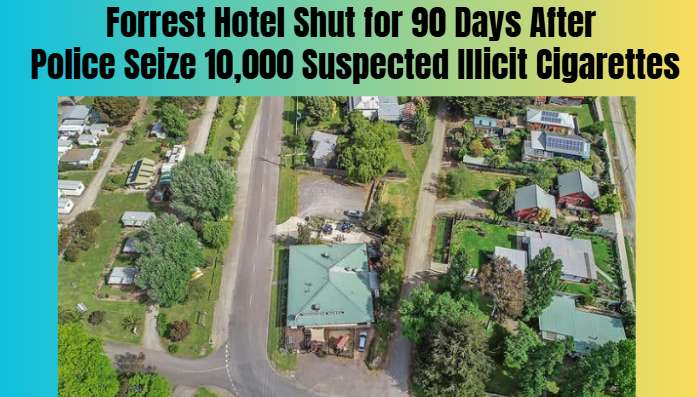
Police have closed a hotel in Forrest, Victoria, for 90 days after seizing approximately 10,000 suspected illicit cigarettes, loose tobacco and cash dur...
Victoria Police seized nine weapons and arrested four people during a targeted operation involving more than 300 searches at Stockland Plaza in Ballarat.
A 36-year-old man extradited from Perth has received a suspended prison sentence after being convicted over a violent incident involving four people at...
Darwin's Frontier Bar and Grill manager Aston Bell has received two industry awards, recognising her leadership, customer service and contribution to th...
A teenager from Devonport has died and four other people were injured after a serious crash involving a ute on Mersey Main Road near Latrobe, Tasmania.