Investigation Links Logistics Operator to North Queensland Freight Train Derailment
By Neha Maurya · Published 19 Jun 2026 · Updated 19 Jun 2026
Townsville, Queensland · Queensland News
Safety note: Admin approval is an initial review, not a guarantee that every detail is correct. Check important or urgent claims with official sources and report anything inaccurate or unsafe.
Source and credit: Contributor's own report
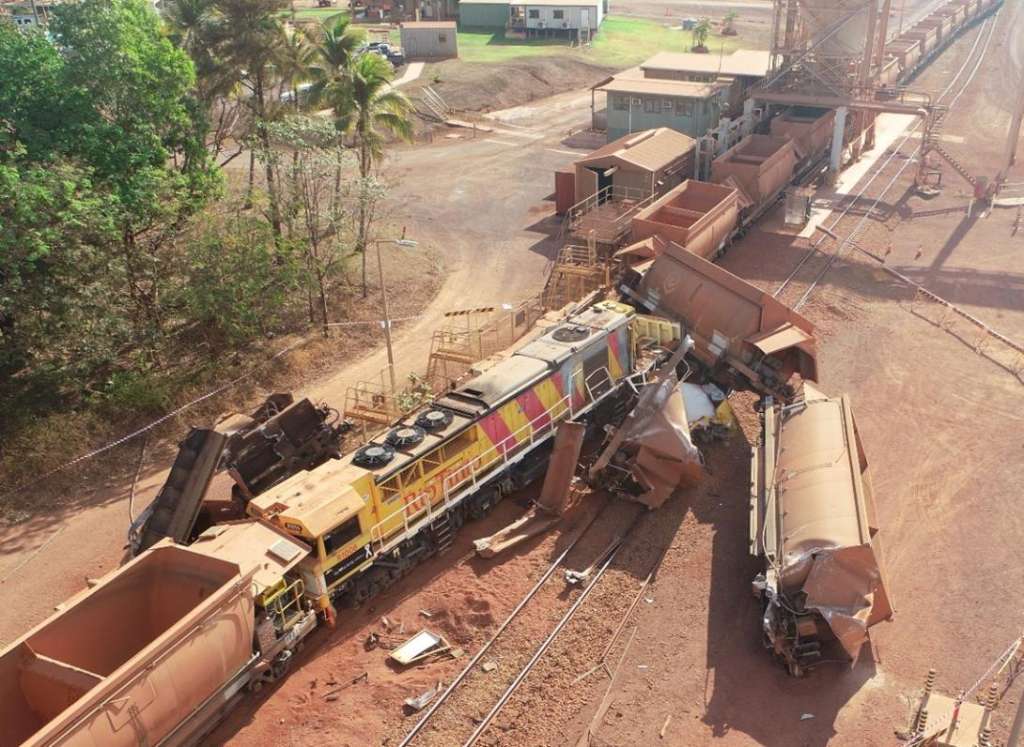
Freight train tracks in North Queensland
Smart summary
A formal investigation into a freight train derailment in North Queensland has identified actions by logistics operator Qube as a contributing factor in the incident involving an Aurizon locomotive.
A rail safety investigation has concluded that logistics company Qube Holdings was responsible for circumstances that contributed to a freight train derailment involving an Aurizon locomotive in North Queensland.
The incident occurred during freight operations and resulted in the derailment of an Aurizon locomotive, causing disruption to rail services and prompting a detailed investigation into the factors leading up to the crash. Fortunately, no fatalities were reported, but the incident raised concerns about operational procedures and rail safety management.
According to findings reported by the Townsville Bulletin, investigators determined that actions associated with Qube's operations played a significant role in the derailment. The investigation examined freight handling procedures, communication protocols and operational practices surrounding the train movement before the incident occurred.
Rail freight networks are critical to Queensland's economy, transporting commodities, agricultural products and industrial goods across vast distances. Any disruption to these networks can have significant economic impacts, making safety and operational compliance a top priority for both operators and regulators.
The investigation found that a series of procedural failures and operational decisions contributed to conditions that ultimately resulted in the derailment. Authorities examined whether established safety systems were followed and assessed how risks were managed throughout the operation.
Aurizon, one of Australia's largest rail freight operators, regularly transports goods throughout Queensland and across other parts of the country. The company operates extensive rail networks and relies on coordination with logistics providers, terminal operators and customers to ensure safe and efficient freight movements.
The findings have prompted calls for improved safety oversight and stronger compliance measures within freight operations. Industry experts note that rail transport remains one of the safest methods of moving large volumes of freight, but incidents such as derailments highlight the importance of strict adherence to procedures.
Following the investigation, recommendations were reportedly made to reduce the likelihood of similar incidents occurring in the future. These may include enhanced staff training, procedural reviews, improved communication systems and stronger safety management practices.
Rail safety regulators continue to monitor compliance across the industry, emphasising that all operators and contractors share responsibility for maintaining safe operations. Lessons learned from investigations are often used to strengthen standards throughout Australia's rail sector.
The derailment serves as a reminder of the complexity of freight operations and the importance of effective risk management. While freight trains move millions of tonnes of goods each year without incident, maintaining safety remains essential to protecting workers, infrastructure and communities.
Authorities hope that the findings and subsequent recommendations will help prevent future accidents and improve operational practices across the rail industry.
FreightRailSafetyDerailmentInvestigation
A rail safety investigation has concluded that logistics company Qube Holdings was responsible for circumstances that contributed to a freight train derailment involving an Aurizon locomotive in North Queensland.
The incident occurred during freight operations and resulted in the derailment of an Aurizon locomotive, causing disruption to rail services and prompting a detailed investigation into the factors leading up to the crash. Fortunately, no fatalities were reported, but the incident raised concerns about operational procedures and rail safety management.
According to findings reported by the Townsville Bulletin, investigators determined that actions associated with Qube's operations played a significant role in the derailment. The investigation examined freight handling procedures, communication protocols and operational practices surrounding the train movement before the incident occurred.
Rail freight networks are critical to Queensland's economy, transporting commodities, agricultural products and industrial goods across vast distances. Any disruption to these networks can have significant economic impacts, making safety and operational compliance a top priority for both operators and regulators.
The investigation found that a series of procedural failures and operational decisions contributed to conditions that ultimately resulted in the derailment. Authorities examined whether established safety systems were followed and assessed how risks were managed throughout the operation.
Aurizon, one of Australia's largest rail freight operators, regularly transports goods throughout Queensland and across other parts of the country. The company operates extensive rail networks and relies on coordination with logistics providers, terminal operators and customers to ensure safe and efficient freight movements.
The findings have prompted calls for improved safety oversight and stronger compliance measures within freight operations. Industry experts note that rail transport remains one of the safest methods of moving large volumes of freight, but incidents such as derailments highlight the importance of strict adherence to procedures.
Following the investigation, recommendations were reportedly made to reduce the likelihood of similar incidents occurring in the future. These may include enhanced staff training, procedural reviews, improved communication systems and stronger safety management practices.
Rail safety regulators continue to monitor compliance across the industry, emphasising that all operators and contractors share responsibility for maintaining safe operations. Lessons learned from investigations are often used to strengthen standards throughout Australia's rail sector.
The derailment serves as a reminder of the complexity of freight operations and the importance of effective risk management. While freight trains move millions of tonnes of goods each year without incident, maintaining safety remains essential to protecting workers, infrastructure and communities.
Authorities hope that the findings and subsequent recommendations will help prevent future accidents and improve operational practices across the rail industry.
Queensland Police have charged a 24-year-old Coomera man following an alleged stolen-truck incident and hit-and-run crash across the northern Gold Coast. Police say the investig...
A dramatic close call at Brisbane's Howard Smith Wharves has reignited discussions about pedestrian safety, rider responsibility and the use of shared p...
From European-style villages and tropical rainforests to turquoise beaches and dramatic desert landscapes, these Australian locations offer internationa...
The City of Moreton Bay will launch Australia's first next-generation AI traffic light pilot in Petrie, using intelligent sensors and artificial intelli...
Queensland's emerging football prospects are coming together for a three-day Brisbane Lions State Academy showcase, giving young players an opportunity...
A Wavell Heights enrolled nurse has been charged with four counts of alleged sexual assault and one count of wilful exposure, with his professional regi...
A 24-year-old Carina Heights man has been charged with 36 offences following an investigation into alleged break-ins, vehicle offences and other propert...
Cairns Regional Council has unanimously voted to seek $400,000 in Queensland Government funding for a program designed to connect local businesses with the region’s growing film...
An automated external defibrillator and memorial plaque have been installed at Ellery Creek Big Hole following the death of disability advocate Ellen Fr...
Queensland firefighters spent several hours monitoring a significant grass fire at Mary Kinross Park in Bargara, near Bundaberg, after the blaze broke out on Wednesday evening....