Safety note: Admin approval is an initial review, not a guarantee that every detail is correct. Check important or urgent claims with official sources and report anything inaccurate or unsafe.
Source and credit: Contributor's own report
Major R-Code overhaul could unlock 50,000 Perth housing sites and lift property values - Perth, WA
Smart summary
The Western Australian Government has unveiled its biggest overhaul of residential planning rules in more than 30 years, with proposed R-Code reforms expected to boost subdivision opportunities, increase housing densi...
The Western Australian Government has announced sweeping changes to the state's Residential Design Codes (R-Codes), a planning reform package aimed at increasing housing supply, encouraging higher-density development and reducing approval delays across metropolitan Perth.
Planning and Lands Minister John Carey described the reforms as the most significant changes to the R-Codes since they were introduced more than three decades ago. The proposals are designed to help address the state's housing shortage by allowing significantly more residential properties to be subdivided and redeveloped.
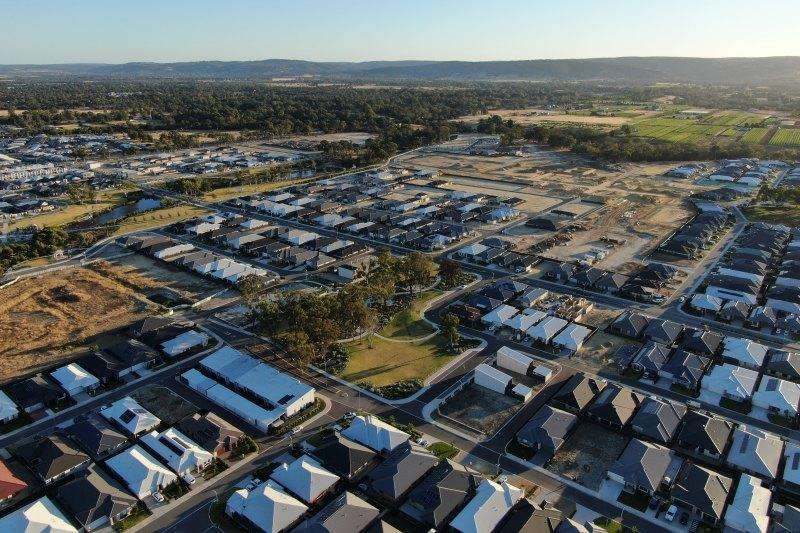
A key feature of the overhaul is the proposed reduction in subdivision requirements for land zoned R20 and below, the most common low-density residential zoning across Perth. Under the current rules, many R20 properties require an average site area of about 900 square metres before subdivision is possible. The reforms would lower that threshold, allowing qualifying 700-square-metre blocks to be subdivided into two lots where minimum lot-size requirements are met. Government estimates suggest this change alone could unlock around 50,000 additional residential properties for future housing development.
The proposed changes are expected to have a significant impact on established suburbs, where many homeowners may gain new opportunities to develop or subdivide their land. Property experts believe blocks that become eligible for subdivision could experience increased market value because of their redevelopment potential. Corner blocks and larger suburban lots are expected to benefit the most if the reforms proceed.
Beyond subdivision changes, the reform package seeks to simplify planning processes and reduce bureaucracy. The government proposes removing planning approval requirements for many straightforward residential projects, including single houses, patios, carports and some home renovations that meet standard development requirements. Approval times for single dwellings are also targeted to fall from approximately 60 days to 30 days.
Additional proposals include reviewing building height limits in medium-density areas, allowing three-storey development in some R40 zones and removing minimum parking requirements for certain apartments and granny flats. Together, the measures are intended to encourage more housing in established suburbs while making better use of existing roads, schools, transport and other infrastructure.
The reforms form part of the Cook Government's broader housing strategy as Perth continues to fall short of long-term urban infill targets. Government data shows the proportion of new housing built through urban infill has improved but remains below the desired level, prompting renewed efforts to encourage development within existing suburbs instead of relying primarily on outer suburban expansion.
The proposed R-Code changes will be released for public consultation later in 2026, with implementation anticipated in July 2027, subject to feedback and final approval. Industry organisations including the Property Council of Australia, the Planning Institute of Australia and the Housing Industry Association have broadly welcomed the reforms, saying they could improve housing supply while modernising Western Australia's planning framework.
HousingPlanningChangesDevelopmentGovernment
The Western Australian Government has announced sweeping changes to the state's Residential Design Codes (R-Codes), a planning reform package aimed at increasing housing supply, encouraging higher-density development and reducing approval delays across metropolitan Perth.
Planning and Lands Minister John Carey described the reforms as the most significant changes to the R-Codes since they were introduced more than three decades ago. The proposals are designed to help address the state's housing shortage by allowing significantly more residential properties to be subdivided and redeveloped.
A key feature of the overhaul is the proposed reduction in subdivision requirements for land zoned R20 and below, the most common low-density residential zoning across Perth. Under the current rules, many R20 properties require an average site area of about 900 square metres before subdivision is possible. The reforms would lower that threshold, allowing qualifying 700-square-metre blocks to be subdivided into two lots where minimum lot-size requirements are met. Government estimates suggest this change alone could unlock around 50,000 additional residential properties for future housing development.
The proposed changes are expected to have a significant impact on established suburbs, where many homeowners may gain new opportunities to develop or subdivide their land. Property experts believe blocks that become eligible for subdivision could experience increased market value because of their redevelopment potential. Corner blocks and larger suburban lots are expected to benefit the most if the reforms proceed.
Beyond subdivision changes, the reform package seeks to simplify planning processes and reduce bureaucracy. The government proposes removing planning approval requirements for many straightforward residential projects, including single houses, patios, carports and some home renovations that meet standard development requirements. Approval times for single dwellings are also targeted to fall from approximately 60 days to 30 days.
Additional proposals include reviewing building height limits in medium-density areas, allowing three-storey development in some R40 zones and removing minimum parking requirements for certain apartments and granny flats. Together, the measures are intended to encourage more housing in established suburbs while making better use of existing roads, schools, transport and other infrastructure.
The reforms form part of the Cook Government's broader housing strategy as Perth continues to fall short of long-term urban infill targets. Government data shows the proportion of new housing built through urban infill has improved but remains below the desired level, prompting renewed efforts to encourage development within existing suburbs instead of relying primarily on outer suburban expansion.
The proposed R-Code changes will be released for public consultation later in 2026, with implementation anticipated in July 2027, subject to feedback and final approval. Industry organisations including the Property Council of Australia, the Planning Institute of Australia and the Housing Industry Association have broadly welcomed the reforms, saying they could improve housing supply while modernising Western Australia's planning framework.
Armidale Regional Council will replace an ageing cast-iron water main in Ampol and Miller Streets with a modern system, with construction scheduled to b...
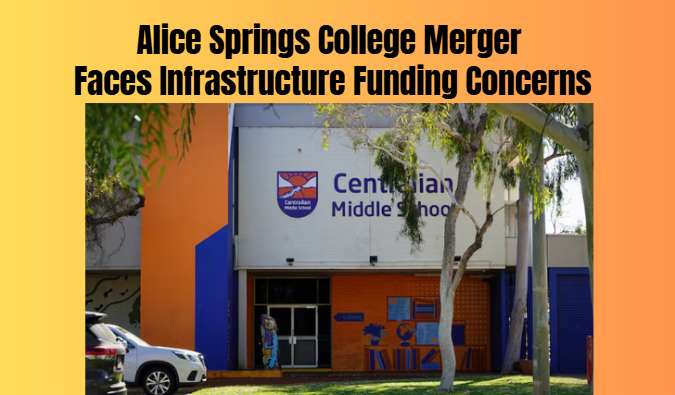
Community and education representatives have raised concerns that the initial $500,000 allocation may not cover the infrastructure upgrades needed for t...
Four public swimming pools across the Central Darling Shire are being opened for unsupervised access this season, with residents required to complete sa...
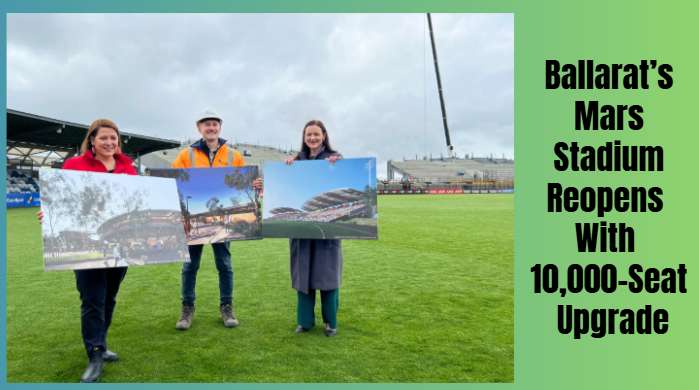
Ballarat’s redeveloped Mars Stadium has unveiled its expanded seating capacity and upgraded facilities ahead of the return of major AFLW events to the r...
A 59-year-old rubbish-truck driver has been charged with dangerous driving causing death after a 70-year-old man was fatally struck in Queens Park earli...
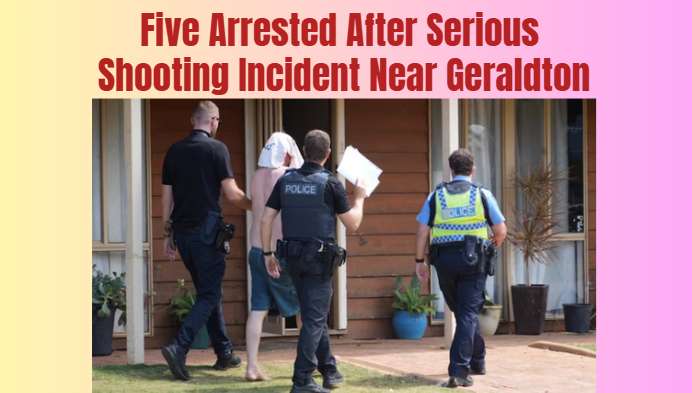
Police have arrested five people after a man was taken to hospital with a gunshot wound following a serious incident at Moonyoonooka, east of Geraldton,...
Authorities have crushed 23 confiscated electric bikes in Blacktown under new laws targeting non-compliant e-bikes, following a joint enforcement operat...
Thousands of Victorian doctors and allied health professionals have begun industrial action over stalled negotiations on pay and working conditions, wit...