Safety note: Admin approval is an initial review, not a guarantee that every detail is correct. Check important or urgent claims with official sources and report anything inaccurate or unsafe.
Source and credit: Contributor's own report
More Than 800 Feral Pigs Removed Across Cassowary Coast in Major Pest Control Program - Innisfail, QLD
Smart summary
A coordinated pest management program has removed more than 800 feral pigs across the Cassowary Coast over the past year, helping protect farms, native wildlife and environmentally significant habitats.
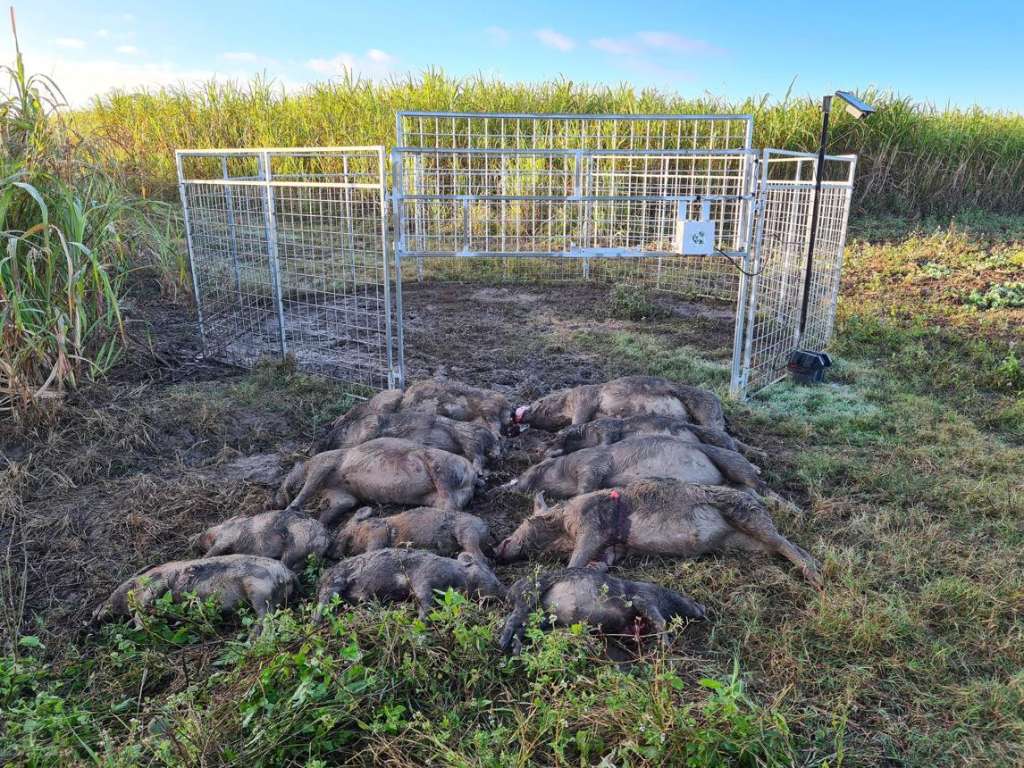
More than 800 feral pigs have been removed from the Cassowary Coast during the past 12 months through a coordinated management program involving local landholders, the sugar and banana industries, the Cassowary Coast Regional Council, environmental organisations and the Queensland Government. The initiative aims to reduce the significant environmental and agricultural damage caused by invasive feral pigs.
The control program combined aerial culling, council-operated trapping, and landholder-led trapping and baiting, allowing authorities to target pig populations across farmland, wetlands and environmentally sensitive areas. The collaborative approach has been credited with delivering one of the region's strongest pest management results in recent years.
Cassowary Coast Regional Council Mayor Teresa Millwood said the achievement demonstrates what can be accomplished when industry, government agencies and local communities work together. She thanked farmers, environmental groups and residents for reporting pig activity and supporting ongoing control efforts.
Feral pigs are considered one of Australia's most destructive invasive animals. They damage sugar cane and banana crops, destroy native vegetation, erode riverbanks, spread weeds and diseases, and threaten wildlife by disturbing habitats and preying on native species. They also pose a biosecurity risk to the agricultural sector.
The program also received support from Terrain NRM, which helped expand operations by funding additional pig traps and conservation work to protect endangered vegetation in the Wet Tropics region. Five new traps were added to the council's landholder support program to improve long-term pest management.
Council has reminded residents not to interfere with feral pig traps, explaining that all council-operated traps are monitored continuously. Authorities said interference can reduce the effectiveness of the program and may place wildlife or people at risk.
Landholders are encouraged to continue reporting feral pig activity and participate in trapping programs to help reduce future infestations. Council says coordinated action remains essential because feral pigs reproduce quickly and can rapidly re-establish populations if control efforts decline.
The successful removal of more than 800 pigs is expected to reduce damage to agricultural land, improve biodiversity outcomes and strengthen protection for the Cassowary Coast's unique natural ecosystems.
FeralPigsProgramCassowaryCoast
More than 800 feral pigs have been removed from the Cassowary Coast during the past 12 months through a coordinated management program involving local landholders, the sugar and banana industries, the Cassowary Coast Regional Council, environmental organisations and the Queensland Government. The initiative aims to reduce the significant environmental and agricultural damage caused by invasive feral pigs.
The control program combined aerial culling, council-operated trapping, and landholder-led trapping and baiting, allowing authorities to target pig populations across farmland, wetlands and environmentally sensitive areas. The collaborative approach has been credited with delivering one of the region's strongest pest management results in recent years.
Cassowary Coast Regional Council Mayor Teresa Millwood said the achievement demonstrates what can be accomplished when industry, government agencies and local communities work together. She thanked farmers, environmental groups and residents for reporting pig activity and supporting ongoing control efforts.
Feral pigs are considered one of Australia's most destructive invasive animals. They damage sugar cane and banana crops, destroy native vegetation, erode riverbanks, spread weeds and diseases, and threaten wildlife by disturbing habitats and preying on native species. They also pose a biosecurity risk to the agricultural sector.
The program also received support from Terrain NRM, which helped expand operations by funding additional pig traps and conservation work to protect endangered vegetation in the Wet Tropics region. Five new traps were added to the council's landholder support program to improve long-term pest management.
Council has reminded residents not to interfere with feral pig traps, explaining that all council-operated traps are monitored continuously. Authorities said interference can reduce the effectiveness of the program and may place wildlife or people at risk.
Landholders are encouraged to continue reporting feral pig activity and participate in trapping programs to help reduce future infestations. Council says coordinated action remains essential because feral pigs reproduce quickly and can rapidly re-establish populations if control efforts decline.
The successful removal of more than 800 pigs is expected to reduce damage to agricultural land, improve biodiversity outcomes and strengthen protection for the Cassowary Coast's unique natural ecosystems.
A vehicle has crashed into a house in Albury, prompting police attendance at a residential property near the intersection of Mate and North streets. The incident was reported to...
A high-profile athlete has returned to court and told the hearing that an alleged unwanted kiss by former broadcaster Alan Jones remained difficult to f...
Work on the $150 million Sydney Town Hall Square project has been paused after the NSW Planning Minister referred the development for review by the Inde...
Queensland's emerging football prospects are coming together for a three-day Brisbane Lions State Academy showcase, giving young players an opportunity...
A Wavell Heights enrolled nurse has been charged with four counts of alleged sexual assault and one count of wilful exposure, with his professional regi...
A 24-year-old Carina Heights man has been charged with 36 offences following an investigation into alleged break-ins, vehicle offences and other propert...
Cairns Regional Council has unanimously voted to seek $400,000 in Queensland Government funding for a program designed to connect local businesses with the region’s growing film...
An automated external defibrillator and memorial plaque have been installed at Ellery Creek Big Hole following the death of disability advocate Ellen Fr...
Queensland firefighters spent several hours monitoring a significant grass fire at Mary Kinross Park in Bargara, near Bundaberg, after the blaze broke out on Wednesday evening....