Safety note: Admin approval is an initial review, not a guarantee that every detail is correct. Check important or urgent claims with official sources and report anything inaccurate or unsafe.
Source and credit: Contributor's own report
Smart summary
Queensland Health says it is reviewing guidance issued under the state's new assisted reproductive technology laws after concerns that some same-sex female couples could be treated as separate families when accessing...
Queensland Health is reviewing guidance issued to fertility providers after concerns were raised that the state's assisted reproductive technology (ART) rules could unintentionally disadvantage some queer families seeking to have children.
The issue emerged after same-sex female couples reported being told that if each partner wished to carry a pregnancy using sperm from the same donor, they could be counted as two separate donor-related families under current guidance. This interpretation could affect access to donor sperm because Queensland law limits the number of families that can be created from a single donor.
The concerns relate to Queensland's Assisted Reproductive Technology Act 2024, which came into operation alongside the new regulatory framework in 2026. The legislation introduced licensing requirements for fertility clinics, donor registers, family limits for donor conception and stronger oversight of assisted reproductive treatment across the state.
According to Queensland Health's published guidance, a donor-related Australian family generally includes a parent, their spouse (where applicable) and their children. Questions arose over how this definition should apply when both members of a same-sex female couple want to have genetically related children using the same donor.
Several affected couples said they believed they were being treated differently from heterosexual couples. Family creation lawyers and LGBTQ+ advocacy groups argued the guidance did not reflect the intention of the legislation and created unnecessary uncertainty for families planning future pregnancies.
Queensland Health has acknowledged the concerns and indicated it is reviewing the guidance while continuing discussions with stakeholders, including fertility providers and members of the donor conception community. Officials said the regulatory scheme was developed following extensive consultation and that implementation will continue to evolve as practical issues are identified.
Advocacy organisations have welcomed the review but are calling for clearer guidance to ensure all families are treated equally. They argue that requiring same-sex couples to seek exemptions or additional approvals creates unnecessary barriers for people already navigating emotionally and financially demanding fertility treatment.
The broader ART reforms were introduced to improve safety, transparency and accountability within Queensland's fertility sector following several high-profile concerns nationally about assisted reproductive treatment. The legislation also established stronger reporting obligations, donor information requirements and regulatory oversight for clinics operating in Queensland.
Health experts note that donor family limits are designed to reduce the number of genetically related families created from a single donor while protecting donor-conceived people's interests. However, they also recognise the importance of applying these rules consistently and fairly across different family structures.
Queensland Health has not announced any immediate changes but says it will continue reviewing the guidance and engaging with affected communities to ensure the new assisted reproductive technology framework operates as intended.
DonorQueenslandGuidanceFamiliesHealth
Queensland Health is reviewing guidance issued to fertility providers after concerns were raised that the state's assisted reproductive technology (ART) rules could unintentionally disadvantage some queer families seeking to have children.
The issue emerged after same-sex female couples reported being told that if each partner wished to carry a pregnancy using sperm from the same donor, they could be counted as two separate donor-related families under current guidance. This interpretation could affect access to donor sperm because Queensland law limits the number of families that can be created from a single donor.
The concerns relate to Queensland's Assisted Reproductive Technology Act 2024, which came into operation alongside the new regulatory framework in 2026. The legislation introduced licensing requirements for fertility clinics, donor registers, family limits for donor conception and stronger oversight of assisted reproductive treatment across the state.
According to Queensland Health's published guidance, a donor-related Australian family generally includes a parent, their spouse (where applicable) and their children. Questions arose over how this definition should apply when both members of a same-sex female couple want to have genetically related children using the same donor.
Several affected couples said they believed they were being treated differently from heterosexual couples. Family creation lawyers and LGBTQ+ advocacy groups argued the guidance did not reflect the intention of the legislation and created unnecessary uncertainty for families planning future pregnancies.
Queensland Health has acknowledged the concerns and indicated it is reviewing the guidance while continuing discussions with stakeholders, including fertility providers and members of the donor conception community. Officials said the regulatory scheme was developed following extensive consultation and that implementation will continue to evolve as practical issues are identified.
Advocacy organisations have welcomed the review but are calling for clearer guidance to ensure all families are treated equally. They argue that requiring same-sex couples to seek exemptions or additional approvals creates unnecessary barriers for people already navigating emotionally and financially demanding fertility treatment.
The broader ART reforms were introduced to improve safety, transparency and accountability within Queensland's fertility sector following several high-profile concerns nationally about assisted reproductive treatment. The legislation also established stronger reporting obligations, donor information requirements and regulatory oversight for clinics operating in Queensland.
Health experts note that donor family limits are designed to reduce the number of genetically related families created from a single donor while protecting donor-conceived people's interests. However, they also recognise the importance of applying these rules consistently and fairly across different family structures.
Queensland Health has not announced any immediate changes but says it will continue reviewing the guidance and engaging with affected communities to ensure the new assisted reproductive technology framework operates as intended.
New funding from local charity Wishlist is improving communication support for patients at Bundaberg Hospital, with resources designed to help people communicate more effectivel...
New figures have renewed concerns about emergency department delays at Royal Hobart Hospital, with the health system facing questions over patient waiti...
Central Coast New South Wales · Health News · 10 Sep 2026
The design for new Key Health Worker Accommodation at Wyong has been released today, with the project aimed at helping address the need for suitable accommodation for healthcare...
Queensland's emerging football prospects are coming together for a three-day Brisbane Lions State Academy showcase, giving young players an opportunity...
A Wavell Heights enrolled nurse has been charged with four counts of alleged sexual assault and one count of wilful exposure, with his professional regi...
A 24-year-old Carina Heights man has been charged with 36 offences following an investigation into alleged break-ins, vehicle offences and other propert...
Cairns Regional Council has unanimously voted to seek $400,000 in Queensland Government funding for a program designed to connect local businesses with the region’s growing film...
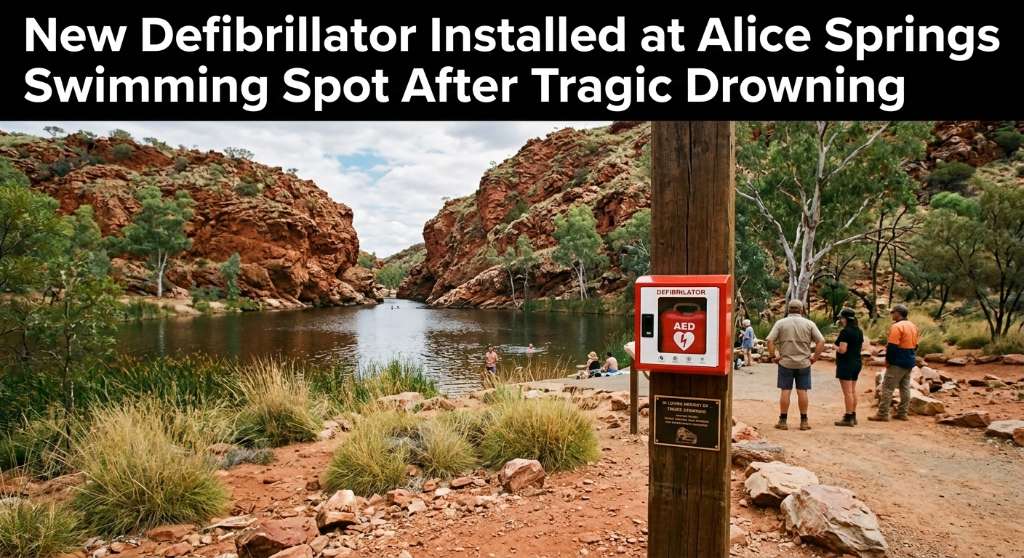
An automated external defibrillator and memorial plaque have been installed at Ellery Creek Big Hole following the death of disability advocate Ellen Fr...
Queensland firefighters spent several hours monitoring a significant grass fire at Mary Kinross Park in Bargara, near Bundaberg, after the blaze broke out on Wednesday evening....