Safety note: Admin approval is an initial review, not a guarantee that every detail is correct. Check important or urgent claims with official sources and report anything inaccurate or unsafe.
Source and credit: Contributor's own report
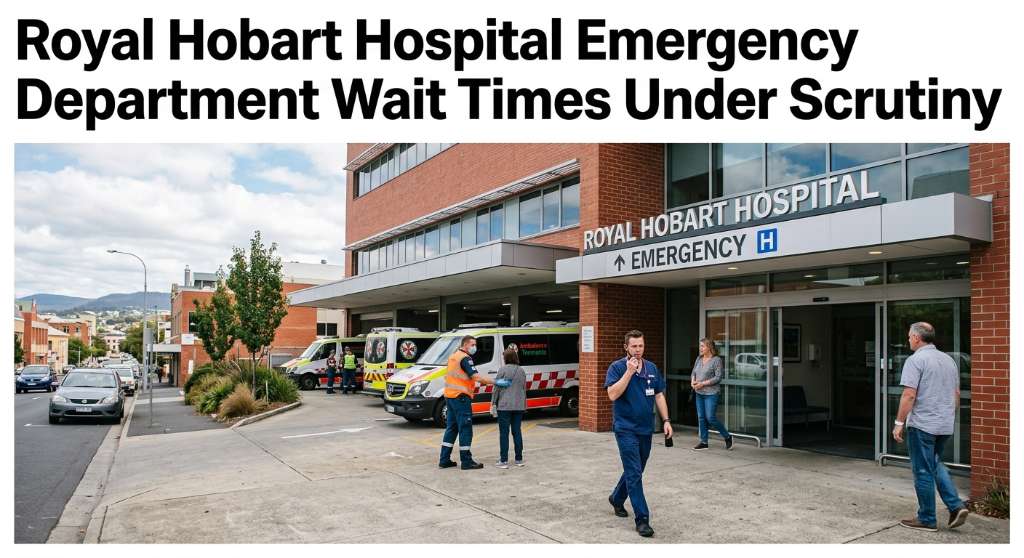
Royal Hobart Hospital Emergency Department Wait Times Under Scrutiny - Hobart, TAS
Smart summary
New figures have renewed concerns about emergency department delays at Royal Hobart Hospital, with the health system facing questions over patient waiting times.
Newly released figures have placed emergency department performance at Royal Hobart Hospital under renewed scrutiny, with concerns being raised about how long some patients are waiting for treatment.
The figures, reported on September 14, have prompted criticism from Tasmania's opposition health spokeswoman, who described the situation as evidence of significant pressure across the state's health system. The concerns centre on emergency department waiting times and the ability of hospitals to provide timely treatment to patients arriving for urgent care.
Royal Hobart Hospital is Tasmania's major tertiary hospital and provides emergency and specialist services to patients from Hobart as well as people referred from other parts of the state. Because of its role within the Tasmanian health network, pressure on its emergency department can have consequences beyond the immediate Hobart area.
Emergency departments are designed to prioritise patients according to the seriousness of their condition rather than simply treating people in the order they arrive. This means people with life-threatening or highly urgent conditions are assessed and treated ahead of patients whose conditions are less immediately serious.
However, longer waiting periods can still be frustrating and concerning for patients and families, particularly when emergency departments are experiencing high demand.
The latest discussion comes amid wider debate about Tasmania's health system and whether hospitals have enough capacity to deal with demand. Emergency department performance can be affected by several factors, including the number of patients arriving, ambulance demand, available hospital beds, staffing levels and how quickly patients can be transferred from emergency care to appropriate inpatient or community services.
Royal Hobart Hospital's central position in Tasmania's healthcare network means it also receives patients requiring specialist services that may not be available elsewhere.
The newly reported figures have therefore renewed attention on the hospital's ability to manage demand while maintaining safe and timely patient care.
The issue is not simply about the number of people waiting in an emergency department. Hospitals must also manage patients already admitted, ambulance arrivals and people requiring specialist assessment or procedures. Delays in one part of the system can place additional pressure on other areas.
For Hobart residents, emergency department performance remains an important local health issue because Royal Hobart Hospital is a major provider of urgent and specialist care.
The latest figures are likely to fuel further discussion about staffing, hospital capacity and the broader organisation of Tasmania's health services. While the figures have generated criticism, they also provide an indication of the continuing pressure facing emergency healthcare.
Patients experiencing serious or potentially life-threatening symptoms should continue to seek appropriate urgent medical assistance rather than delaying care because of concerns about waiting times.
The latest development keeps Royal Hobart Hospital's emergency department at the centre of Tasmania's ongoing health-system debate, with attention now focused on whether measures can improve patient flow and reduce delays for people seeking urgent treatment.
EmergencyPatientsHospitalHobartDepartment
Newly released figures have placed emergency department performance at Royal Hobart Hospital under renewed scrutiny, with concerns being raised about how long some patients are waiting for treatment.
The figures, reported on September 14, have prompted criticism from Tasmania's opposition health spokeswoman, who described the situation as evidence of significant pressure across the state's health system. The concerns centre on emergency department waiting times and the ability of hospitals to provide timely treatment to patients arriving for urgent care.
Royal Hobart Hospital is Tasmania's major tertiary hospital and provides emergency and specialist services to patients from Hobart as well as people referred from other parts of the state. Because of its role within the Tasmanian health network, pressure on its emergency department can have consequences beyond the immediate Hobart area.
Emergency departments are designed to prioritise patients according to the seriousness of their condition rather than simply treating people in the order they arrive. This means people with life-threatening or highly urgent conditions are assessed and treated ahead of patients whose conditions are less immediately serious.
However, longer waiting periods can still be frustrating and concerning for patients and families, particularly when emergency departments are experiencing high demand.
The latest discussion comes amid wider debate about Tasmania's health system and whether hospitals have enough capacity to deal with demand. Emergency department performance can be affected by several factors, including the number of patients arriving, ambulance demand, available hospital beds, staffing levels and how quickly patients can be transferred from emergency care to appropriate inpatient or community services.
Royal Hobart Hospital's central position in Tasmania's healthcare network means it also receives patients requiring specialist services that may not be available elsewhere.
The newly reported figures have therefore renewed attention on the hospital's ability to manage demand while maintaining safe and timely patient care.
The issue is not simply about the number of people waiting in an emergency department. Hospitals must also manage patients already admitted, ambulance arrivals and people requiring specialist assessment or procedures. Delays in one part of the system can place additional pressure on other areas.
For Hobart residents, emergency department performance remains an important local health issue because Royal Hobart Hospital is a major provider of urgent and specialist care.
The latest figures are likely to fuel further discussion about staffing, hospital capacity and the broader organisation of Tasmania's health services. While the figures have generated criticism, they also provide an indication of the continuing pressure facing emergency healthcare.
Patients experiencing serious or potentially life-threatening symptoms should continue to seek appropriate urgent medical assistance rather than delaying care because of concerns about waiting times.
The latest development keeps Royal Hobart Hospital's emergency department at the centre of Tasmania's ongoing health-system debate, with attention now focused on whether measures can improve patient flow and reduce delays for people seeking urgent treatment.
New funding from local charity Wishlist is improving communication support for patients at Bundaberg Hospital, with resources designed to help people communicate more effectivel...
Central Coast New South Wales · Health News · 10 Sep 2026
The design for new Key Health Worker Accommodation at Wyong has been released today, with the project aimed at helping address the need for suitable accommodation for healthcare...
Cairns Regional Council has unanimously voted to seek $400,000 in Queensland Government funding for a program designed to connect local businesses with the region’s growing film...
An automated external defibrillator and memorial plaque have been installed at Ellery Creek Big Hole following the death of disability advocate Ellen Fr...
Queensland firefighters spent several hours monitoring a significant grass fire at Mary Kinross Park in Bargara, near Bundaberg, after the blaze broke out on Wednesday evening....