Safety note: Admin approval is an initial review, not a guarantee that every detail is correct. Check important or urgent claims with official sources and report anything inaccurate or unsafe.
Source and credit: Contributor's own report
Report suggests longer V/Line trains could operate despite government concerns - Warrnambool, Victoria
Smart summary
A new analysis has challenged Victorian Government claims that infrastructure limitations prevent longer V/Line trains, arguing capacity upgrades may be achievable without major network overhauls.
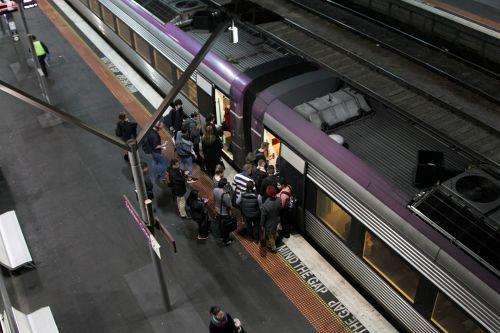
A debate has emerged over the future capacity of Victoria's regional rail network after a new report suggested longer V/Line trains may be possible despite previous government assertions that significant infrastructure constraints make such expansion impractical.
The discussion centres on growing passenger demand across Victoria's regional rail services, particularly on busy routes connecting regional centres with Melbourne. As populations continue to grow in regional cities and commuter numbers increase, pressure has mounted on transport authorities to find ways of expanding capacity and reducing overcrowding on some services.
For several years, the Victorian Government has maintained that operating substantially longer trains on parts of the V/Line network would require expensive infrastructure modifications. These concerns have included platform lengths, stabling facilities, signalling systems, track configurations and operational constraints at key stations throughout the network.
However, the newly released analysis argues that some of those limitations may not be as restrictive as previously suggested. According to the report, a range of engineering and operational options could potentially allow longer trains to be introduced on selected routes, increasing passenger capacity without requiring the scale of investment previously cited.
Supporters of longer trains argue that expanding train lengths could provide a cost-effective solution to increasing demand. Rather than adding additional services—which can be difficult on busy rail corridors—longer trains can transport more passengers using existing timetable slots. This approach is commonly used in many rail networks worldwide where track capacity is limited but passenger demand continues to rise.
The issue is particularly relevant for regional cities that have experienced rapid population growth over the past decade. Communities in western Victoria, central Victoria and the Geelong region have all recorded increasing numbers of residents who rely on rail services for work, education and travel.
Transport advocates believe that improving regional rail capacity will become increasingly important as Victoria's population grows. They argue that investment in public transport can help reduce road congestion, support regional development and provide more sustainable transport options.
Government representatives have previously pointed to the complexity of modifying rail infrastructure, noting that changes often involve more than simply extending platforms. Additional considerations can include depot facilities, maintenance arrangements, accessibility requirements, signalling systems and network reliability.
Rail experts note that both perspectives may contain valid points. While some routes could potentially accommodate longer trains with limited modifications, others may require more substantial upgrades depending on local conditions and operational requirements. The practicality of longer trains can vary significantly across different sections of the network.
The discussion comes at a time when Victoria continues investing heavily in rail infrastructure, including regional rail improvements, fleet upgrades and network modernisation projects. Policymakers face the challenge of balancing growing passenger demand with budget constraints and long-term transport planning objectives.
Regional communities have welcomed renewed attention on rail capacity issues, particularly as many residents increasingly depend on public transport connections to Melbourne and other major centres. Improved capacity could enhance travel comfort, reduce overcrowding and support future economic growth.
The debate is likely to continue as transport planners, government officials and regional stakeholders assess the findings of the report and consider options for expanding the state's regional rail network. Ultimately, decisions regarding longer trains will depend on detailed engineering assessments, operational requirements and funding priorities.
RailRegionalLongerTrainsTransport
A debate has emerged over the future capacity of Victoria's regional rail network after a new report suggested longer V/Line trains may be possible despite previous government assertions that significant infrastructure constraints make such expansion impractical.
The discussion centres on growing passenger demand across Victoria's regional rail services, particularly on busy routes connecting regional centres with Melbourne. As populations continue to grow in regional cities and commuter numbers increase, pressure has mounted on transport authorities to find ways of expanding capacity and reducing overcrowding on some services.
For several years, the Victorian Government has maintained that operating substantially longer trains on parts of the V/Line network would require expensive infrastructure modifications. These concerns have included platform lengths, stabling facilities, signalling systems, track configurations and operational constraints at key stations throughout the network.
However, the newly released analysis argues that some of those limitations may not be as restrictive as previously suggested. According to the report, a range of engineering and operational options could potentially allow longer trains to be introduced on selected routes, increasing passenger capacity without requiring the scale of investment previously cited.
Supporters of longer trains argue that expanding train lengths could provide a cost-effective solution to increasing demand. Rather than adding additional services—which can be difficult on busy rail corridors—longer trains can transport more passengers using existing timetable slots. This approach is commonly used in many rail networks worldwide where track capacity is limited but passenger demand continues to rise.
The issue is particularly relevant for regional cities that have experienced rapid population growth over the past decade. Communities in western Victoria, central Victoria and the Geelong region have all recorded increasing numbers of residents who rely on rail services for work, education and travel.
Transport advocates believe that improving regional rail capacity will become increasingly important as Victoria's population grows. They argue that investment in public transport can help reduce road congestion, support regional development and provide more sustainable transport options.
Government representatives have previously pointed to the complexity of modifying rail infrastructure, noting that changes often involve more than simply extending platforms. Additional considerations can include depot facilities, maintenance arrangements, accessibility requirements, signalling systems and network reliability.
Rail experts note that both perspectives may contain valid points. While some routes could potentially accommodate longer trains with limited modifications, others may require more substantial upgrades depending on local conditions and operational requirements. The practicality of longer trains can vary significantly across different sections of the network.
The discussion comes at a time when Victoria continues investing heavily in rail infrastructure, including regional rail improvements, fleet upgrades and network modernisation projects. Policymakers face the challenge of balancing growing passenger demand with budget constraints and long-term transport planning objectives.
Regional communities have welcomed renewed attention on rail capacity issues, particularly as many residents increasingly depend on public transport connections to Melbourne and other major centres. Improved capacity could enhance travel comfort, reduce overcrowding and support future economic growth.
The debate is likely to continue as transport planners, government officials and regional stakeholders assess the findings of the report and consider options for expanding the state's regional rail network. Ultimately, decisions regarding longer trains will depend on detailed engineering assessments, operational requirements and funding priorities.
Queensland Police have charged a 24-year-old Coomera man following an alleged stolen-truck incident and hit-and-run crash across the northern Gold Coast. Police say the investig...
A dramatic close call at Brisbane's Howard Smith Wharves has reignited discussions about pedestrian safety, rider responsibility and the use of shared p...
From European-style villages and tropical rainforests to turquoise beaches and dramatic desert landscapes, these Australian locations offer internationa...
The City of Moreton Bay will launch Australia's first next-generation AI traffic light pilot in Petrie, using intelligent sensors and artificial intelli...
Wet conditions at the Melbourne Cricket Ground are creating difficult conditions for the AFL Grand Final, while poor weather has also disrupted flights...
Police have arrested three teenagers after a man was allegedly stabbed while confronting a group of boys attempting to break into a car in Melbourne’s s...
After losing two sons, Melbourne father Nick Olney has established a charity helping grieving parents preserve memories of their babies and access suppo...
A 50-year-old man has died after being struck by a vehicle in Fernvale, west of Brisbane, with police launching a homicide investigation and arresting a...
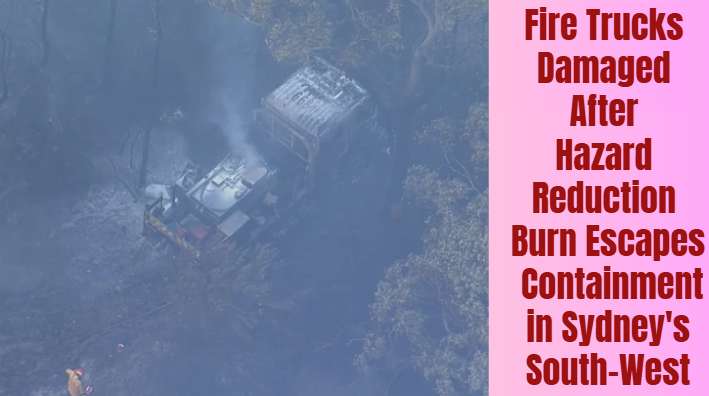
Multiple Rural Fire Service trucks were damaged after a planned hazard reduction burn at Wedderburn in Sydney's south-west escaped containment on Saturday.
Wet conditions at the Melbourne Cricket Ground are creating difficult conditions for the AFL Grand Final, while poor weather has also disrupted flights...
Amateur astronomers are using new telescope technology to photograph the Moon, planets and distant galaxies from Brisbane homes, showing that city skies...