Safety note: Admin approval is an initial review, not a guarantee that every detail is correct. Check important or urgent claims with official sources and report anything inaccurate or unsafe.
Source and credit: Contributor's own report
Tasmania Introduces New Booking System for Popular National Park Campsites - Hobart, TAS
Smart summary
Around 30 campsites across 10 Tasmanian national parks and conservation areas will move to a new online booking system from 3 November.
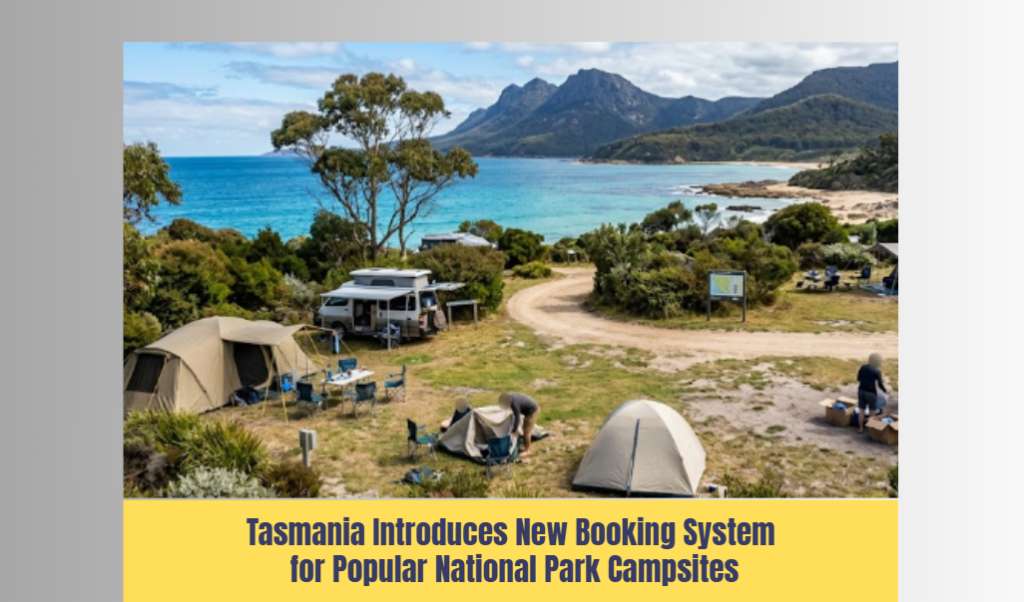
Tasmania is introducing a new online booking system for some of its most popular national park and conservation-area campsites, with the first stage scheduled to begin on 3 November 2026.
The new system will apply to approximately 30 campgrounds managed by Tasmania's Parks and Wildlife Service. Initially, only campsites that already charge a camping fee will be included.
The first group includes camping areas at Arthur Pieman Conservation Area, Peggs Beach Conservation Area, Narawntapu National Park, Mount William National Park, Maria Island National Park, Freycinet National Park, Fortescue Bay in Tasman National Park, South Bruny National Park and Mount Field National Park.
Under the new arrangement, campers will be able to select and pay for their campsite online before travelling. The system is designed to make the booking process more predictable, particularly at popular locations where demand can be high during holiday periods.
One of the problems the new system is intended to address is known as "ghost camping". This occurs when people reserve a campsite, sometimes by leaving a tent, caravan or other equipment at the site, without actually occupying it for the entire period.
Parks and Wildlife Service project manager Chris Evans said the new system would require campers to make a reservation and pay when booking. Under the proposed arrangements, people who cancel close to their arrival date could lose the full camping fee.
The change is expected to give other campers a clearer opportunity to access sites that might otherwise appear occupied even when nobody is staying there.
Freycinet National Park is among the popular destinations affected by the first stage. The park attracts visitors to locations including Wineglass Bay and other parts of Tasmania's east coast.
The booking system will not immediately cover every campground in Tasmania. The first phase is focused on sites where visitors already pay a camping fee, with the Parks and Wildlife Service planning to expand the system to additional services in the future.
The broader rollout could eventually include other Parks and Wildlife offerings, including park passes.
For campers, the change means that planning ahead will become increasingly important when visiting the affected locations. Visitors who previously arrived and found a campsite through an existing local process will need to check the booking requirements before travelling.
The system is part of a wider effort to modernise how Tasmania manages visitor access to popular protected areas.
Tasmania's national parks and conservation areas attract visitors throughout the year for camping, hiking, wildlife viewing and outdoor recreation. Popular sites can experience significant demand during school holidays and peak travel periods.
The new booking arrangement is expected to provide Parks and Wildlife Service with more accurate information about demand and campsite occupancy.
It could also help visitors avoid arriving at a campground only to discover that sites are unavailable.
The first phase will begin on 3 November 2026, with the system expected to expand over time as additional Parks and Wildlife facilities are brought into the online platform.
For anyone planning a Tasmanian camping trip later this year, checking whether the chosen campground is included in the new booking system will be important before travelling.
ParkNationalSystemBookingWill
Tasmania is introducing a new online booking system for some of its most popular national park and conservation-area campsites, with the first stage scheduled to begin on 3 November 2026.
The new system will apply to approximately 30 campgrounds managed by Tasmania's Parks and Wildlife Service. Initially, only campsites that already charge a camping fee will be included.
The first group includes camping areas at Arthur Pieman Conservation Area, Peggs Beach Conservation Area, Narawntapu National Park, Mount William National Park, Maria Island National Park, Freycinet National Park, Fortescue Bay in Tasman National Park, South Bruny National Park and Mount Field National Park.
Under the new arrangement, campers will be able to select and pay for their campsite online before travelling. The system is designed to make the booking process more predictable, particularly at popular locations where demand can be high during holiday periods.
One of the problems the new system is intended to address is known as "ghost camping". This occurs when people reserve a campsite, sometimes by leaving a tent, caravan or other equipment at the site, without actually occupying it for the entire period.
Parks and Wildlife Service project manager Chris Evans said the new system would require campers to make a reservation and pay when booking. Under the proposed arrangements, people who cancel close to their arrival date could lose the full camping fee.
The change is expected to give other campers a clearer opportunity to access sites that might otherwise appear occupied even when nobody is staying there.
Freycinet National Park is among the popular destinations affected by the first stage. The park attracts visitors to locations including Wineglass Bay and other parts of Tasmania's east coast.
The booking system will not immediately cover every campground in Tasmania. The first phase is focused on sites where visitors already pay a camping fee, with the Parks and Wildlife Service planning to expand the system to additional services in the future.
The broader rollout could eventually include other Parks and Wildlife offerings, including park passes.
For campers, the change means that planning ahead will become increasingly important when visiting the affected locations. Visitors who previously arrived and found a campsite through an existing local process will need to check the booking requirements before travelling.
The system is part of a wider effort to modernise how Tasmania manages visitor access to popular protected areas.
Tasmania's national parks and conservation areas attract visitors throughout the year for camping, hiking, wildlife viewing and outdoor recreation. Popular sites can experience significant demand during school holidays and peak travel periods.
The new booking arrangement is expected to provide Parks and Wildlife Service with more accurate information about demand and campsite occupancy.
It could also help visitors avoid arriving at a campground only to discover that sites are unavailable.
The first phase will begin on 3 November 2026, with the system expected to expand over time as additional Parks and Wildlife facilities are brought into the online platform.
For anyone planning a Tasmanian camping trip later this year, checking whether the chosen campground is included in the new booking system will be important before travelling.
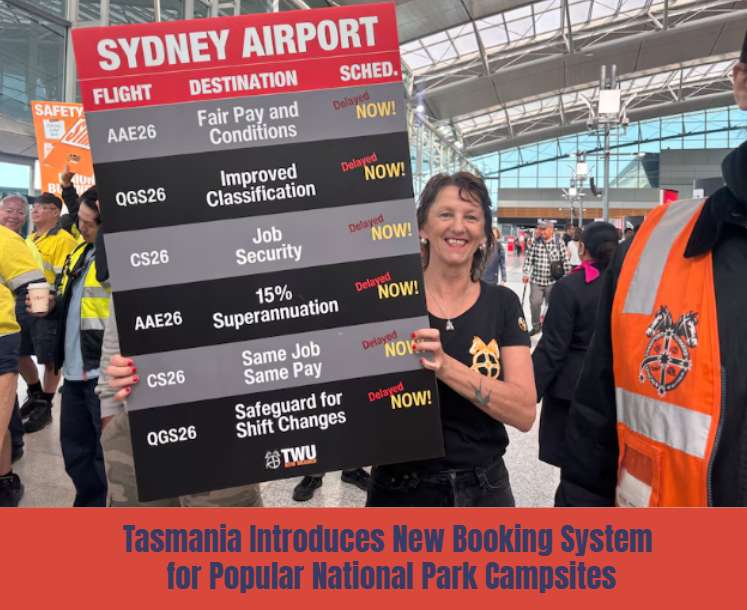
Passengers travelling through Sydney Airport on September 24 are being warned to allow extra time as separate strikes involving airport security and gro...
A British traveller was left behind at a remote South Australian roadside stop after her Greyhound bus departed during a scheduled overnight break near...
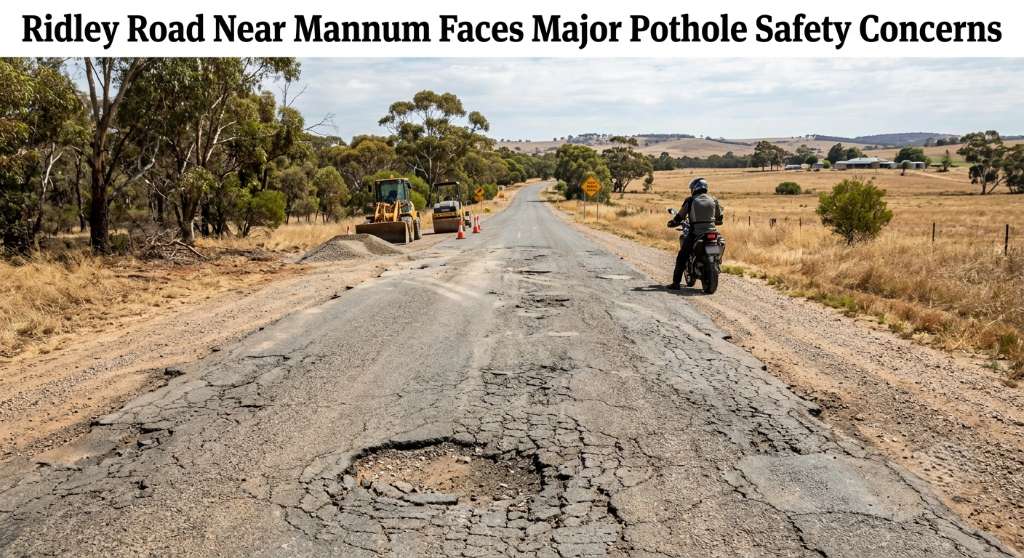
A badly deteriorated section of Ridley Road between Mannum and Cambrai has raised serious safety concerns, with South Australian authorities acknowledgi...
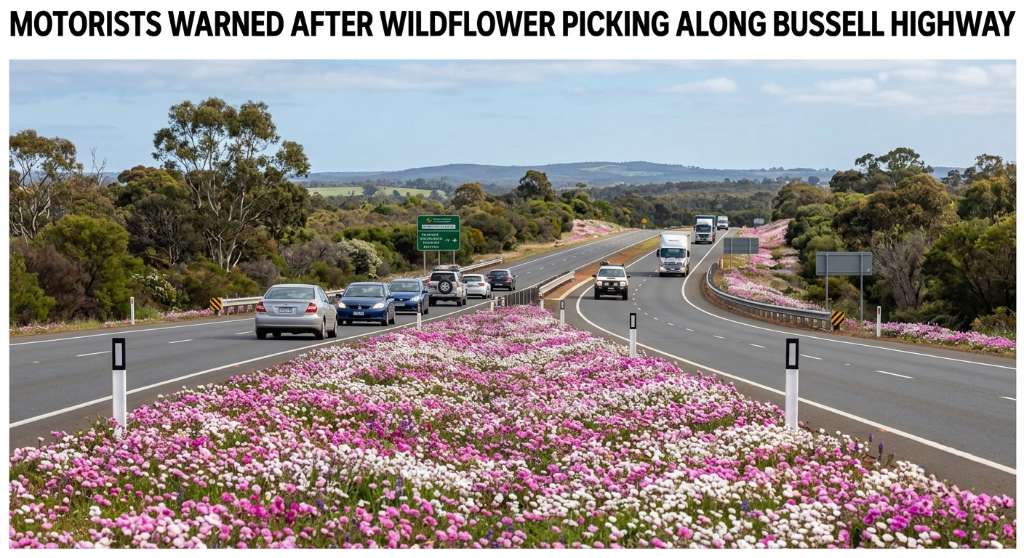
Drivers stopping to pick or photograph colourful everlasting wildflowers along Western Australia’s Bussell Highway are being warned about serious road-s...
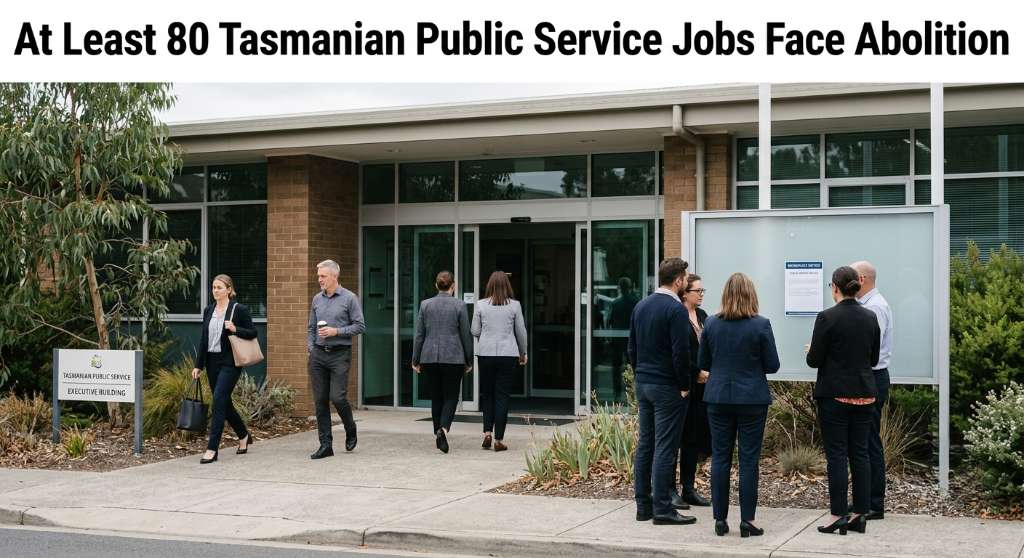
At least 80 positions have been identified for abolition as Tasmania restructures parts of its public service and works toward a broader reduction in go...
Tasmania is facing pressure on mental health services in the state's north-west after a fire damaged the Spencer Clinic at North West Regional Hospital...
Passengers travelling through Sydney Airport on September 24 are being warned to allow extra time as separate strikes involving airport security and gro...
Two men have been charged after detectives investigating an alleged large-scale drug supply network seized cocaine, methylamphetamine, MDMA and other it...