Safety note: Admin approval is an initial review, not a guarantee that every detail is correct. Check important or urgent claims with official sources and report anything inaccurate or unsafe.
Source and credit: Contributor's own report
Tasmania's Cherry Blossom Festival Blossoms From a Japanese Soba Connection - Deloraire, Tasmania
Smart summary
A Japanese love of Tasmanian buckwheat and fresh soba noodles helped create a lasting cultural connection that is now celebrated through the annual Hanami Trail in northern Tasmania.
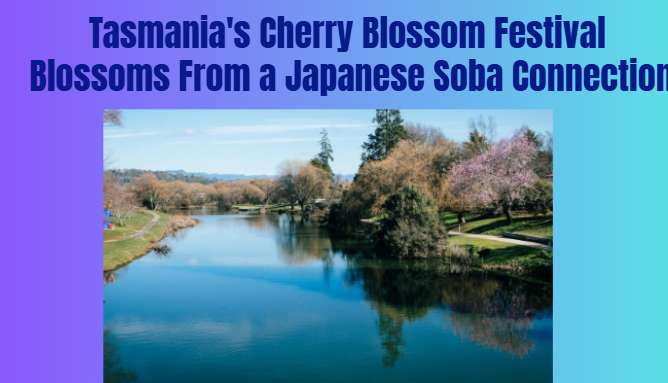
Hundreds of cherry blossom trees lining the Meander River at Deloraine have become the centrepiece of a growing cultural tradition in northern Tasmania, with the annual Hanami Trail festival celebrating a connection between Tasmania and Japan that began decades ago.
The story behind the festival dates back to the 1980s, when Tasmania began experimenting with growing buckwheat, a crop used to make soba noodles. Japanese flour mill owner Rick Shiratori helped develop the idea of growing the crop in Tasmania after recognising that the state's seasons were opposite to those in Japan.
That seasonal difference created an opportunity for Japanese consumers to access fresh, new-season buckwheat at a different time of year. Trials began in Tasmania in 1986, eventually developing into a small but distinctive agricultural connection between the two regions.
Around three decades ago, Shiratori donated hundreds of cherry blossom trees to Tasmania. About 300 of those trees now line sections of the Meander River at Deloraine, where their annual flowering has become a major attraction.
The trees are part of the Hanami Trail, a festival that celebrates Japanese culture, food, art and community. This year's event marked the festival's fifth year and attracted hundreds of people to the area.
Festival activities included traditional Japanese performances, including taiko drumming, shakuhachi bamboo flute performances and aikido. Visitors also took part in Japanese calligraphy and other cultural activities while enjoying the spring scenery created by the flowering trees.
The blossoms have also become an important gathering point for Tasmania's Japanese community. The Australia-Japan Society of Tasmania estimates that about 800 Japanese people live in the state.
For people with connections to Japan, the annual flowering provides an opportunity to share cultural traditions and meet others in the community. Local resident Kuniko Ishihara, who was born in Japan and moved to Australia as a student, has made the annual blossom display part of her family's routine.
The cherry trees flower for only about 10 days each year, making the festival a relatively short seasonal event. Their brief flowering period has helped create a strong sense of anticipation among residents and visitors who return each year to see the display.
The connection also continues through Tasmania's buckwheat industry. Growers in the region have been cultivating, processing and exporting buckwheat for decades, with some of the crop sent to Japan and other international markets.
Tasmanian growers say the state's buckwheat remains a niche agricultural product. The crop is harvested, dried and processed before the dark outer husk is removed, allowing the seeds to be shipped for use in food production.
The story of the Hanami Trail demonstrates how an agricultural relationship that began with a specialised food crop eventually developed into a broader cultural connection. Today, the cherry trees along the Meander River provide a visible reminder of that history while giving northern Tasmania a distinctive annual spring celebration.
The latest festival has once again brought local residents, Japanese Australians and visitors together beneath the flowering trees, combining Tasmania's agricultural history with Japanese cultural traditions.
TasmaniaJapaneseFestivalTreesAnnual
Hundreds of cherry blossom trees lining the Meander River at Deloraine have become the centrepiece of a growing cultural tradition in northern Tasmania, with the annual Hanami Trail festival celebrating a connection between Tasmania and Japan that began decades ago.
The story behind the festival dates back to the 1980s, when Tasmania began experimenting with growing buckwheat, a crop used to make soba noodles. Japanese flour mill owner Rick Shiratori helped develop the idea of growing the crop in Tasmania after recognising that the state's seasons were opposite to those in Japan.
That seasonal difference created an opportunity for Japanese consumers to access fresh, new-season buckwheat at a different time of year. Trials began in Tasmania in 1986, eventually developing into a small but distinctive agricultural connection between the two regions.
Around three decades ago, Shiratori donated hundreds of cherry blossom trees to Tasmania. About 300 of those trees now line sections of the Meander River at Deloraine, where their annual flowering has become a major attraction.
The trees are part of the Hanami Trail, a festival that celebrates Japanese culture, food, art and community. This year's event marked the festival's fifth year and attracted hundreds of people to the area.
Festival activities included traditional Japanese performances, including taiko drumming, shakuhachi bamboo flute performances and aikido. Visitors also took part in Japanese calligraphy and other cultural activities while enjoying the spring scenery created by the flowering trees.
The blossoms have also become an important gathering point for Tasmania's Japanese community. The Australia-Japan Society of Tasmania estimates that about 800 Japanese people live in the state.
For people with connections to Japan, the annual flowering provides an opportunity to share cultural traditions and meet others in the community. Local resident Kuniko Ishihara, who was born in Japan and moved to Australia as a student, has made the annual blossom display part of her family's routine.
The cherry trees flower for only about 10 days each year, making the festival a relatively short seasonal event. Their brief flowering period has helped create a strong sense of anticipation among residents and visitors who return each year to see the display.
The connection also continues through Tasmania's buckwheat industry. Growers in the region have been cultivating, processing and exporting buckwheat for decades, with some of the crop sent to Japan and other international markets.
Tasmanian growers say the state's buckwheat remains a niche agricultural product. The crop is harvested, dried and processed before the dark outer husk is removed, allowing the seeds to be shipped for use in food production.
The story of the Hanami Trail demonstrates how an agricultural relationship that began with a specialised food crop eventually developed into a broader cultural connection. Today, the cherry trees along the Meander River provide a visible reminder of that history while giving northern Tasmania a distinctive annual spring celebration.
The latest festival has once again brought local residents, Japanese Australians and visitors together beneath the flowering trees, combining Tasmania's agricultural history with Japanese cultural traditions.
Essential bus services connecting Alice Springs with five remote communities have been reduced, with the operator warning that some routes could be canc...
A carpentry apprentice in Alice Springs says course cancellations at Charles Darwin University could delay his qualification by up to 12 months because...
A carpentry apprentice in Alice Springs says course cancellations at Charles Darwin University could delay his qualification by up to 12 months because...
Several sharks have been spotted near a whale carcass that washed ashore at Perth's City Beach, prompting authorities to issue multiple warnings for swi...
Police have arrested a 32-year-old man after the bodies of two men were discovered at the same property near Grafton in northern New South Wales two wee...
Researchers are warning communities along South Australia's Lower Murray to prepare for more frequent flash droughts, with above-average temperatures fo...
Three high-school students have joined the Carnarvon Volunteer Fire and Rescue Service as the regional organisation works to strengthen its volunteer nu...
The Western Australia Supreme Court has dismissed a $2.6 million claim brought by engineering companies over alleged damage to a commercial barge that w...
A 34-year-old man has been charged after police allege a worker was threatened with a knife during an overnight robbery at a fast-food restaurant in Spr...
Police have arrested a 32-year-old man after the bodies of two men were discovered at the same property near Grafton in northern New South Wales two wee...
Two 14-year-old boys have been arrested and charged after police allege they were caught trying to enter a property at Noarlunga Downs in Adelaide's sou...
Researchers are warning communities along South Australia's Lower Murray to prepare for more frequent flash droughts, with above-average temperatures fo...