Safety note: Admin approval is an initial review, not a guarantee that every detail is correct. Check important or urgent claims with official sources and report anything inaccurate or unsafe.
Source and credit: Contributor's own report
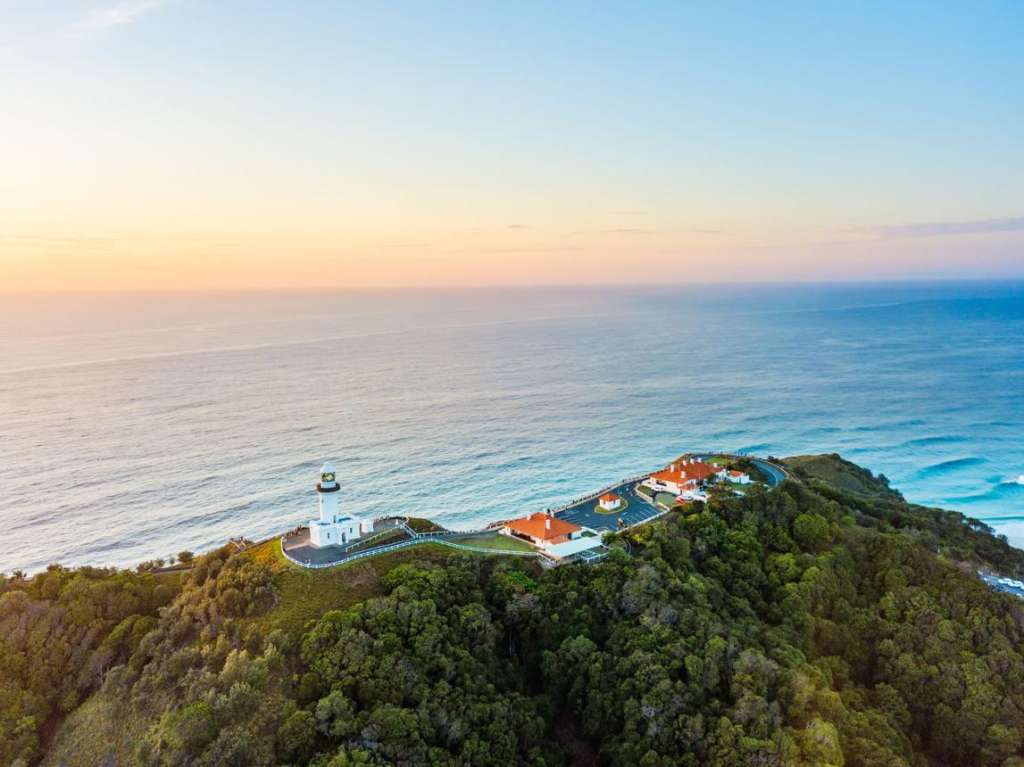
Tibetan Monks Create Magical Sunrise Moment at Cape Byron Lighthouse - Byron Bay, NSW
Smart summary
Tibetan monks gathered at Cape Byron Lighthouse for a special sunrise experience, creating a memorable cultural moment at one of Byron Bay’s most recognisable landmarks.
A group of Tibetan monks created a memorable sunrise moment at Cape Byron Lighthouse, bringing a unique cultural experience to one of Byron Bay’s best-known locations.
The monks gathered at the lighthouse during the early morning as the sun rose over the coast. Cape Byron is particularly significant as Australia’s easternmost mainland point, making sunrise there an important experience for visitors and locals alike.
The visit provided an opportunity for the monks to experience Byron Bay’s natural environment while also creating an unusual and visually striking scene for people at the landmark.
Cape Byron Lighthouse attracts visitors throughout the year because of its spectacular coastal views. The surrounding headland provides views across the Pacific Ocean and is also an important area for wildlife and conservation.
Sunrise at the lighthouse can be especially striking, with changing light across the ocean and surrounding coastline. The presence of the Tibetan monks added a cultural dimension to the experience.
The visit also reflects Byron Bay’s reputation as a destination where nature, spirituality, culture and tourism frequently intersect. The area has long attracted visitors interested in meditation, wellness, arts and alternative cultural experiences.
For the monks, visiting such a prominent coastal location offered an opportunity to experience a different environment from the communities and places where they normally live and work.
For people who witnessed the gathering, the event provided a memorable start to the day. The combination of traditional Buddhist robes, the historic lighthouse and the sunrise created a distinctive scene at the headland.
Cape Byron Lighthouse itself has an important place in the history of the region. Built to help guide ships along the New South Wales coast, it has since become one of Byron Bay’s most recognisable tourist attractions.
The surrounding Cape Byron Headland is also popular for walking and sightseeing. Visitors regularly travel to the lighthouse to watch sunrise, view the coastline and, during the appropriate seasons, look for whales moving through offshore waters.
The monks’ visit highlights how the location continues to serve more than simply a tourism function. It can also provide a setting for reflection, cultural experiences and community gatherings.
Events and visits such as this can contribute to Byron Bay’s distinctive identity, where the natural landscape is closely connected with cultural and spiritual activities.
The story is particularly relevant to the local community because it occurred at a landmark strongly associated with Byron Bay and was reported locally on 10 August.
It is separate from the previously sent Byron Fest 2027 tourism-development story and the social and affordable housing partnership story.
I have also excluded the “hogtied” whale rescue, because the local Byron Coast Times archive dates that report to 9 August 2026, not 10 August.
ByronLighthouseMonksAlsoCape
A group of Tibetan monks created a memorable sunrise moment at Cape Byron Lighthouse, bringing a unique cultural experience to one of Byron Bay’s best-known locations.
The monks gathered at the lighthouse during the early morning as the sun rose over the coast. Cape Byron is particularly significant as Australia’s easternmost mainland point, making sunrise there an important experience for visitors and locals alike.
The visit provided an opportunity for the monks to experience Byron Bay’s natural environment while also creating an unusual and visually striking scene for people at the landmark.
Cape Byron Lighthouse attracts visitors throughout the year because of its spectacular coastal views. The surrounding headland provides views across the Pacific Ocean and is also an important area for wildlife and conservation.
Sunrise at the lighthouse can be especially striking, with changing light across the ocean and surrounding coastline. The presence of the Tibetan monks added a cultural dimension to the experience.
The visit also reflects Byron Bay’s reputation as a destination where nature, spirituality, culture and tourism frequently intersect. The area has long attracted visitors interested in meditation, wellness, arts and alternative cultural experiences.
For the monks, visiting such a prominent coastal location offered an opportunity to experience a different environment from the communities and places where they normally live and work.
For people who witnessed the gathering, the event provided a memorable start to the day. The combination of traditional Buddhist robes, the historic lighthouse and the sunrise created a distinctive scene at the headland.
Cape Byron Lighthouse itself has an important place in the history of the region. Built to help guide ships along the New South Wales coast, it has since become one of Byron Bay’s most recognisable tourist attractions.
The surrounding Cape Byron Headland is also popular for walking and sightseeing. Visitors regularly travel to the lighthouse to watch sunrise, view the coastline and, during the appropriate seasons, look for whales moving through offshore waters.
The monks’ visit highlights how the location continues to serve more than simply a tourism function. It can also provide a setting for reflection, cultural experiences and community gatherings.
Events and visits such as this can contribute to Byron Bay’s distinctive identity, where the natural landscape is closely connected with cultural and spiritual activities.
The story is particularly relevant to the local community because it occurred at a landmark strongly associated with Byron Bay and was reported locally on 10 August.
It is separate from the previously sent Byron Fest 2027 tourism-development story and the social and affordable housing partnership story.
I have also excluded the “hogtied” whale rescue, because the local Byron Coast Times archive dates that report to 9 August 2026, not 10 August.
A fire damaged the Moama Football and Netball Club's social rooms during Saturday's grand final, forcing about 1,000 people to leave the building becaus...
At least 80 positions have been identified for abolition as Tasmania restructures parts of its public service and works toward a broader reduction in go...
A local investor has purchased Brisbane's historic Coorparoo Bowls Club, with both bowling greens set to remain and the clubhouse planned for renovation.
A Bendigo-based migration agent has raised concerns about proposed changes to Australia’s migration system, saying the federal government’s planned reduction in net migration co...
A Queensland parliamentary committee has completed regional hearings on proposed tougher bail laws, hearing from crime victims, legal experts and commun...
Seven Australian health startups will share $15.6 million in equity-free funding to develop new dementia treatments, early-detection tools, gene therapi...
The Victorian Department of Education pleaded guilty after a Year 10 student suffered serious hand injuries while using an unguarded metal guillotine du...
Administrators have revealed Australian Off Road owes about $9 million after the Sunshine Coast caravan manufacturer collapsed, leaving customers, emplo...
A woman has died following a serious three-vehicle collision involving a commercial bus and two cars in Glenburn, in Victoria’s Yarra Ranges, on Thursday, 24 September 2026. Eme...
A woman has died following a serious three-car collision in Leongatha, Victoria, on Wednesday afternoon, 23 September 2026. Emergency services were called to the Strzelecki High...
A Queensland parliamentary committee has completed regional hearings on proposed tougher bail laws, hearing from crime victims, legal experts and commun...