WA Premier Challenges Federal Labor Over Working Holiday Visa Changes
By Chloe · Published 26 Oct 2026 · Updated 26 Oct 2026
Perth, WA · Western Australia News
Safety note: Admin approval is an initial review, not a guarantee that every detail is correct. Check important or urgent claims with official sources and report anything inaccurate or unsafe.
Source and credit: Contributor's own report
WA Premier Challenges Federal Labor Over Working Holiday Visa Changes - Perth, WA
Smart summary
Western Australian Premier Roger Cook is urging the federal government to reconsider proposed restrictions on second- and third-year working holiday visas, warning that regional tourism and hospitality businesses coul...
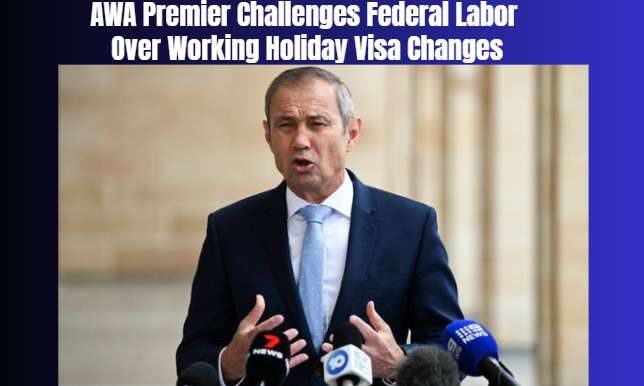
Western Australian Premier Roger Cook has urged the federal government to reconsider proposed changes to working holiday visas, warning that restrictions on second- and third-year visas could make it harder for regional tourism and hospitality businesses to recruit seasonal workers.
Cook has raised concerns with federal Home Affairs Minister Tony Burke about the potential effects of the proposed changes, which would introduce a ballot system for working holiday makers seeking to remain in Australia for a second or third year. Under the proposed arrangements, 45,000 places would be available for second-year visas and 5,000 for third-year visas.
The Western Australian government argues that regional businesses rely on working holiday makers to fill temporary jobs, particularly during busy tourism periods when demand for staff increases. Hotels, restaurants, tourism operators and other hospitality businesses may face additional recruitment pressure if fewer eligible travellers are available to work.
Concerns for regional tourism
Western Australia has a distinctive challenge because many international visitors initially arrive in Australia's eastern cities before travelling west. Some working holiday makers take considerable time to reach Western Australia, meaning regional employers can depend on travellers who move across the country during their extended stay.
Tourism industry representatives have warned that reducing the number of returning working holiday makers could affect businesses that already find it difficult to recruit staff. Seasonal workers can be especially important in regional destinations, where the local population may not be large enough to meet temporary increases in labour demand.
Cook and industry representatives have argued that federal migration settings should take regional workforce requirements into account. They say a national policy designed to manage migration numbers needs to recognise that different states and industries have different employment needs.
Government's position on visa reform
The federal government has presented changes to working holiday arrangements as part of its broader effort to manage migration and maintain the integrity of the visa program. A ballot system would determine access to a limited number of places for eligible applicants seeking to extend their stay.
However, details about how the system would operate and how it might affect individual industries remain important concerns for employers. Tourism businesses want sufficient clarity to plan staffing, accommodation and operations ahead of peak visitor periods.
The disagreement reflects a wider policy challenge for Canberra: balancing migration management with the need to supply workers to industries that depend on temporary labour.
Other state leaders have also expressed concerns about the possible economic effects of tighter migration settings. Regional businesses argue that reductions in available workers could affect service levels, operating capacity and local visitor spending.
Potential economic implications
Tourism is an important source of employment and business activity across Western Australia, including in destinations outside Perth. If employers cannot recruit enough staff during busy periods, some businesses could face increased costs, reduced operating hours or difficulty meeting visitor demand.
The extent of any impact will depend on the final visa arrangements, the number of eligible workers available and whether employers can recruit from other sources. The proposed changes do not automatically mean every business will experience a shortage, but they have prompted concern among industry representatives.
Cook's intervention adds to ongoing debate over how federal migration policy should account for regional economic conditions. Western Australia's position is that visa rules should be designed with the needs of tourism operators and other employers in mind, particularly where seasonal labour is essential.
The federal government has not agreed to abandon the proposed changes. The issue remains a point of discussion between state and federal leaders as Australia seeks to balance migration policy, workforce availability and the needs of regional industries.
RegionalFederalTourismBusinessesHoliday
Western Australian Premier Roger Cook has urged the federal government to reconsider proposed changes to working holiday visas, warning that restrictions on second- and third-year visas could make it harder for regional tourism and hospitality businesses to recruit seasonal workers.
Cook has raised concerns with federal Home Affairs Minister Tony Burke about the potential effects of the proposed changes, which would introduce a ballot system for working holiday makers seeking to remain in Australia for a second or third year. Under the proposed arrangements, 45,000 places would be available for second-year visas and 5,000 for third-year visas.
The Western Australian government argues that regional businesses rely on working holiday makers to fill temporary jobs, particularly during busy tourism periods when demand for staff increases. Hotels, restaurants, tourism operators and other hospitality businesses may face additional recruitment pressure if fewer eligible travellers are available to work.
Concerns for regional tourism
Western Australia has a distinctive challenge because many international visitors initially arrive in Australia's eastern cities before travelling west. Some working holiday makers take considerable time to reach Western Australia, meaning regional employers can depend on travellers who move across the country during their extended stay.
Tourism industry representatives have warned that reducing the number of returning working holiday makers could affect businesses that already find it difficult to recruit staff. Seasonal workers can be especially important in regional destinations, where the local population may not be large enough to meet temporary increases in labour demand.
Cook and industry representatives have argued that federal migration settings should take regional workforce requirements into account. They say a national policy designed to manage migration numbers needs to recognise that different states and industries have different employment needs.
Government's position on visa reform
The federal government has presented changes to working holiday arrangements as part of its broader effort to manage migration and maintain the integrity of the visa program. A ballot system would determine access to a limited number of places for eligible applicants seeking to extend their stay.
However, details about how the system would operate and how it might affect individual industries remain important concerns for employers. Tourism businesses want sufficient clarity to plan staffing, accommodation and operations ahead of peak visitor periods.
The disagreement reflects a wider policy challenge for Canberra: balancing migration management with the need to supply workers to industries that depend on temporary labour.
Other state leaders have also expressed concerns about the possible economic effects of tighter migration settings. Regional businesses argue that reductions in available workers could affect service levels, operating capacity and local visitor spending.
Potential economic implications
Tourism is an important source of employment and business activity across Western Australia, including in destinations outside Perth. If employers cannot recruit enough staff during busy periods, some businesses could face increased costs, reduced operating hours or difficulty meeting visitor demand.
The extent of any impact will depend on the final visa arrangements, the number of eligible workers available and whether employers can recruit from other sources. The proposed changes do not automatically mean every business will experience a shortage, but they have prompted concern among industry representatives.
Cook's intervention adds to ongoing debate over how federal migration policy should account for regional economic conditions. Western Australia's position is that visa rules should be designed with the needs of tourism operators and other employers in mind, particularly where seasonal labour is essential.
The federal government has not agreed to abandon the proposed changes. The issue remains a point of discussion between state and federal leaders as Australia seeks to balance migration policy, workforce availability and the needs of regional industries.
A freedom of information request has revealed that Gold Coast Council does not hold a copy of the invoice for Mayor Tom Tate's three-day stay at Donald...
A nationwide survey of 4,000 Australians reveals declining confidence in politicians, growing dissatisfaction with democracy and significant differences...
New figures reveal more than $3 million in government spending on promotional merchandise, including unusual items such as condoms and lollies, raising...
Australia's antisemitism envoy has recommended stronger protest rules, additional visa checks and independent oversight of public broadcasters as part o...
A 59-year-old convicted sex offender is scheduled for release in December despite remaining classified as a high-risk offender. The Supreme Court has im...
Around 8,000 customers in Western Australia's coastal city of Albany will need to replace gas appliances with electric alternatives or switch to bottled...
Fremantle's new bridge will open to the public on Sunday, 1 November, replacing the ageing crossing and providing wider shared paths for pedestrians and...
Western Australia's Joint Counter Terrorism Team has upgraded charges against a 22-year-old Perth man following further investigations into alleged prep...
A psychiatric report presented to South Australia's Supreme Court has raised questions about Tamika Chesser's mental competence in the case involving th...
A freedom of information request has revealed that Gold Coast Council does not hold a copy of the invoice for Mayor Tom Tate's three-day stay at Donald...