Safety note: Admin approval is an initial review, not a guarantee that every detail is correct. Check important or urgent claims with official sources and report anything inaccurate or unsafe.
Source and credit: Contributor's own report
40 Years of Great Barrier Reef Monitoring Provides Critical Insights into Reef Health - Cairns, Queensland
Smart summary
Scientists celebrate four decades of continuous reef surveys, creating one of the world's longest marine monitoring programs and helping guide conservation efforts across the Great Barrier Reef.
The Australian Institute of Marine Science (AIMS) is celebrating 40 years of its Long-Term Monitoring Program (LTMP), a landmark scientific initiative that has become one of the world's longest continuous coral reef monitoring projects. Since its establishment in 1985, the program has provided invaluable information about the health, condition and changing trends of the Great Barrier Reef, helping scientists and governments better understand one of Earth's most important natural ecosystems.
Originally created to monitor outbreaks of the coral-eating crown-of-thorns starfish, the program has evolved into a comprehensive scientific survey covering coral cover, reef recovery, fish populations, marine habitats and the impacts of environmental disturbances. Over four decades, researchers have built an extensive dataset that allows scientists to compare current reef conditions with historical records and identify long-term environmental changes.
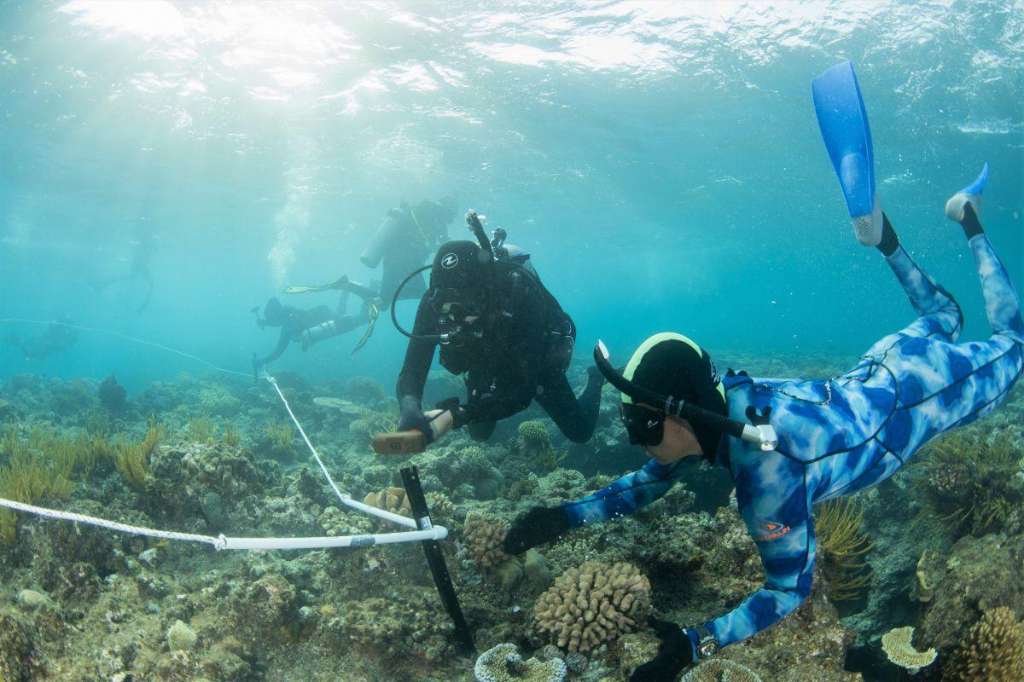
Fieldwork remains one of the most demanding aspects of the program. Marine scientists often spend up to 120 days each year aboard research vessels, surveying multiple reefs daily across thousands of kilometres of Queensland's coastline. Using underwater visual surveys, photography and advanced monitoring technologies, researchers collect consistent data that forms the foundation of Australia's reef management strategies.
The monitoring program has documented many significant events affecting the Great Barrier Reef, including tropical cyclones, coral bleaching episodes, disease outbreaks and infestations of crown-of-thorns starfish. These long-term records allow researchers to measure both damage and recovery, helping identify reefs that show resilience and those requiring greater protection or restoration efforts. Scientists say the value of the program lies not only in recording change but also in understanding why those changes occur.
Information gathered through the LTMP supports government agencies, conservation organisations and reef managers in making evidence-based decisions. The data contributes to water quality management, marine park planning, coral restoration projects and international reporting on the condition of the Great Barrier Reef World Heritage Area. Long-term scientific observations also help improve climate research by revealing how coral ecosystems respond to rising ocean temperatures and other environmental pressures.
Many of the scientists involved describe the program as both physically demanding and deeply rewarding. Extended periods at sea, repeated diving missions and detailed underwater observations require specialised training and dedication. Their work has created one of the most comprehensive marine datasets available anywhere in the world, providing an essential scientific record for future generations.
The anniversary comes at a time when the Great Barrier Reef continues to face significant environmental challenges, including climate change, marine heatwaves and recurring bleaching events. Despite these pressures, scientists emphasise that long-term monitoring remains one of the most effective tools for measuring reef resilience, evaluating conservation efforts and guiding future policy decisions.
As the monitoring program enters its fifth decade, researchers hope continued investment in science and technology will further improve understanding of the reef's complex ecosystem. The information collected over the past 40 years not only helps protect Australia's natural heritage but also provides valuable lessons for coral reef conservation around the world. Through ongoing collaboration between scientists, governments and local communities, the program will continue supporting informed decisions aimed at preserving the Great Barrier Reef for future generations.
ReefProgramMonitoringScientistsBarrier
The Australian Institute of Marine Science (AIMS) is celebrating 40 years of its Long-Term Monitoring Program (LTMP), a landmark scientific initiative that has become one of the world's longest continuous coral reef monitoring projects. Since its establishment in 1985, the program has provided invaluable information about the health, condition and changing trends of the Great Barrier Reef, helping scientists and governments better understand one of Earth's most important natural ecosystems.
Originally created to monitor outbreaks of the coral-eating crown-of-thorns starfish, the program has evolved into a comprehensive scientific survey covering coral cover, reef recovery, fish populations, marine habitats and the impacts of environmental disturbances. Over four decades, researchers have built an extensive dataset that allows scientists to compare current reef conditions with historical records and identify long-term environmental changes.
Fieldwork remains one of the most demanding aspects of the program. Marine scientists often spend up to 120 days each year aboard research vessels, surveying multiple reefs daily across thousands of kilometres of Queensland's coastline. Using underwater visual surveys, photography and advanced monitoring technologies, researchers collect consistent data that forms the foundation of Australia's reef management strategies.
The monitoring program has documented many significant events affecting the Great Barrier Reef, including tropical cyclones, coral bleaching episodes, disease outbreaks and infestations of crown-of-thorns starfish. These long-term records allow researchers to measure both damage and recovery, helping identify reefs that show resilience and those requiring greater protection or restoration efforts. Scientists say the value of the program lies not only in recording change but also in understanding why those changes occur.
Information gathered through the LTMP supports government agencies, conservation organisations and reef managers in making evidence-based decisions. The data contributes to water quality management, marine park planning, coral restoration projects and international reporting on the condition of the Great Barrier Reef World Heritage Area. Long-term scientific observations also help improve climate research by revealing how coral ecosystems respond to rising ocean temperatures and other environmental pressures.
Many of the scientists involved describe the program as both physically demanding and deeply rewarding. Extended periods at sea, repeated diving missions and detailed underwater observations require specialised training and dedication. Their work has created one of the most comprehensive marine datasets available anywhere in the world, providing an essential scientific record for future generations.
The anniversary comes at a time when the Great Barrier Reef continues to face significant environmental challenges, including climate change, marine heatwaves and recurring bleaching events. Despite these pressures, scientists emphasise that long-term monitoring remains one of the most effective tools for measuring reef resilience, evaluating conservation efforts and guiding future policy decisions.
As the monitoring program enters its fifth decade, researchers hope continued investment in science and technology will further improve understanding of the reef's complex ecosystem. The information collected over the past 40 years not only helps protect Australia's natural heritage but also provides valuable lessons for coral reef conservation around the world. Through ongoing collaboration between scientists, governments and local communities, the program will continue supporting informed decisions aimed at preserving the Great Barrier Reef for future generations.
Darwin Northern Territory · Other News · 01 Sep 2026
A scenic hike through Butterfly Gorge in the Northern Territory turned into a frightening experience when a buffalo charged at two hikers. ABC Darwin reported the story today, 1...
Coffs Harbour New South Wales · Other News · 01 Sep 2026
A Safe Work NSW inspection blitz across the Coffs Harbour region has uncovered dozens of workplace-safety issues in the horticulture industry. The operation followed concerns ab...
A major Queensland Government infrastructure investment is set to unlock thousands of new homes across the Fraser Coast, including projects in Maryborough.
Queensland's emerging football prospects are coming together for a three-day Brisbane Lions State Academy showcase, giving young players an opportunity...
A Wavell Heights enrolled nurse has been charged with four counts of alleged sexual assault and one count of wilful exposure, with his professional regi...
A 24-year-old Carina Heights man has been charged with 36 offences following an investigation into alleged break-ins, vehicle offences and other propert...
Cairns Regional Council has unanimously voted to seek $400,000 in Queensland Government funding for a program designed to connect local businesses with the region’s growing film...
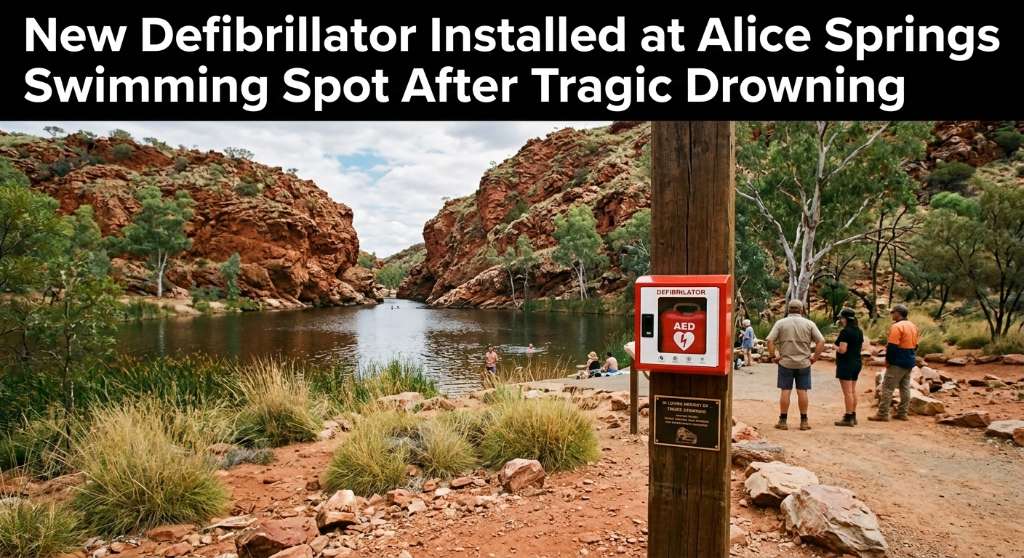
An automated external defibrillator and memorial plaque have been installed at Ellery Creek Big Hole following the death of disability advocate Ellen Fr...
Queensland firefighters spent several hours monitoring a significant grass fire at Mary Kinross Park in Bargara, near Bundaberg, after the blaze broke out on Wednesday evening....