Safety note: Admin approval is an initial review, not a guarantee that every detail is correct. Check important or urgent claims with official sources and report anything inaccurate or unsafe.
AI Set to Reduce Workload for Women in Australian Agriculture.
Smart summary
Artificial intelligence is expected to play a major role in the future of Australian farming, with industry experts saying the technology could significantly reduce the daily workload carried by women working on farms...
Artificial intelligence is expected to play a major role in the future of Australian farming, with industry experts saying the technology could significantly reduce the daily workload carried by women working on farms and in regional communities. The topic was a key focus at the Australian Women in Agriculture National Conference held in Orange, New South Wales, where speakers highlighted how AI is already changing agricultural practices and is likely to become even more influential over the coming decade.
Ag-tech consultant Vi Nguyen, chief executive of Ryka Global, told conference delegates that women in agriculture often manage a wide range of responsibilities each day, including farm operations, finances, livestock, crop management, family commitments, education and household tasks. She said artificial intelligence has the potential to reduce much of this mental workload by automating routine activities and providing smarter decision-making tools.
According to Nguyen, Australian farmers are already benefiting from technologies such as autonomous tractors, satellite livestock monitoring, soil sensors and precision farming systems. She said future developments in AI-powered equipment, robotics and automated machinery could further improve productivity while reducing costs, waste and manual labour across agricultural businesses.
Nguyen also described how she has been working with the NSW Drought Coordinator to collect and analyse hundreds of stories from farmers across the state. Artificial intelligence has been used to record, organise and summarise this information, making it easier to identify common challenges and opportunities facing regional communities. She said these insights are helping improve understanding of how technology can support farmers in different environments.
During the conference, examples were shared of producers already achieving measurable benefits through digital technologies. One grain farmer used soil moisture and nutrient sensors to better manage fertiliser applications, resulting in an estimated 20 per cent reduction in fertiliser use during a recent growing season. Industry experts believe wider adoption of AI-based tools could deliver similar improvements across many agricultural sectors.
The conference also explored broader issues affecting women in agriculture, including leadership, climate resilience, innovation and inclusion. Agricultural leader Pip Job encouraged greater diversity within the sector, saying stronger decision-making is achieved when leadership reflects a wider range of experiences and backgrounds. She emphasised the importance of creating opportunities for First Nations people, migrants and other underrepresented groups within Australian agriculture.
Participants agreed that while AI is unlikely to replace farmers, it will increasingly become a valuable tool that supports better planning, improves efficiency and allows producers to focus on higher-value work. However, speakers also noted the importance of ensuring rural communities have access to digital infrastructure, training and education so they can confidently adopt emerging technologies.
As artificial intelligence continues to evolve, industry leaders believe Australian agriculture is well positioned to benefit from smarter farming practices that improve productivity while reducing pressure on farming families. They said ongoing collaboration between technology providers, governments and agricultural organisations will be essential to ensure the benefits of AI are shared across regional Australia and help strengthen the future of the nation's farming industry.
AgricultureAgriculturalFarmingWomenAcross
Artificial intelligence is expected to play a major role in the future of Australian farming, with industry experts saying the technology could significantly reduce the daily workload carried by women working on farms and in regional communities. The topic was a key focus at the Australian Women in Agriculture National Conference held in Orange, New South Wales, where speakers highlighted how AI is already changing agricultural practices and is likely to become even more influential over the coming decade.
Ag-tech consultant Vi Nguyen, chief executive of Ryka Global, told conference delegates that women in agriculture often manage a wide range of responsibilities each day, including farm operations, finances, livestock, crop management, family commitments, education and household tasks. She said artificial intelligence has the potential to reduce much of this mental workload by automating routine activities and providing smarter decision-making tools.
According to Nguyen, Australian farmers are already benefiting from technologies such as autonomous tractors, satellite livestock monitoring, soil sensors and precision farming systems. She said future developments in AI-powered equipment, robotics and automated machinery could further improve productivity while reducing costs, waste and manual labour across agricultural businesses.
Nguyen also described how she has been working with the NSW Drought Coordinator to collect and analyse hundreds of stories from farmers across the state. Artificial intelligence has been used to record, organise and summarise this information, making it easier to identify common challenges and opportunities facing regional communities. She said these insights are helping improve understanding of how technology can support farmers in different environments.
During the conference, examples were shared of producers already achieving measurable benefits through digital technologies. One grain farmer used soil moisture and nutrient sensors to better manage fertiliser applications, resulting in an estimated 20 per cent reduction in fertiliser use during a recent growing season. Industry experts believe wider adoption of AI-based tools could deliver similar improvements across many agricultural sectors.
The conference also explored broader issues affecting women in agriculture, including leadership, climate resilience, innovation and inclusion. Agricultural leader Pip Job encouraged greater diversity within the sector, saying stronger decision-making is achieved when leadership reflects a wider range of experiences and backgrounds. She emphasised the importance of creating opportunities for First Nations people, migrants and other underrepresented groups within Australian agriculture.
Participants agreed that while AI is unlikely to replace farmers, it will increasingly become a valuable tool that supports better planning, improves efficiency and allows producers to focus on higher-value work. However, speakers also noted the importance of ensuring rural communities have access to digital infrastructure, training and education so they can confidently adopt emerging technologies.
As artificial intelligence continues to evolve, industry leaders believe Australian agriculture is well positioned to benefit from smarter farming practices that improve productivity while reducing pressure on farming families. They said ongoing collaboration between technology providers, governments and agricultural organisations will be essential to ensure the benefits of AI are shared across regional Australia and help strengthen the future of the nation's farming industry.
Tesla is preparing to bring its driverless Cybercab to Australia for a preview, giving Australians an early look at the company’s autonomous vehicle tec...
A 15-year-old Pacific Lutheran College student has developed a privacy-first women’s health app and presented her work at a major national cyber event.
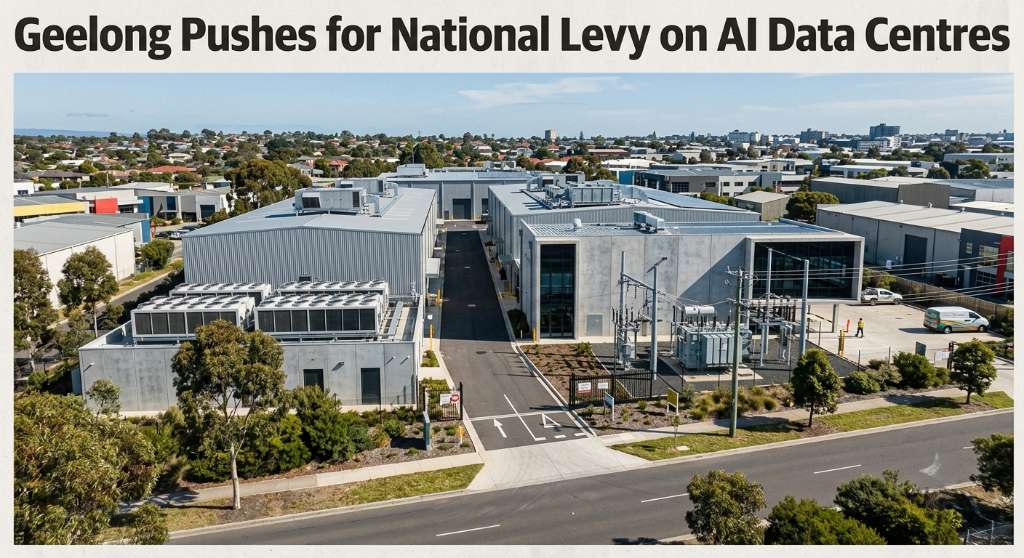
Greater Geelong Council wants data-centre operators to contribute to local infrastructure as community concerns grow over energy, water use and developm...
Orange New South Wales · Community News · 17 Sep 2026
Orange City Council has elected a new Deputy Mayor for the next two years, with the decision announced today, 17 September 2026. The council said the election took place during...
Orange is continuing its regular local court and civic activity today, with the Orange Local Court scheduled to deal with matters as part of its ongoing judicial calendar. Court...
Orange New South Wales · Community News · 01 Sep 2026
Orange Anglican Grammar has renewed calls for the removal of a large tree on its school grounds, saying the 18-metre-high tree presents a potential safety hazard for students an...
Orange New South Wales · Community News · 25 Aug 2026
Orange is preparing for another major community celebration with the return of Zest Fest 2026, which organisers say will be the festival’s biggest year yet. Orange City Council...
Bathurst New South Wales · Community News · 17 Sep 2026
Kerry “Pecky” Peck, a long-standing Bathurst radio personality, has been inducted into the Bathurst Business Hall of Fame in recognition of his extensive contribution to the loc...
Orange New South Wales · Community News · 17 Sep 2026
Orange City Council has elected a new Deputy Mayor for the next two years, with the decision announced today, 17 September 2026. The council said the election took place during...
Wagga Wagga New South Wales · Crime News · 17 Sep 2026
Riverina Police have established a specialised task force in Wagga Wagga to investigate a series of aggravated break-and-enter offences, home invasions and firearm-related incid...
Albury New South Wales · Business News · 17 Sep 2026
An Australian artificial intelligence company has purchased the former Visy paper mill site at Ettamogah, north of Albury, in a significant local business The company, Sharon AI...
Cairns Regional Council has unanimously voted to seek $400,000 in Queensland Government funding for a program designed to connect local businesses with the region’s growing film...
An automated external defibrillator and memorial plaque have been installed at Ellery Creek Big Hole following the death of disability advocate Ellen Fr...
Queensland firefighters spent several hours monitoring a significant grass fire at Mary Kinross Park in Bargara, near Bundaberg, after the blaze broke out on Wednesday evening....