Australian Huntsman Spider Identified Among World's Fastest Arachnids
By Neha · Published 11 Jul 2026 · Updated 11 Jul 2026
Brisbane, QLD · Queensland News
Safety note: Admin approval is an initial review, not a guarantee that every detail is correct. Check important or urgent claims with official sources and report anything inaccurate or unsafe.
Source and credit: Contributor's own report
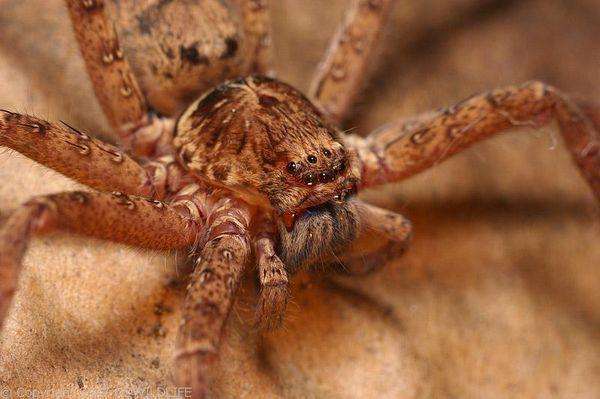
A close-up view of an Australian huntsman spider on a textured surface.
Smart summary
New scientific findings reveal the Australian huntsman spider can reach speeds of nearly 13 kilometres per hour, setting a new benchmark for spider movement.
A new scientific study has revealed that an Australian huntsman spider may be the fastest running spider ever recorded. Researchers found that the brown huntsman spider, scientifically known as Heteropoda jugulans, can reach a top speed of 3.59 metres per second, equal to almost 13 kilometres per hour.
The discovery came from an international research project that analysed the movement speeds of hundreds of spider species. Scientists tested more than 250 species to understand how body size, leg structure, and evolutionary adaptations influence spider speed. The study found that the Australian huntsman was faster than previously recognised record holders, including the Moroccan flic-flac spider.
Huntsman spiders are already well known in Australia for their large size, long legs, and ability to move quickly. Unlike many spiders that rely on webs to catch prey, huntsman spiders are active hunters that chase and capture insects and other small animals. Their long legs allow them to move rapidly across surfaces and change direction quickly.
Researchers discovered that longer legs, rather than simply having a smaller or lighter body, played a major role in helping spiders achieve higher speeds. The findings challenge earlier assumptions that smaller spiders would always be faster because they require less energy to move.
The study involved recording spider movements using high-speed cameras and analysing their running patterns. Scientists examined how different species use their muscles, body structure, and leg movements to produce rapid bursts of speed.
The results showed that the huntsman spider’s speed is not just about escaping danger. Fast movement is an important survival advantage, helping the spider catch prey and avoid threats in its natural environment. Researchers said the findings could also help scientists better understand animal movement and inspire future designs in robotics and engineering.
Although the huntsman spider is extremely fast compared with other spiders, researchers noted that its speed is usually displayed in short bursts rather than long-distance running. The spider’s unique combination of body size, leg length, and movement style allows it to achieve remarkable acceleration.
The discovery has attracted attention worldwide because it changes how scientists view spider abilities. Creatures often considered slow or frightening are proving to have highly advanced movement systems developed through millions of years of evolution.
The research highlights Australia’s unique biodiversity and shows that many remarkable animal abilities remain undiscovered. Scientists continue studying different species to understand how evolution shapes speed, strength, and survival strategies across the natural world.
SpiderHuntsmanSpeedSpidersMovement
A new scientific study has revealed that an Australian huntsman spider may be the fastest running spider ever recorded. Researchers found that the brown huntsman spider, scientifically known as Heteropoda jugulans, can reach a top speed of 3.59 metres per second, equal to almost 13 kilometres per hour.
The discovery came from an international research project that analysed the movement speeds of hundreds of spider species. Scientists tested more than 250 species to understand how body size, leg structure, and evolutionary adaptations influence spider speed. The study found that the Australian huntsman was faster than previously recognised record holders, including the Moroccan flic-flac spider.
Huntsman spiders are already well known in Australia for their large size, long legs, and ability to move quickly. Unlike many spiders that rely on webs to catch prey, huntsman spiders are active hunters that chase and capture insects and other small animals. Their long legs allow them to move rapidly across surfaces and change direction quickly.
Researchers discovered that longer legs, rather than simply having a smaller or lighter body, played a major role in helping spiders achieve higher speeds. The findings challenge earlier assumptions that smaller spiders would always be faster because they require less energy to move.
The study involved recording spider movements using high-speed cameras and analysing their running patterns. Scientists examined how different species use their muscles, body structure, and leg movements to produce rapid bursts of speed.
The results showed that the huntsman spider’s speed is not just about escaping danger. Fast movement is an important survival advantage, helping the spider catch prey and avoid threats in its natural environment. Researchers said the findings could also help scientists better understand animal movement and inspire future designs in robotics and engineering.
Although the huntsman spider is extremely fast compared with other spiders, researchers noted that its speed is usually displayed in short bursts rather than long-distance running. The spider’s unique combination of body size, leg length, and movement style allows it to achieve remarkable acceleration.
The discovery has attracted attention worldwide because it changes how scientists view spider abilities. Creatures often considered slow or frightening are proving to have highly advanced movement systems developed through millions of years of evolution.
The research highlights Australia’s unique biodiversity and shows that many remarkable animal abilities remain undiscovered. Scientists continue studying different species to understand how evolution shapes speed, strength, and survival strategies across the natural world.
Newcastle Museum will host the fifth annual Hunter Science Festival on 23 August, featuring 40 interactive exhibits, combat robots, science shows and ha...
The Australian Reptile Park’s funnel-web spider program has reached a significant milestone as efforts continue to secure the future of Australia’s crit...
Queensland's emerging football prospects are coming together for a three-day Brisbane Lions State Academy showcase, giving young players an opportunity...
A Wavell Heights enrolled nurse has been charged with four counts of alleged sexual assault and one count of wilful exposure, with his professional regi...
A 24-year-old Carina Heights man has been charged with 36 offences following an investigation into alleged break-ins, vehicle offences and other propert...
Cairns Regional Council has unanimously voted to seek $400,000 in Queensland Government funding for a program designed to connect local businesses with the region’s growing film...
An automated external defibrillator and memorial plaque have been installed at Ellery Creek Big Hole following the death of disability advocate Ellen Fr...
Queensland firefighters spent several hours monitoring a significant grass fire at Mary Kinross Park in Bargara, near Bundaberg, after the blaze broke out on Wednesday evening....