Safety note: Admin approval is an initial review, not a guarantee that every detail is correct. Check important or urgent claims with official sources and report anything inaccurate or unsafe.
Source and credit: Contributor's own report
Birdwatching Boom Brings Young People to Broome’s Shorebird Capital - Broome, WA
Smart summary
A growing number of young Australians are taking up birdwatching, bringing fresh interest to the Broome Bird Observatory and the migratory shorebirds of Roebuck Bay.
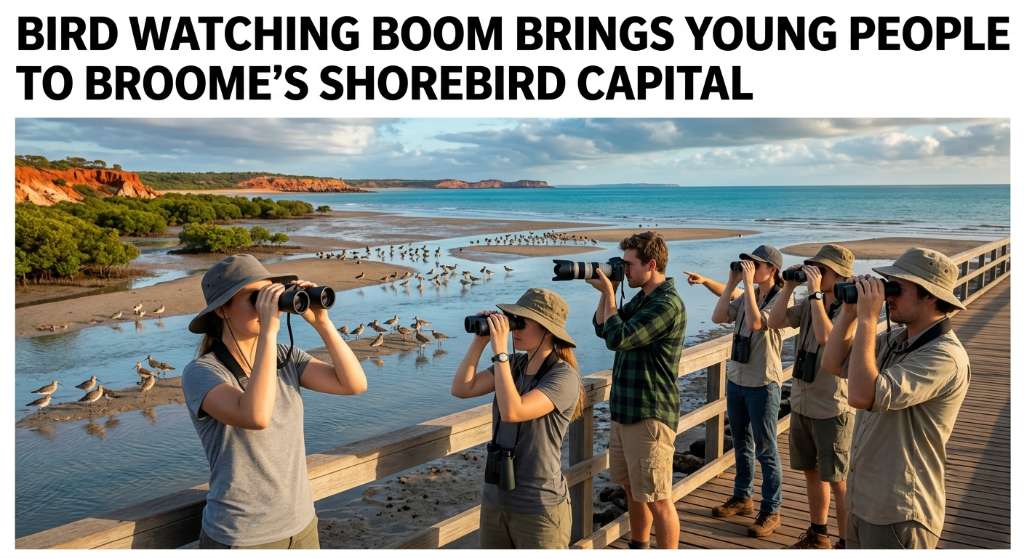
Birdwatching is attracting a growing number of younger Australians, with the trend bringing new visitors to the Broome Bird Observatory in Western Australia’s Kimberley region.
The observatory, located near Broome and overlooking Roebuck Bay, is a major destination for people interested in migratory shorebirds. Roebuck Bay is recognised for the large numbers of birds that gather there during migration, including species that travel between northern Australia and the Northern Hemisphere.
Broome Bird Observatory warden Jamie Van Jones said the increased interest among younger visitors had been noticeable. She said many young people were arriving with lists of birds they hoped to see and were enthusiastic about identifying different species during their visits.
The changing image of birdwatching is also helping attract a new generation. The activity was once commonly associated with older enthusiasts carrying binoculars and cameras, but younger birdwatchers are increasingly using smartphones and specialised apps to identify and record birds.
For some young Australians, an interest in birds developed during the COVID-19 pandemic. Lockdowns encouraged people to spend more time observing nature close to home, and some continued the hobby after restrictions ended.
Melbourne birdwatcher Ella Kerr that her interest began during the pandemic lockdowns in 2020 and 2021. She said she started noticing birds and parts of the environment that she had previously overlooked. Her interest eventually helped shape a trip to Darwin and Broome, where she wanted to see species associated with northern Australia.
The Broome region provides particularly strong opportunities for birdwatchers because of its position along important migratory routes. Visitors to the observatory can see large numbers of shorebirds, including species such as godwits, knots and great knots.
These birds travel extraordinary distances between breeding grounds in the Northern Hemisphere and feeding areas in Australia. Roebuck Bay provides important habitat during their migration, making the region significant not only for tourism and recreation but also for wildlife research and conservation.
The observatory's work extends beyond helping visitors identify birds. The organisation is dedicated to research and education relating to shorebirds and their habitat. Its location provides researchers, volunteers and visitors with an opportunity to observe migratory species in one of Australia's important coastal environments.
Social media is also helping change the way birdwatching is perceived. Young birdwatchers increasingly share photographs, identification lists and sightings online, allowing people to connect with others who have similar interests.
In the Kimberley, Callum Wells established the Talbot Bay Birdwatching Club with friends. The group uses humour and social media to encourage more people to see birdwatching as an accessible outdoor activity rather than something limited to traditional enthusiasts.
The growing interest has benefits for regional tourism as well. Birdwatchers can travel significant distances to see particular species, creating demand for accommodation, tours and other local services. Broome's reputation as a destination for migratory shorebirds therefore gives the region an additional connection to nature-based tourism.
The Broome Bird Observatory hopes the growing interest will also encourage stronger environmental awareness. Observing birds can give people a closer connection to wetlands, beaches and other habitats, potentially increasing public interest in protecting those environments.
For Broome, the birdwatching boom provides a positive example of how a long-established wildlife activity can attract a younger audience. With social media, mobile identification technology and increased interest in outdoor experiences helping to reshape the hobby, the Kimberley is seeing a new generation discover its remarkable birdlife.
BroomeBirdsInterestBirdwatchingPeople
Birdwatching is attracting a growing number of younger Australians, with the trend bringing new visitors to the Broome Bird Observatory in Western Australia’s Kimberley region.
The observatory, located near Broome and overlooking Roebuck Bay, is a major destination for people interested in migratory shorebirds. Roebuck Bay is recognised for the large numbers of birds that gather there during migration, including species that travel between northern Australia and the Northern Hemisphere.
Broome Bird Observatory warden Jamie Van Jones said the increased interest among younger visitors had been noticeable. She said many young people were arriving with lists of birds they hoped to see and were enthusiastic about identifying different species during their visits.
The changing image of birdwatching is also helping attract a new generation. The activity was once commonly associated with older enthusiasts carrying binoculars and cameras, but younger birdwatchers are increasingly using smartphones and specialised apps to identify and record birds.
For some young Australians, an interest in birds developed during the COVID-19 pandemic. Lockdowns encouraged people to spend more time observing nature close to home, and some continued the hobby after restrictions ended.
Melbourne birdwatcher Ella Kerr that her interest began during the pandemic lockdowns in 2020 and 2021. She said she started noticing birds and parts of the environment that she had previously overlooked. Her interest eventually helped shape a trip to Darwin and Broome, where she wanted to see species associated with northern Australia.
The Broome region provides particularly strong opportunities for birdwatchers because of its position along important migratory routes. Visitors to the observatory can see large numbers of shorebirds, including species such as godwits, knots and great knots.
These birds travel extraordinary distances between breeding grounds in the Northern Hemisphere and feeding areas in Australia. Roebuck Bay provides important habitat during their migration, making the region significant not only for tourism and recreation but also for wildlife research and conservation.
The observatory's work extends beyond helping visitors identify birds. The organisation is dedicated to research and education relating to shorebirds and their habitat. Its location provides researchers, volunteers and visitors with an opportunity to observe migratory species in one of Australia's important coastal environments.
Social media is also helping change the way birdwatching is perceived. Young birdwatchers increasingly share photographs, identification lists and sightings online, allowing people to connect with others who have similar interests.
In the Kimberley, Callum Wells established the Talbot Bay Birdwatching Club with friends. The group uses humour and social media to encourage more people to see birdwatching as an accessible outdoor activity rather than something limited to traditional enthusiasts.
The growing interest has benefits for regional tourism as well. Birdwatchers can travel significant distances to see particular species, creating demand for accommodation, tours and other local services. Broome's reputation as a destination for migratory shorebirds therefore gives the region an additional connection to nature-based tourism.
The Broome Bird Observatory hopes the growing interest will also encourage stronger environmental awareness. Observing birds can give people a closer connection to wetlands, beaches and other habitats, potentially increasing public interest in protecting those environments.
For Broome, the birdwatching boom provides a positive example of how a long-established wildlife activity can attract a younger audience. With social media, mobile identification technology and increased interest in outdoor experiences helping to reshape the hobby, the Kimberley is seeing a new generation discover its remarkable birdlife.
A Gippsland mother has been charged after allegedly placing a recording device in her non-verbal seven-year-old son's clothing following concerns about...
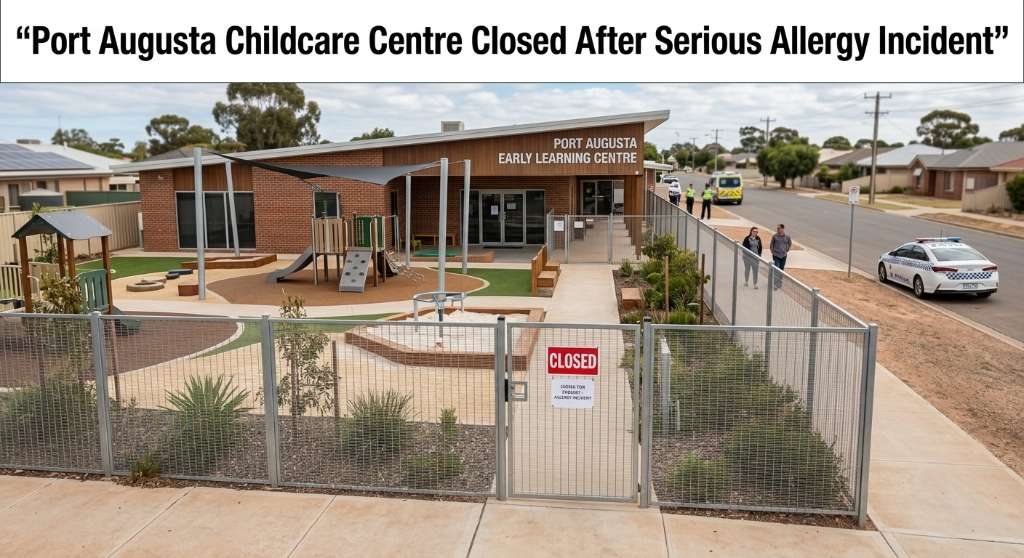
An Edge Early Learning centre in Port Augusta has been ordered to close for two weeks after a child with allergies was hospitalised after being given fo...
The statewide scheme allows eligible renters to transfer their existing bond directly to a new rental property instead of paying a second bond upfront.
Global diesel shortages and disrupted shipping routes are pushing up fuel costs and creating growing risks for Australia’s farmers, miners and wider eco...
A 63-year-old swimmer died after a shark attack at Sorrento Beach on Friday, with authorities keeping beaches across Perth’s northern suburbs closed on...
Two teenagers have appeared in a Perth court after allegedly breaking into a crocodile enclosure and attacking the 400-kilogram reptile with a metal pole.
A Gippsland mother has been charged after allegedly placing a recording device in her non-verbal seven-year-old son's clothing following concerns about...
Sixteen-year-old Xavier Cain from Mount Gambier is preparing to compete against some of the world's leading simulator racers in the 2026 Porsche e Sports...
Tasmania Police are investigating a two-vehicle collision at the intersection of Percival and Cotton Streets in Latrobe, with three people taken to hosp...