Safety note: Admin approval is an initial review, not a guarantee that every detail is correct. Check important or urgent claims with official sources and report anything inaccurate or unsafe.
Bodycam Footage Raises Questions Over Police Conduct at Sydney Protest
Smart summary
New body-worn-camera footage has emerged from a 9 February 2026 protest at Sydney Town Hall, showing an NSW Police officer apparently boasting about punching a protester who was on the ground. The footage has triggere...
New body-worn-camera footage has emerged from a 9 February 2026 protest at Sydney Town Hall, showing an NSW Police officer apparently boasting about punching a protester who was on the ground. The footage has triggered renewed questions about police conduct during the protest.
The protest was held during a visit to Sydney by Israeli President Isaac Herzog. A number of protesters were charged following the demonstration. The Guardian reports that NSW Police have since withdrawn charges against four of the 30 protesters originally charged.
The newly surfaced footage has become significant because it provides another piece of evidence for an existing investigation into alleged police conduct at the protest. The Law Enforcement Conduct Commission (LECC) launched Operation Makalu in February to investigate allegations of police brutality connected with the event.
On Tuesday, NSW Greens MP Sue Higginson referred the newly released footage to the LECC, arguing that it should be considered as part of the investigation. NSW Police confirmed they were aware of the footage but said they could not comment because the LECC investigation remains ongoing.
The footage relates to a protester who had previously been charged with assaulting police. According to the report, those charges were among several subsequently withdrawn. The legal position surrounding the original protest charges is separate from the allegations concerning police conduct.
The incident has also raised broader questions about the policing of the February protest. The NSW government had previously defended police actions at the demonstration and urged the public to consider the broader context surrounding footage circulating online.
In April 2026, the NSW Court of Appeal ruled that the public-assembly restriction law used during the protest was unconstitutional. That ruling has become part of the wider debate surrounding the February demonstration and the subsequent prosecutions.
The latest footage does not itself establish criminal guilt by the officer. The conduct is subject to investigation, and the LECC remains responsible for examining the circumstances and determining whether further action is warranted.
PoliceFootageProtestConductFebruary
New body-worn-camera footage has emerged from a 9 February 2026 protest at Sydney Town Hall, showing an NSW Police officer apparently boasting about punching a protester who was on the ground. The footage has triggered renewed questions about police conduct during the protest.
The protest was held during a visit to Sydney by Israeli President Isaac Herzog. A number of protesters were charged following the demonstration. The Guardian reports that NSW Police have since withdrawn charges against four of the 30 protesters originally charged.
The newly surfaced footage has become significant because it provides another piece of evidence for an existing investigation into alleged police conduct at the protest. The Law Enforcement Conduct Commission (LECC) launched Operation Makalu in February to investigate allegations of police brutality connected with the event.
On Tuesday, NSW Greens MP Sue Higginson referred the newly released footage to the LECC, arguing that it should be considered as part of the investigation. NSW Police confirmed they were aware of the footage but said they could not comment because the LECC investigation remains ongoing.
The footage relates to a protester who had previously been charged with assaulting police. According to the report, those charges were among several subsequently withdrawn. The legal position surrounding the original protest charges is separate from the allegations concerning police conduct.
The incident has also raised broader questions about the policing of the February protest. The NSW government had previously defended police actions at the demonstration and urged the public to consider the broader context surrounding footage circulating online.
In April 2026, the NSW Court of Appeal ruled that the public-assembly restriction law used during the protest was unconstitutional. That ruling has become part of the wider debate surrounding the February demonstration and the subsequent prosecutions.
The latest footage does not itself establish criminal guilt by the officer. The conduct is subject to investigation, and the LECC remains responsible for examining the circumstances and determining whether further action is warranted.
A 21-year-old Bendigo man, Adrian Turnbull, has been sentenced to a maximum of four years and eight months in prison after pleading guilty to a series of offences committed acro...
Wagga Wagga New South Wales · Crime News · 17 Sep 2026
Riverina Police have established a specialised task force in Wagga Wagga to investigate a series of aggravated break-and-enter offences, home invasions and firearm-related incid...
Five-Year Sentence for Albury Police Siege A 36-year-old man, Stephen Bates, has been sentenced to five years in prison following a serious confrontation with police in Lavingto...
A 36-year-old man has been charged after investigators allegedly found fraudulent identification documents, cloned number plates, cash and drug-manufact...
A 22-year-old man has been charged after a police pursuit involving an allegedly stolen Toyota utility near Moree in northern New South Wales. NSW Police published the update on...
Sydney New South Wales · General News · 15 Sep 2026
A tragic incident in Auburn, in Sydney’s west, has resulted in the death of a three-year-old girl after she was struck by a car in a residential driveway on Tuesday, September 1...
A 16-year-old boy is due to appear before a children’s court after being charged following an alleged brawl at a train station in Penrith, in Sydney’s west. The incident occurre...
A man in his 40s has been shot dead at the doorway of a home in Merrylands West, western Sydney, prompting a major police investigation. The shooting occurred on Wednesday after...
Bathurst New South Wales · Community News · 17 Sep 2026
Kerry “Pecky” Peck, a long-standing Bathurst radio personality, has been inducted into the Bathurst Business Hall of Fame in recognition of his extensive contribution to the loc...
Orange New South Wales · Community News · 17 Sep 2026
Orange City Council has elected a new Deputy Mayor for the next two years, with the decision announced today, 17 September 2026. The council said the election took place during...
Wagga Wagga New South Wales · Crime News · 17 Sep 2026
Riverina Police have established a specialised task force in Wagga Wagga to investigate a series of aggravated break-and-enter offences, home invasions and firearm-related incid...
Albury New South Wales · Business News · 17 Sep 2026
An Australian artificial intelligence company has purchased the former Visy paper mill site at Ettamogah, north of Albury, in a significant local business The company, Sharon AI...
Cairns Regional Council has unanimously voted to seek $400,000 in Queensland Government funding for a program designed to connect local businesses with the region’s growing film...
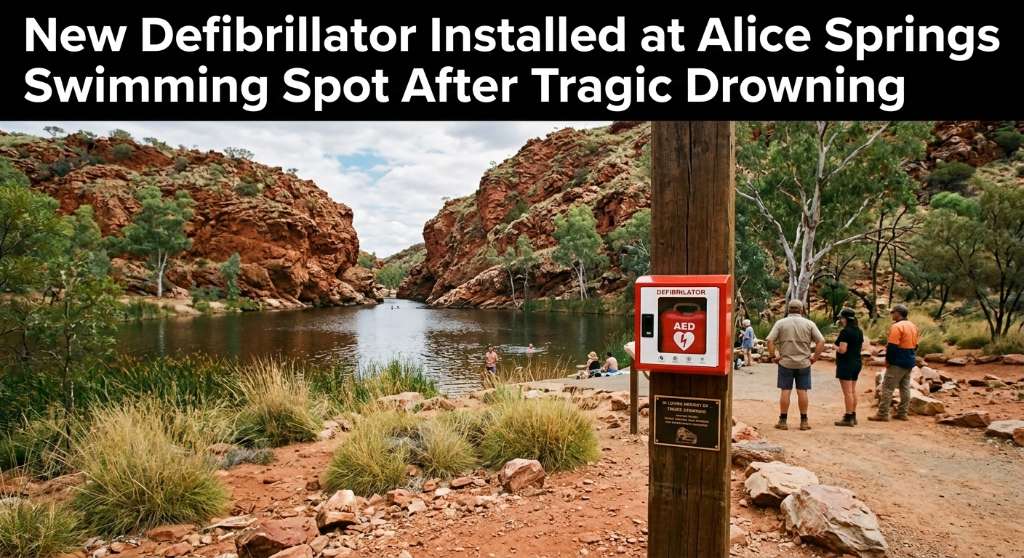
An automated external defibrillator and memorial plaque have been installed at Ellery Creek Big Hole following the death of disability advocate Ellen Fr...
Queensland firefighters spent several hours monitoring a significant grass fire at Mary Kinross Park in Bargara, near Bundaberg, after the blaze broke out on Wednesday evening....