Darwin Homeowners Consider Selling as Property Prices Rise
By Chloe · Published 24 Oct 2026 · Updated 24 Oct 2026
Darwin, NT · Northern Territory News
Safety note: Admin approval is an initial review, not a guarantee that every detail is correct. Check important or urgent claims with official sources and report anything inaccurate or unsafe.
Source and credit: Contributor's own report
Darwin Homeowners Consider Selling as Property Prices Rise - Darwin, NT
Smart summary
Darwin's housing market is showing resilience while property prices weaken across much of Australia. Some homeowners are considering selling to secure profits, but experts warn that rising interest rates and easing bu...
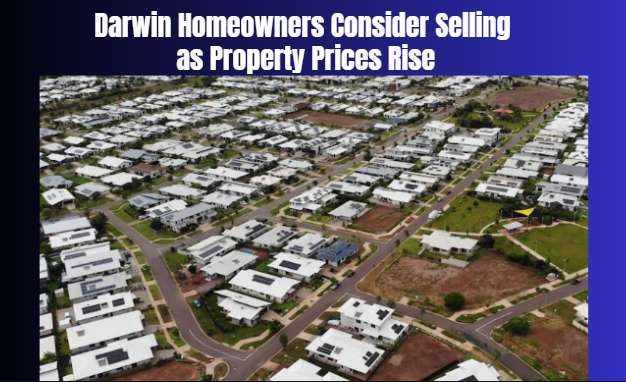
Darwin homeowners are increasingly considering selling their properties after a period of improving prices, offering a contrast to the broader Australian housing market. Limited housing supply and years of relatively slow construction have supported property values in the Northern Territory capital, but analysts warn that the current conditions may not last indefinitely.
One homeowner, Lisa-Joy Cron, purchased a property in Palmerston in 2010, shortly before Darwin experienced a major housing market downturn. After more than a decade of limited growth, the market has begun showing signs of recovery, prompting her to consider whether now is the right time to sell.
Cron said she hoped to receive at least $300,000 more than her original purchase price if she sold. She is weighing the potential profit against uncertainty over future interest rates and whether property prices could weaken again.
Darwin's recent performance has been unusual compared with other Australian capital cities. According to property analytics company Cotality, Darwin recorded a 0.3 per cent increase in house prices and a 0.8 per cent increase in unit prices during September 2026. The figures indicated that Darwin was continuing to record growth at a time when other parts of the country were experiencing softer conditions.
Cotality's head of research, Gerard Burg, attributed the market's resilience largely to limited housing availability and years of subdued building activity. When demand remains steady but relatively few properties are available, prices can rise even when buyers become more cautious.
However, there are signs that the market could be approaching a turning point. More homeowners have begun listing properties for sale, while the number of buyers appears to be easing. This combination could make it harder for sellers to achieve the prices they expect.
Real estate agent Kerri-Ann Laurence, who has worked in Darwin for more than 20 years, has also noticed an increase in listings since the beginning of the year. She said the overall number of properties for sale remained historically low, although the recent increase suggested that more owners were taking advantage of current conditions.
Interstate investors have also contributed to Darwin's housing activity over the past year. Some properties were reportedly attracting buyers quickly after being listed, but agents have observed that this demand is beginning to soften as prices rise.
Interest rates remain another major concern. The Reserve Bank of Australia could increase rates in November, depending on economic conditions. Higher borrowing costs would make mortgages more expensive and could reduce the amount buyers are willing or able to pay.
Rental affordability is also a serious issue in the Northern Territory. Cotality data showed that Darwin's median dwelling rental cost had increased by approximately 11.6 per cent over the year to September. The city's rental vacancy rate remained tight at around 1.9 per cent, while Alice Springs recorded a vacancy rate of about 1.4 per cent.
The combination of limited housing supply, high rents and uncertainty about borrowing costs is creating a complicated outlook for homeowners, buyers and tenants. Although Darwin's property market has performed strongly, experts caution that sellers should consider their individual circumstances rather than assume recent price growth will continue.
The coming months will help reveal whether Darwin can maintain its relative strength or begins to follow the wider national housing slowdown.
DarwinPricesHousingMarketProperty
Darwin homeowners are increasingly considering selling their properties after a period of improving prices, offering a contrast to the broader Australian housing market. Limited housing supply and years of relatively slow construction have supported property values in the Northern Territory capital, but analysts warn that the current conditions may not last indefinitely.
One homeowner, Lisa-Joy Cron, purchased a property in Palmerston in 2010, shortly before Darwin experienced a major housing market downturn. After more than a decade of limited growth, the market has begun showing signs of recovery, prompting her to consider whether now is the right time to sell.
Cron said she hoped to receive at least $300,000 more than her original purchase price if she sold. She is weighing the potential profit against uncertainty over future interest rates and whether property prices could weaken again.
Darwin's recent performance has been unusual compared with other Australian capital cities. According to property analytics company Cotality, Darwin recorded a 0.3 per cent increase in house prices and a 0.8 per cent increase in unit prices during September 2026. The figures indicated that Darwin was continuing to record growth at a time when other parts of the country were experiencing softer conditions.
Cotality's head of research, Gerard Burg, attributed the market's resilience largely to limited housing availability and years of subdued building activity. When demand remains steady but relatively few properties are available, prices can rise even when buyers become more cautious.
However, there are signs that the market could be approaching a turning point. More homeowners have begun listing properties for sale, while the number of buyers appears to be easing. This combination could make it harder for sellers to achieve the prices they expect.
Real estate agent Kerri-Ann Laurence, who has worked in Darwin for more than 20 years, has also noticed an increase in listings since the beginning of the year. She said the overall number of properties for sale remained historically low, although the recent increase suggested that more owners were taking advantage of current conditions.
Interstate investors have also contributed to Darwin's housing activity over the past year. Some properties were reportedly attracting buyers quickly after being listed, but agents have observed that this demand is beginning to soften as prices rise.
Interest rates remain another major concern. The Reserve Bank of Australia could increase rates in November, depending on economic conditions. Higher borrowing costs would make mortgages more expensive and could reduce the amount buyers are willing or able to pay.
Rental affordability is also a serious issue in the Northern Territory. Cotality data showed that Darwin's median dwelling rental cost had increased by approximately 11.6 per cent over the year to September. The city's rental vacancy rate remained tight at around 1.9 per cent, while Alice Springs recorded a vacancy rate of about 1.4 per cent.
The combination of limited housing supply, high rents and uncertainty about borrowing costs is creating a complicated outlook for homeowners, buyers and tenants. Although Darwin's property market has performed strongly, experts caution that sellers should consider their individual circumstances rather than assume recent price growth will continue.
The coming months will help reveal whether Darwin can maintain its relative strength or begins to follow the wider national housing slowdown.
Shipra Saini, an Indian citizen living in Ballarat, Victoria, says she must return to India before the end of October despite still needing to settle he...
A large sperm whale carcass has been buried near Turners Beach after the animal stranded on Tasmania’s north-west coast, raising concerns about environm...
A 75-year-old Perth woman has achieved a remarkable fitness milestone by becoming the oldest person to perform a handstand, demonstrating that strength...
A community group is offering free vegetarian noodles cooked on induction equipment to demonstrate that households can move away from gas cooking withou...
Property offences and crimes against people have fallen across the Northern Territory overall, but recent increases in Darwin and continuing challenges...
Northern Territory Police have charged an 18-year-old man following a five-month investigation into a fatal hit-and-run that killed a 57-year-old man in...
Northern Territory authorities are urging residents to prepare early for another potentially severe wet season, with cyclones, flooding and dangerous st...
A 20-year-old man has been arrested after his cousin was allegedly assaulted with an edged weapon in Gray. The victim is being treated for serious but n...
A man was seriously injured in an alleged assault in Adelaide’s central business district after attending a film screening celebrating queer pride. Fest...
Australian medical research is highlighting a promising vaccine-based approach designed to reduce the risk of melanoma returning after treatment. The fi...
Australian surfer Molly Picklum has won the Rip Curl Pro Portugal, defeating American Caitlin Simmers in the final to move to the top of the World Surf...
A specialist stonemason is carefully recreating an eroded sandstone lion on a historic Darlinghurst building in Sydney, using archival photographs and t...