Sydney Stonemason Recreates 127-Year-Old Lion Sculpture for Historic Building
By Chloe · Published 24 Oct 2026 · Updated 24 Oct 2026
Sydney, NSW · New South Wales News
Safety note: Admin approval is an initial review, not a guarantee that every detail is correct. Check important or urgent claims with official sources and report anything inaccurate or unsafe.
Source and credit: Contributor's own report
Sydney Stonemason Recreates 127-Year-Old Lion Sculpture for Historic Building - Sydney, NSW
Smart summary
A specialist stonemason is carefully recreating an eroded sandstone lion on a historic Darlinghurst building in Sydney, using archival photographs and traditional carving techniques to preserve an important piece of N...
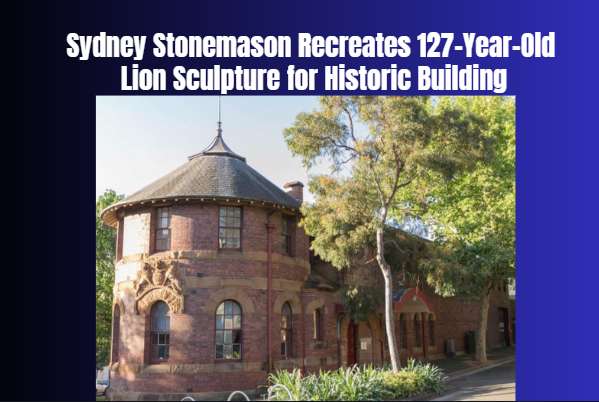
A historic sandstone coat of arms overlooking Taylor Square in Sydney is receiving detailed restoration work to bring one of its most recognisable features back to life. Stonemason Luke McDermott is recreating the lion's head on the 127-year-old crest above the former Darlinghurst Police Station, a heritage building that now houses the Qtopia museum.
The original lion has suffered extensive erosion over many decades as wind, rain and air pollution gradually wore away its facial features. Although the sandstone sculpture remains in place, its face has become so damaged that the original design is difficult to recognise. Restoring it requires more than simply repairing cracks or replacing missing pieces: the craftsperson must reconstruct the lost details while respecting the building's original appearance.
McDermott has been working with the NSW Heritage Stoneworks team on the project for approximately six months. Rather than copying the damaged carving, he has used historical photographs and images of other sandstone lions from the same period to develop a model for the replacement. The aim is to create a lion that looks consistent with the original late-19th-century design.
The work demands considerable precision. The lion sits atop a crown as part of the coat of arms, meaning the proportions and relationship between the two elements must be carefully designed. McDermott uses tools including a hammer drill, cold chisel and smaller finishing instruments to shape the sandstone and refine the sculpture's details.
The project reflects a broader challenge in heritage conservation: once a sculpture's defining features have disappeared, restorers must rely on historical evidence and professional judgement. In some cases, there are no photographs showing the original design clearly, leaving craftspeople to study comparable carvings and interpret the style of the period.
McDermott has 17 years of experience with NSW Heritage Stoneworks. In 2023, he completed a sandstone unicorn's head for the coat of arms above the gates of the National Art School, located across the road from the former police station. That restoration also required him to recreate missing details. A photograph of the original sculpture was discovered halfway through the project, but his reconstruction was sufficiently accurate that it did not need to be replaced.
NSW Heritage Stoneworks maintains more than 800 state-owned heritage sites across the state. Its work includes preserving old schools, courthouses, fire stations and significant public buildings. The projects range from large-scale structural stonework to highly detailed carvings of animals, plants and decorative architectural features.
The organisation also provides employment and training opportunities. Stonemasonry apprenticeships generally take four years, and the trade is included on the Australian Apprenticeships Priority List. However, attracting new workers remains a challenge, particularly when the industry must compete with higher wages available in other sectors.
For experienced stonemasons, the work offers a direct connection to Australia's architectural history. Restoring a historic sculpture helps maintain the character of a building and allows future generations to appreciate craftsmanship that might otherwise be lost to erosion.
The restored lion is intended to complement the surviving sandstone crest and endure for many decades. The project demonstrates how traditional skills, historical research and careful restoration can protect Sydney's heritage while preserving the stories embedded in its historic buildings.
HeritageLionOriginalSandstoneSculpture
A historic sandstone coat of arms overlooking Taylor Square in Sydney is receiving detailed restoration work to bring one of its most recognisable features back to life. Stonemason Luke McDermott is recreating the lion's head on the 127-year-old crest above the former Darlinghurst Police Station, a heritage building that now houses the Qtopia museum.
The original lion has suffered extensive erosion over many decades as wind, rain and air pollution gradually wore away its facial features. Although the sandstone sculpture remains in place, its face has become so damaged that the original design is difficult to recognise. Restoring it requires more than simply repairing cracks or replacing missing pieces: the craftsperson must reconstruct the lost details while respecting the building's original appearance.
McDermott has been working with the NSW Heritage Stoneworks team on the project for approximately six months. Rather than copying the damaged carving, he has used historical photographs and images of other sandstone lions from the same period to develop a model for the replacement. The aim is to create a lion that looks consistent with the original late-19th-century design.
The work demands considerable precision. The lion sits atop a crown as part of the coat of arms, meaning the proportions and relationship between the two elements must be carefully designed. McDermott uses tools including a hammer drill, cold chisel and smaller finishing instruments to shape the sandstone and refine the sculpture's details.
The project reflects a broader challenge in heritage conservation: once a sculpture's defining features have disappeared, restorers must rely on historical evidence and professional judgement. In some cases, there are no photographs showing the original design clearly, leaving craftspeople to study comparable carvings and interpret the style of the period.
McDermott has 17 years of experience with NSW Heritage Stoneworks. In 2023, he completed a sandstone unicorn's head for the coat of arms above the gates of the National Art School, located across the road from the former police station. That restoration also required him to recreate missing details. A photograph of the original sculpture was discovered halfway through the project, but his reconstruction was sufficiently accurate that it did not need to be replaced.
NSW Heritage Stoneworks maintains more than 800 state-owned heritage sites across the state. Its work includes preserving old schools, courthouses, fire stations and significant public buildings. The projects range from large-scale structural stonework to highly detailed carvings of animals, plants and decorative architectural features.
The organisation also provides employment and training opportunities. Stonemasonry apprenticeships generally take four years, and the trade is included on the Australian Apprenticeships Priority List. However, attracting new workers remains a challenge, particularly when the industry must compete with higher wages available in other sectors.
For experienced stonemasons, the work offers a direct connection to Australia's architectural history. Restoring a historic sculpture helps maintain the character of a building and allows future generations to appreciate craftsmanship that might otherwise be lost to erosion.
The restored lion is intended to complement the surviving sandstone crest and endure for many decades. The project demonstrates how traditional skills, historical research and careful restoration can protect Sydney's heritage while preserving the stories embedded in its historic buildings.
A new flight from Sydney to the Gold Coast is drawing attention to a journey that began eight decades ago, connecting Australia’s aviation history with...
Sudden hail has damaged crops in parts of Australia just as farmers prepare for an important harvest season, raising concerns about crop quality and pot...
A Chinese private processor has purchased 68,000 tonnes of new-season Australian canola for shipment in March, marking the first known private-sector pu...
Darwin Northern Territory · Other News · 01 Sep 2026
A scenic hike through Butterfly Gorge in the Northern Territory turned into a frightening experience when a buffalo charged at two hikers. ABC Darwin reported the story today, 1...
A new flight from Sydney to the Gold Coast is drawing attention to a journey that began eight decades ago, connecting Australia’s aviation history with...
Kenyan marathon star Peres Jepchirchir has received a provisional suspension after an out-of-competition sample tested positive for the banned substance...
Australian homicide detectives brought a 26-year-old man back from Poland to face a murder charge over the death of a 22-year-old man whose body was dis...
Planned train timetable changes affecting Sydney and the Illawarra have been abandoned following strong opposition from commuters, less than a month bef...
A man was seriously injured in an alleged assault in Adelaide’s central business district after attending a film screening celebrating queer pride. Fest...
Australian medical research is highlighting a promising vaccine-based approach designed to reduce the risk of melanoma returning after treatment. The fi...
Australian surfer Molly Picklum has won the Rip Curl Pro Portugal, defeating American Caitlin Simmers in the final to move to the top of the World Surf...
One Nation national director James Ashby is considering contesting the federal seat of Capricornia after sitting MP Michelle Landry announced her retire...