Safety note: Admin approval is an initial review, not a guarantee that every detail is correct. Check important or urgent claims with official sources and report anything inaccurate or unsafe.
Source and credit: Contributor's own report
Families urge more resources for NSW cold cases at parliamentary inquiry in Grafton - Coffs Harbour, NSW
Smart summary
A New South Wales parliamentary inquiry into unsolved murders and long-term missing persons cases has heard emotional testimony from families who say police lack the resources to properly investigate cold cases, leavi...
Families of missing people and unsolved murder victims have called for greater police resources and systemic reforms during a public hearing of the New South Wales parliamentary inquiry into unsolved murders and long-term missing persons cases, held in Grafton.
The inquiry, which is examining unresolved homicide and missing persons cases between 1965 and 2010, heard emotional evidence from relatives who described decades of grief, frustration and unanswered questions. Many told the committee they believe cold case investigations have been hampered by limited staffing and an inability to promptly pursue new leads.
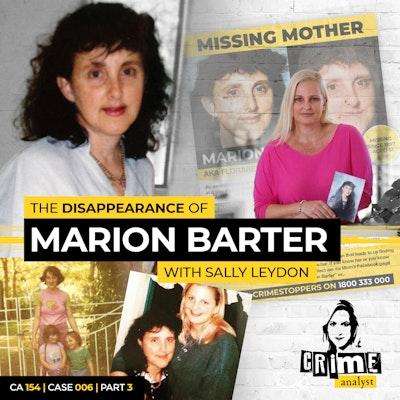
Among those giving evidence was Sally Leydon, daughter of missing woman Marion Barter, who disappeared in 1997. Leydon told the inquiry she believes NSW Police officers are committed to solving cold cases but are overwhelmed by a lack of resources. She said the NSW Police Unsolved Homicide Unit has only 38 staff responsible for investigating approximately 753 unsolved matters, making it difficult for investigators to respond quickly when new information emerges.
The inquiry also heard from Joni Condos, an independent researcher who assisted in uncovering new information relating to Marion Barter's disappearance. She called for the creation of a national register of missing persons and unidentified human remains, as well as a formal process allowing experienced volunteer researchers to work collaboratively with police on unresolved investigations.
Another witness, Peter Stace, whose 16-year-old daughter Lee Ellen Stace was murdered near Yamba in 1997, expressed frustration over the number of investigators assigned to cold cases. He said families often experience repeated changes in investigators over many years, making it difficult to maintain continuity and confidence in the investigative process.
The inquiry also heard from the sisters of Narelle Cox, who disappeared in 1977 after leaving Grafton intending to hitchhike to Noosa. They described how police responses at the time were slow and dismissive because Narelle was an adult, saying their family endured years of false hope and uncertainty. While acknowledging that modern missing-person investigations are generally handled much more quickly, they said families affected by historical cases continue to suffer from the absence of closure.
The parliamentary inquiry was established in October 2025 to examine whether historical investigations into unsolved murders and long-term missing persons cases were handled appropriately and to identify reforms that could improve future investigations. Previous hearings examined cases across southern New South Wales, including evidence relating to possible links with serial killer Ivan Milat, while the Grafton hearing focused primarily on unresolved cases from the state's North Coast.
The committee's next public hearing is scheduled to be held in Newcastle in August 2026, before further hearings in Sydney later in the year. Families hope the inquiry will ultimately lead to increased funding, better coordination between agencies and renewed investigative efforts into some of the state's oldest unresolved cases.
CasesInquiryMissingFamiliesInvestigations
Families of missing people and unsolved murder victims have called for greater police resources and systemic reforms during a public hearing of the New South Wales parliamentary inquiry into unsolved murders and long-term missing persons cases, held in Grafton.
The inquiry, which is examining unresolved homicide and missing persons cases between 1965 and 2010, heard emotional evidence from relatives who described decades of grief, frustration and unanswered questions. Many told the committee they believe cold case investigations have been hampered by limited staffing and an inability to promptly pursue new leads.
Among those giving evidence was Sally Leydon, daughter of missing woman Marion Barter, who disappeared in 1997. Leydon told the inquiry she believes NSW Police officers are committed to solving cold cases but are overwhelmed by a lack of resources. She said the NSW Police Unsolved Homicide Unit has only 38 staff responsible for investigating approximately 753 unsolved matters, making it difficult for investigators to respond quickly when new information emerges.
The inquiry also heard from Joni Condos, an independent researcher who assisted in uncovering new information relating to Marion Barter's disappearance. She called for the creation of a national register of missing persons and unidentified human remains, as well as a formal process allowing experienced volunteer researchers to work collaboratively with police on unresolved investigations.
Another witness, Peter Stace, whose 16-year-old daughter Lee Ellen Stace was murdered near Yamba in 1997, expressed frustration over the number of investigators assigned to cold cases. He said families often experience repeated changes in investigators over many years, making it difficult to maintain continuity and confidence in the investigative process.
The inquiry also heard from the sisters of Narelle Cox, who disappeared in 1977 after leaving Grafton intending to hitchhike to Noosa. They described how police responses at the time were slow and dismissive because Narelle was an adult, saying their family endured years of false hope and uncertainty. While acknowledging that modern missing-person investigations are generally handled much more quickly, they said families affected by historical cases continue to suffer from the absence of closure.
The parliamentary inquiry was established in October 2025 to examine whether historical investigations into unsolved murders and long-term missing persons cases were handled appropriately and to identify reforms that could improve future investigations. Previous hearings examined cases across southern New South Wales, including evidence relating to possible links with serial killer Ivan Milat, while the Grafton hearing focused primarily on unresolved cases from the state's North Coast.
The committee's next public hearing is scheduled to be held in Newcastle in August 2026, before further hearings in Sydney later in the year. Families hope the inquiry will ultimately lead to increased funding, better coordination between agencies and renewed investigative efforts into some of the state's oldest unresolved cases.
A Chinese private processor has purchased 68,000 tonnes of new-season Australian canola for shipment in March, marking the first known private-sector pu...
Darwin Northern Territory · Other News · 01 Sep 2026
A scenic hike through Butterfly Gorge in the Northern Territory turned into a frightening experience when a buffalo charged at two hikers. ABC Darwin reported the story today, 1...
Coffs Harbour New South Wales · Other News · 01 Sep 2026
A Safe Work NSW inspection blitz across the Coffs Harbour region has uncovered dozens of workplace-safety issues in the horticulture industry. The operation followed concerns ab...
A new proposal for factory-built ecohomes in Orange aims to speed up construction while reducing household energy costs as local property prices remain...
An 18-year-old man has been charged after NSW Police allege he used a drone to conduct surveillance as part of a conspiracy to murder a man in Sydney's...
An 18-year-old man has been charged after NSW Police allege he operated a drone to conduct surveillance as part of a conspiracy to murder a man in Sydne...
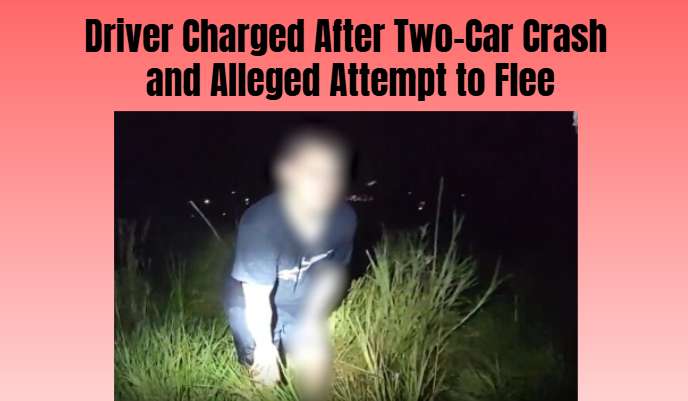
A 22-year-old Elimbah man has been charged after a two-car crash at Baringa on the Sunshine Coast, with police alleging he fled into nearby bushland bef...
A new proposal for factory-built ecohomes in Orange aims to speed up construction while reducing household energy costs as local property prices remain...
Geelong's historic Botanic Gardens are preparing for their 175th anniversary, with volunteers and horticultural staff working to preserve a living colle...