Safety note: Admin approval is an initial review, not a guarantee that every detail is correct. Check important or urgent claims with official sources and report anything inaccurate or unsafe.
Source and credit: Contributor's own report
No Water, No REZ: Armidale Pushes for Water Security - Armidale, NSW
Smart summary
Armidale is using the proposed New England Renewable Energy Zone as leverage to secure a long-term solution to the region’s water supply.
Armidale is using the proposed New England Renewable Energy Zone (NEREZ) as leverage to push for a long-term solution to the region's water-security problems. Armidale Regional Council Mayor Sam Coupland has taken a firm position that the region's water needs must be addressed before renewable-energy development proceeds at scale. The issue was reported on 15 August 2026 by the New England Times.
Armidale's water-security concerns are not new. The current debate can be traced back to the severe drought between 2017 and 2020, which placed significant pressure on water supplies across the New England region. During that period, Guyra and Uralla faced critical shortages, while Armidale prepared for the possibility of reaching a "day zero" situation in which available water supplies could become severely limited. The NSW Government subsequently assessed the region's water supply as a Category 5 risk, its highest risk classification.
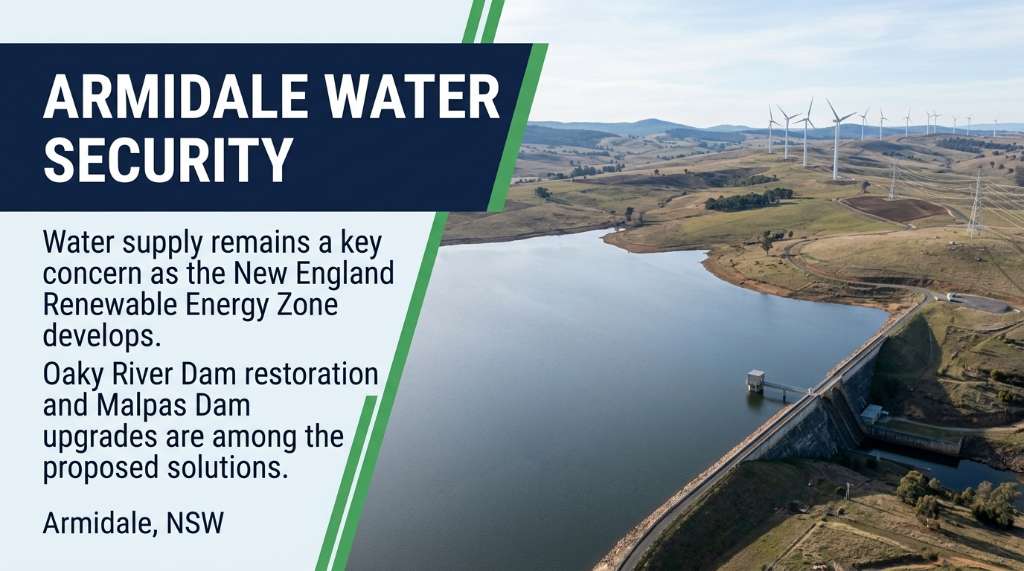
Several proposals have emerged over the years to improve regional water security. These include restoring Oaky River Dam, constructing a transfer system to Armidale's water-treatment plant and raising Malpas Dam. The proposed infrastructure is intended to provide additional capacity for the community while improving the region's resilience during future droughts.
The water issue has become particularly important because of the proposed New England Renewable Energy Zone. The zone is expected to support significant renewable-energy development, including generation, storage and transmission infrastructure. Construction and development activities could require additional water, creating concerns about whether existing regional supplies can support both community needs and large infrastructure projects.
A water-and-wastewater security study prepared for Energy Co and published in December 2025 examined projected demand associated with construction of the REZ network infrastructure and wider renewable-energy development. The study recognised that water required for renewable-energy projects should not come at the expense of household water security.
Mayor Coupland has therefore argued that water security needs to be treated as a fundamental requirement rather than an issue that can be addressed later. Armidale Regional Council adopted a Mayoral Minute on 27 May 2026 stating that water is a binding constraint for the New England region and calling for a clear and binding NSW Government commitment to address the regional water-security deficit before council water supplies are allocated to renewable-energy projects.
The proposed approach includes a staged water-security package. One stage would involve restoring Oaky River Dam and constructing a pipeline to the Armidale water-treatment plant. Another would involve raising Malpas Dam by approximately 6.5 metres and upgrading infrastructure connecting the dam to the treatment plant.
Energy Co has said it is working with local councils and government agencies to identify dedicated water solutions and avoid placing excessive pressure on existing town infrastructure. Renewable-energy projects in NSW are also required to secure their own water licences and allocations for construction and operation.
The debate is significant because the NEREZ could bring substantial investment and infrastructure development to the New England region, while Armidale wants to ensure that growth does not compromise essential services for existing residents.
The issue also demonstrates the challenge regional communities face when major infrastructure projects are developed alongside existing population and environmental needs. Water security must be considered alongside economic development, housing, agriculture, industry and household demand.
For Armidale, the current negotiations represent an opportunity to address a water problem that has remained unresolved for many years. Council wants any major renewable-energy development to be accompanied by concrete investment in water infrastructure rather than relying on future promises.
WaterArmidaleInfrastructureDevelopmentRegion
Armidale is using the proposed New England Renewable Energy Zone (NEREZ) as leverage to push for a long-term solution to the region's water-security problems. Armidale Regional Council Mayor Sam Coupland has taken a firm position that the region's water needs must be addressed before renewable-energy development proceeds at scale. The issue was reported on 15 August 2026 by the New England Times.
Armidale's water-security concerns are not new. The current debate can be traced back to the severe drought between 2017 and 2020, which placed significant pressure on water supplies across the New England region. During that period, Guyra and Uralla faced critical shortages, while Armidale prepared for the possibility of reaching a "day zero" situation in which available water supplies could become severely limited. The NSW Government subsequently assessed the region's water supply as a Category 5 risk, its highest risk classification.
Several proposals have emerged over the years to improve regional water security. These include restoring Oaky River Dam, constructing a transfer system to Armidale's water-treatment plant and raising Malpas Dam. The proposed infrastructure is intended to provide additional capacity for the community while improving the region's resilience during future droughts.
The water issue has become particularly important because of the proposed New England Renewable Energy Zone. The zone is expected to support significant renewable-energy development, including generation, storage and transmission infrastructure. Construction and development activities could require additional water, creating concerns about whether existing regional supplies can support both community needs and large infrastructure projects.
A water-and-wastewater security study prepared for Energy Co and published in December 2025 examined projected demand associated with construction of the REZ network infrastructure and wider renewable-energy development. The study recognised that water required for renewable-energy projects should not come at the expense of household water security.
Mayor Coupland has therefore argued that water security needs to be treated as a fundamental requirement rather than an issue that can be addressed later. Armidale Regional Council adopted a Mayoral Minute on 27 May 2026 stating that water is a binding constraint for the New England region and calling for a clear and binding NSW Government commitment to address the regional water-security deficit before council water supplies are allocated to renewable-energy projects.
The proposed approach includes a staged water-security package. One stage would involve restoring Oaky River Dam and constructing a pipeline to the Armidale water-treatment plant. Another would involve raising Malpas Dam by approximately 6.5 metres and upgrading infrastructure connecting the dam to the treatment plant.
Energy Co has said it is working with local councils and government agencies to identify dedicated water solutions and avoid placing excessive pressure on existing town infrastructure. Renewable-energy projects in NSW are also required to secure their own water licences and allocations for construction and operation.
The debate is significant because the NEREZ could bring substantial investment and infrastructure development to the New England region, while Armidale wants to ensure that growth does not compromise essential services for existing residents.
The issue also demonstrates the challenge regional communities face when major infrastructure projects are developed alongside existing population and environmental needs. Water security must be considered alongside economic development, housing, agriculture, industry and household demand.
For Armidale, the current negotiations represent an opportunity to address a water problem that has remained unresolved for many years. Council wants any major renewable-energy development to be accompanied by concrete investment in water infrastructure rather than relying on future promises.
A new proposal for factory-built ecohomes in Orange aims to speed up construction while reducing household energy costs as local property prices remain...
A Japanese love of Tasmanian buckwheat and fresh soba noodles helped create a lasting cultural connection that is now celebrated through the annual Hana...
Essential bus services connecting Alice Springs with five remote communities have been reduced, with the operator warning that some routes could be canc...
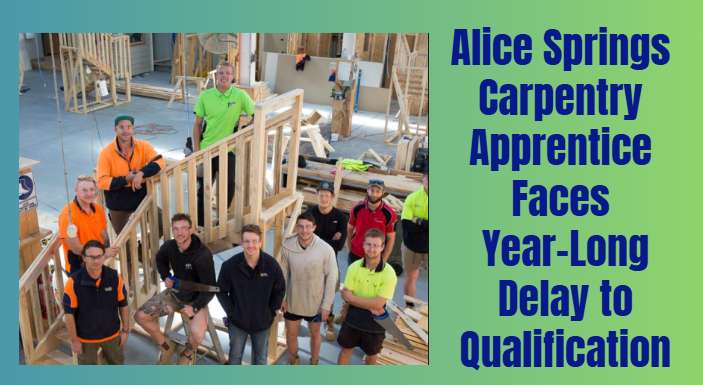
A carpentry apprentice in Alice Springs says course cancellations at Charles Darwin University could delay his qualification by up to 12 months because...
A new proposal for factory-built ecohomes in Orange aims to speed up construction while reducing household energy costs as local property prices remain...
An 18-year-old man has been charged after NSW Police allege he used a drone to conduct surveillance as part of a conspiracy to murder a man in Sydney's...
An 18-year-old man has been charged after NSW Police allege he operated a drone to conduct surveillance as part of a conspiracy to murder a man in Sydne...
A 22-year-old Elimbah man has been charged after a two-car crash at Baringa on the Sunshine Coast, with police alleging he fled into nearby bushland bef...
A new proposal for factory-built ecohomes in Orange aims to speed up construction while reducing household energy costs as local property prices remain...
Geelong's historic Botanic Gardens are preparing for their 175th anniversary, with volunteers and horticultural staff working to preserve a living colle...