Safety note: Admin approval is an initial review, not a guarantee that every detail is correct. Check important or urgent claims with official sources and report anything inaccurate or unsafe.
Source and credit: Contributor's own report
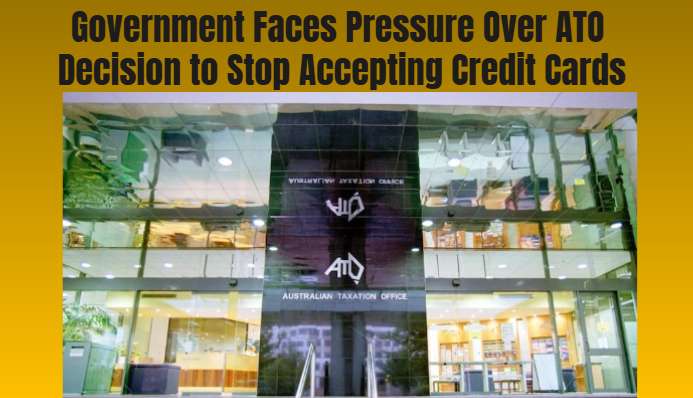
Government Faces Pressure Over ATO Decision to Stop Accepting Credit Cards - Canberra, ACT
Smart summary
Small business groups and crossbench MPs are calling on the federal government to intervene after the Australian Taxation Office confirmed it will stop accepting credit card payments for tax bills from December.
The federal government is facing increasing pressure to intervene after the Australian Taxation Office confirmed that it will stop accepting credit card payments for tax bills from 1 December 2026.
The decision has triggered concern among small businesses that use credit cards as a short-term cash-flow management tool. Business groups argue that removing the payment option could make it more difficult for some businesses to manage large tax liabilities, particularly at a time when many operators are already facing higher costs and financial pressure.
The ATO's decision follows changes introduced by the Reserve Bank of Australia that prohibit businesses from passing certain card-payment surcharges on to customers. The tax office has argued that continuing to accept credit cards would leave it responsible for significant transaction costs.
According to the ATO, merchant fees associated with credit-card payments are estimated to cost almost $200 million a year and are expected to increase. The organisation says absorbing those costs indefinitely would ultimately reduce the amount of revenue available for government services.
However, business organisations have criticised the decision. The Australian Chamber of Commerce and Industry has argued that small businesses should not lose an important cash-flow option because of the changes to card-payment fees. Other business groups have similarly called for the decision to be reconsidered.
The issue has also exposed differences within the federal government over how the decision should be handled. Assistant Technology Minister Andrew Charlton has indicated that the government supports the ATO's position. At the same time, Housing Minister Clare O'Neil has acknowledged concerns within Labor about the impact on businesses and the wider consequences of the changes.
The conflicting comments have increased pressure on ministers to clarify whether the government will ask the tax office to reconsider the policy.
The Opposition has also criticised the decision, arguing that the government should direct the ATO to continue accepting credit cards. Business representatives say that removing the option could particularly affect companies that rely on credit facilities to smooth out irregular cash flow between invoices, wages and tax obligations.
The ATO has pointed out that credit-card payments account for only about 2.3 per cent of payments made to the tax office. It maintains that taxpayers will still have other payment methods available, including debit cards and bank transfers.
The controversy follows a broader national debate over Australia's new rules governing card-payment surcharges. The reforms were introduced with the aim of reducing costs for consumers, but businesses and government agencies have been forced to reconsider how they handle transaction fees.
For small businesses, the dispute is now centred on whether the loss of credit-card payments will create additional financial pressure or whether alternative payment methods can adequately replace the service.
The ATO has so far maintained that the change will proceed from December 1. Business groups, however, continue to push for the government to intervene and reopen discussions before the deadline.
The federal government's next steps could determine whether the policy remains unchanged or whether a compromise is reached with business representatives before the new payment arrangements take effect.
GovernmentBusinessesDecisionBusinessCredit
The federal government is facing increasing pressure to intervene after the Australian Taxation Office confirmed that it will stop accepting credit card payments for tax bills from 1 December 2026.
The decision has triggered concern among small businesses that use credit cards as a short-term cash-flow management tool. Business groups argue that removing the payment option could make it more difficult for some businesses to manage large tax liabilities, particularly at a time when many operators are already facing higher costs and financial pressure.
The ATO's decision follows changes introduced by the Reserve Bank of Australia that prohibit businesses from passing certain card-payment surcharges on to customers. The tax office has argued that continuing to accept credit cards would leave it responsible for significant transaction costs.
According to the ATO, merchant fees associated with credit-card payments are estimated to cost almost $200 million a year and are expected to increase. The organisation says absorbing those costs indefinitely would ultimately reduce the amount of revenue available for government services.
However, business organisations have criticised the decision. The Australian Chamber of Commerce and Industry has argued that small businesses should not lose an important cash-flow option because of the changes to card-payment fees. Other business groups have similarly called for the decision to be reconsidered.
The issue has also exposed differences within the federal government over how the decision should be handled. Assistant Technology Minister Andrew Charlton has indicated that the government supports the ATO's position. At the same time, Housing Minister Clare O'Neil has acknowledged concerns within Labor about the impact on businesses and the wider consequences of the changes.
The conflicting comments have increased pressure on ministers to clarify whether the government will ask the tax office to reconsider the policy.
The Opposition has also criticised the decision, arguing that the government should direct the ATO to continue accepting credit cards. Business representatives say that removing the option could particularly affect companies that rely on credit facilities to smooth out irregular cash flow between invoices, wages and tax obligations.
The ATO has pointed out that credit-card payments account for only about 2.3 per cent of payments made to the tax office. It maintains that taxpayers will still have other payment methods available, including debit cards and bank transfers.
The controversy follows a broader national debate over Australia's new rules governing card-payment surcharges. The reforms were introduced with the aim of reducing costs for consumers, but businesses and government agencies have been forced to reconsider how they handle transaction fees.
For small businesses, the dispute is now centred on whether the loss of credit-card payments will create additional financial pressure or whether alternative payment methods can adequately replace the service.
The ATO has so far maintained that the change will proceed from December 1. Business groups, however, continue to push for the government to intervene and reopen discussions before the deadline.
The federal government's next steps could determine whether the policy remains unchanged or whether a compromise is reached with business representatives before the new payment arrangements take effect.
Darwin's Frontier Bar and Grill manager Aston Bell has received two industry awards, recognising her leadership, customer service and contribution to th...
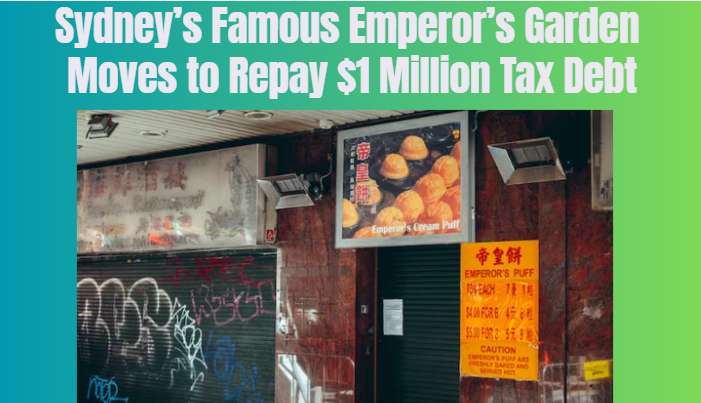
Sydney Chinatown institution Emperor’s Garden has reached an agreement to repay more than $1 million in tax debt, with discussions now underway about re...
A major developer has ended its involvement in the Eyre residential development in Adelaide's north, leaving South Australia's Renewal SA to take respon...
Australia has signed a new agreement with Vanuatu to support its renewable energy transition, alongside a $7.29 million regional package aimed at improv...
A small colony of critically endangered Darling River snails has been discovered at a weir near Walgett, offering fresh hope for a species that was fear...
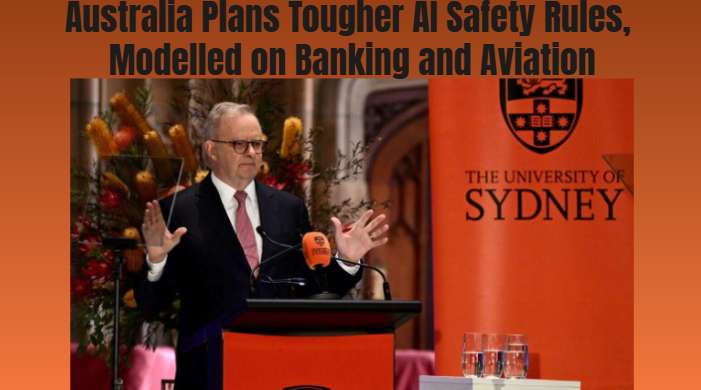
The federal government says artificial intelligence companies could be required to prove that their AI systems are properly tested and capable of preven...
Six vehicles were torched across Melbourne overnight, with fires damaging homes in Oakleigh East and Springvale as police investigate a growing series o...