Safety note: Admin approval is an initial review, not a guarantee that every detail is correct. Check important or urgent claims with official sources and report anything inaccurate or unsafe.
Source and credit: Contributor's own report
Nearly Extinct Darling River Snail Rediscovered in Western NSW - Walgett, NSW
Smart summary
A small colony of critically endangered Darling River snails has been discovered at a weir near Walgett, offering fresh hope for a species that was feared to have disappeared from the region.
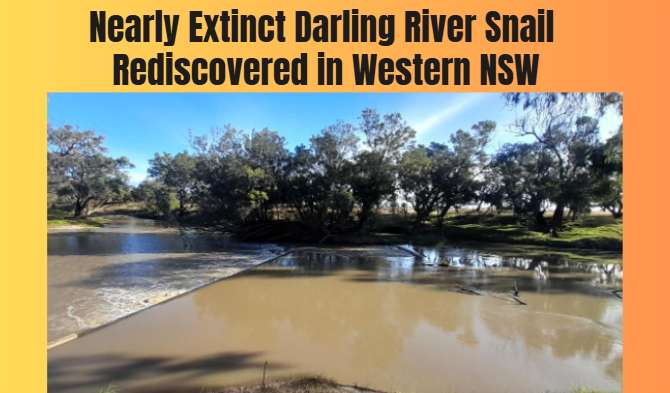
A critically endangered freshwater snail that had not been seen in the Walgett region for decades has been rediscovered at a weir on the Barwon River in western New South Wales. The discovery, confirmed by Aboriginal rangers and the Australian Museum, has given researchers new hope for the survival of the Darling River snail.
The Darling River snail was once common throughout parts of the Darling-Baaka river system, but its population declined dramatically from the 1960s. Changes to river flows, the construction of weirs and irrigation infrastructure were among the factors associated with the species' decline. The snail was eventually feared to have become extinct in parts of its former range.
The newly discovered colony contains about 50 living snails and is located more than 700 kilometres upstream from other recently identified populations. Colonies were previously found at weirs near Wilcannia and Louth from late 2024, but the Walgett discovery represents the first confirmed sighting of the species in that area in decades.
The discovery was particularly significant for the Ngarrangarra-li Walaaybaa Rangers and the Dharriwaa Elders Group in Walgett. Aboriginal rangers confirmed the animals after receiving information from a local resident. Senior ranger John Sands recognised the species from his childhood and said he had not seen one for more than 30 years.
Researchers were also encouraged by the presence of different-sized shells within the colony. The combination of young and older specimens suggests that the snails may be breeding at the site rather than representing only a small group of surviving adults.
The location itself has surprised scientists. Weirs and irrigation infrastructure have historically been considered part of the environmental changes that contributed to the species' decline. However, researchers now believe that some artificial structures may also provide small pockets of suitable habitat where the snails can survive.
River ecologist Martin Mallen-Cooper said the discovery demonstrates that threatened aquatic species may be able to survive in small, specialised habitats when suitable conditions are available. The finding could help researchers understand how artificial habitats might be used in future conservation programs.
There are still significant risks to the colony. Low river flows allowed researchers to locate the snails, but changing water conditions could threaten their survival. Rangers are particularly concerned about warmer water, algae growth and reduced flowing water around the weir.
Authorities and researchers are now planning further investigation and conservation work. The NSW government is undertaking dietary analysis of the species and working toward a research project with Traditional Owners that could eventually support translocation and repopulation efforts.
Conservation programs elsewhere are already breeding Darling River snails. A dedicated facility at the Narrandera Fisheries Centre in the Riverina holds thousands of snails that were bred from rescued animals collected at Louth weir.
The Walgett discovery therefore provides more than just evidence that the species survives. It may help scientists understand how the snails use their environment and whether suitable habitats can be restored or created elsewhere along the Darling-Baaka river system.
For conservationists and local Traditional Owners, the discovery is an encouraging development after decades of uncertainty. Researchers say it demonstrates that even critically endangered species thought to have disappeared from an area can sometimes persist in unexpected places.
RiverSpeciesResearchersSnailsDiscovery
A critically endangered freshwater snail that had not been seen in the Walgett region for decades has been rediscovered at a weir on the Barwon River in western New South Wales. The discovery, confirmed by Aboriginal rangers and the Australian Museum, has given researchers new hope for the survival of the Darling River snail.
The Darling River snail was once common throughout parts of the Darling-Baaka river system, but its population declined dramatically from the 1960s. Changes to river flows, the construction of weirs and irrigation infrastructure were among the factors associated with the species' decline. The snail was eventually feared to have become extinct in parts of its former range.
The newly discovered colony contains about 50 living snails and is located more than 700 kilometres upstream from other recently identified populations. Colonies were previously found at weirs near Wilcannia and Louth from late 2024, but the Walgett discovery represents the first confirmed sighting of the species in that area in decades.
The discovery was particularly significant for the Ngarrangarra-li Walaaybaa Rangers and the Dharriwaa Elders Group in Walgett. Aboriginal rangers confirmed the animals after receiving information from a local resident. Senior ranger John Sands recognised the species from his childhood and said he had not seen one for more than 30 years.
Researchers were also encouraged by the presence of different-sized shells within the colony. The combination of young and older specimens suggests that the snails may be breeding at the site rather than representing only a small group of surviving adults.
The location itself has surprised scientists. Weirs and irrigation infrastructure have historically been considered part of the environmental changes that contributed to the species' decline. However, researchers now believe that some artificial structures may also provide small pockets of suitable habitat where the snails can survive.
River ecologist Martin Mallen-Cooper said the discovery demonstrates that threatened aquatic species may be able to survive in small, specialised habitats when suitable conditions are available. The finding could help researchers understand how artificial habitats might be used in future conservation programs.
There are still significant risks to the colony. Low river flows allowed researchers to locate the snails, but changing water conditions could threaten their survival. Rangers are particularly concerned about warmer water, algae growth and reduced flowing water around the weir.
Authorities and researchers are now planning further investigation and conservation work. The NSW government is undertaking dietary analysis of the species and working toward a research project with Traditional Owners that could eventually support translocation and repopulation efforts.
Conservation programs elsewhere are already breeding Darling River snails. A dedicated facility at the Narrandera Fisheries Centre in the Riverina holds thousands of snails that were bred from rescued animals collected at Louth weir.
The Walgett discovery therefore provides more than just evidence that the species survives. It may help scientists understand how the snails use their environment and whether suitable habitats can be restored or created elsewhere along the Darling-Baaka river system.
For conservationists and local Traditional Owners, the discovery is an encouraging development after decades of uncertainty. Researchers say it demonstrates that even critically endangered species thought to have disappeared from an area can sometimes persist in unexpected places.
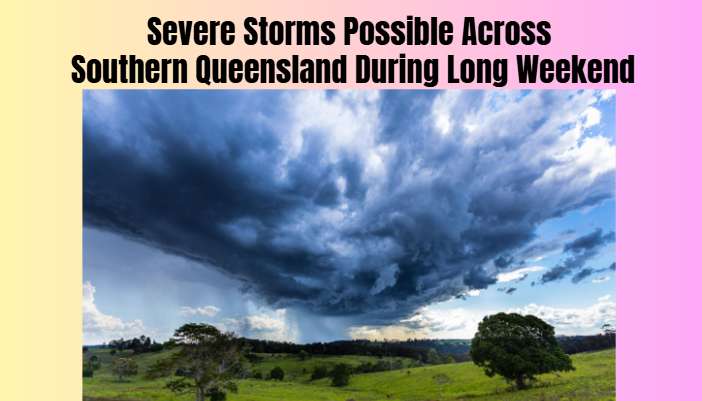
The Bureau of Meteorology is warning of possible thunderstorms across southern Queensland during the King’s Birthday long weekend, with unsettled weathe...
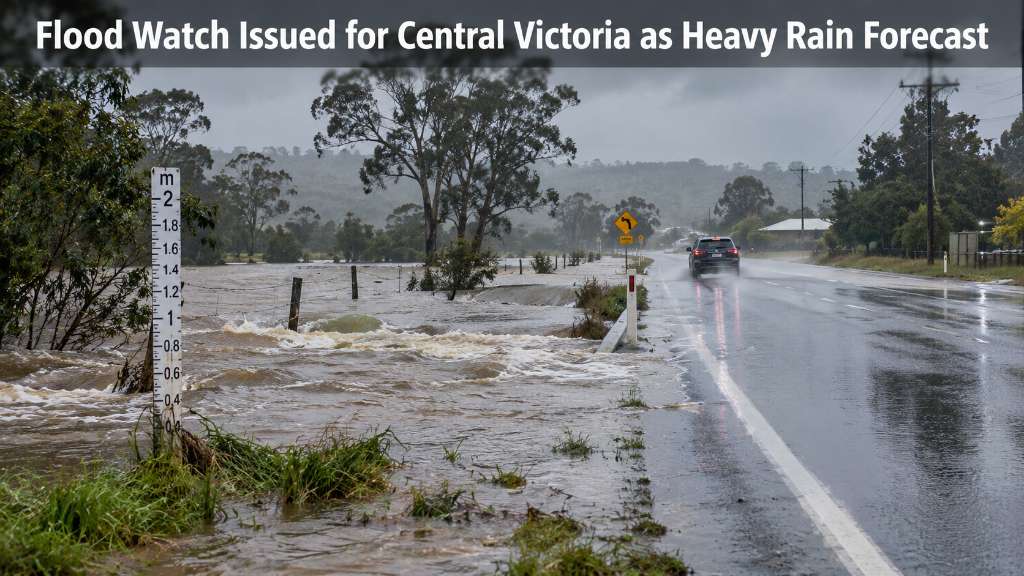
A flood watch is in place across parts of Victoria, with Ballarat and surrounding Central Victorian catchments facing the risk of minor to moderate floo...
Researchers are warning communities along South Australia's Lower Murray to prepare for more frequent flash droughts, with above-average temperatures fo...
Heavy and near-record rainfall has inundated parts of Western Australia's Goldfields and Esperance region, damaging pastoral properties and forcing the...
A Canberra man accused of seriously injuring another man with a machete has pleaded guilty to a lesser charge, forcing the ACT Supreme Court to abandon...
Small business groups and crossbench MPs are calling on the federal government to intervene after the Australian Taxation Office confirmed it will stop...
The federal government says artificial intelligence companies could be required to prove that their AI systems are properly tested and capable of preven...
Six vehicles were torched across Melbourne overnight, with fires damaging homes in Oakleigh East and Springvale as police investigate a growing series o...