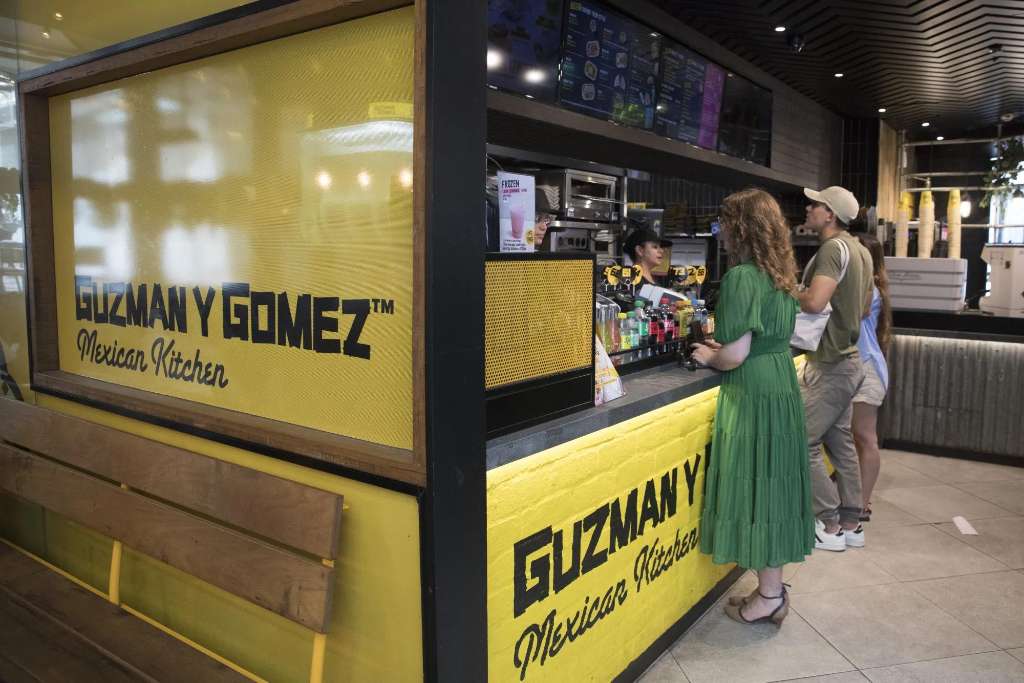
Guzman y Gomez Targets 1,000 Australian Stores After US Expansion Falls Short
By Neha · Published 23 Jun 2026 · Updated 23 Jun 2026
Sydney, NSW · New South Wales News
Safety note: Admin approval is an initial review, not a guarantee that every detail is correct. Check important or urgent claims with official sources and report anything inaccurate or unsafe.
Source and credit: Contributor's own report
Guzman y Gomez Targets 1,000 Australian Stores After US Expansion Falls Short - Sydney, NSW
Smart summary
Mexican fast-food chain Guzman y Gomez is shifting its focus back to Australia, unveiling ambitions for a massive domestic expansion after its push into the United States failed to deliver the growth the company had h...
Australian restaurant chain Guzman y Gomez is accelerating plans for domestic growth, setting its sights on reaching 1,000 Australian outlets after scaling back expectations for its United States expansion.
The company, commonly known as GYG, has enjoyed strong growth across Australia over the past decade, building a network of restaurants that compete with traditional fast-food giants through a menu focused on Mexican-inspired cuisine.
However, the company's ambitions in the United States have proven more challenging. Despite significant investment and efforts to establish a foothold in the highly competitive American quick-service restaurant market, the expansion has not generated the level of success originally anticipated.
As a result, GYG management is increasingly directing attention toward opportunities within Australia, where brand recognition remains strong and demand continues to grow.
The revised strategy centres on an aggressive long-term rollout that could eventually see the company operate as many as 1,000 stores nationwide. Such an expansion would represent a dramatic increase from its current footprint and position the business among Australia's largest restaurant chains.
Company executives believe Australia still offers significant untapped growth potential, particularly in outer metropolitan areas and regional communities where the brand has yet to establish a presence.
The shift comes as the Australian fast-food sector remains highly competitive, with major domestic and international brands investing heavily in new stores, technology, delivery services and drive-through operations.
GYG has benefited from consumer demand for convenient dining options and has continued investing in digital ordering platforms, delivery partnerships and drive-through formats. These initiatives have helped support sales growth and improve customer accessibility.
Industry analysts note that expanding within Australia may present lower risks than attempting to compete in the crowded US market, where established players dominate and operational costs can be significantly higher.
The company has indicated that while it is not abandoning international opportunities altogether, future investment decisions will prioritise markets where returns can be achieved more efficiently and with greater certainty.
Investors are expected to closely monitor the company's ability to execute its ambitious Australian growth strategy. Expanding to 1,000 stores would require substantial franchise development, site acquisition and workforce expansion over many years.
Despite the setback in the United States, company leadership remains optimistic about the long-term outlook for the business. Executives argue that Australia's growing population, changing consumer preferences and demand for convenient food options provide a strong foundation for future expansion.
The strategy reflects a broader trend among Australian companies that are choosing to focus on domestic opportunities after encountering challenges in larger overseas markets.
CompanyExpansionGrowthStoresWhere
Australian restaurant chain Guzman y Gomez is accelerating plans for domestic growth, setting its sights on reaching 1,000 Australian outlets after scaling back expectations for its United States expansion.
The company, commonly known as GYG, has enjoyed strong growth across Australia over the past decade, building a network of restaurants that compete with traditional fast-food giants through a menu focused on Mexican-inspired cuisine.
However, the company's ambitions in the United States have proven more challenging. Despite significant investment and efforts to establish a foothold in the highly competitive American quick-service restaurant market, the expansion has not generated the level of success originally anticipated.
As a result, GYG management is increasingly directing attention toward opportunities within Australia, where brand recognition remains strong and demand continues to grow.
The revised strategy centres on an aggressive long-term rollout that could eventually see the company operate as many as 1,000 stores nationwide. Such an expansion would represent a dramatic increase from its current footprint and position the business among Australia's largest restaurant chains.
Company executives believe Australia still offers significant untapped growth potential, particularly in outer metropolitan areas and regional communities where the brand has yet to establish a presence.
The shift comes as the Australian fast-food sector remains highly competitive, with major domestic and international brands investing heavily in new stores, technology, delivery services and drive-through operations.
GYG has benefited from consumer demand for convenient dining options and has continued investing in digital ordering platforms, delivery partnerships and drive-through formats. These initiatives have helped support sales growth and improve customer accessibility.
Industry analysts note that expanding within Australia may present lower risks than attempting to compete in the crowded US market, where established players dominate and operational costs can be significantly higher.
The company has indicated that while it is not abandoning international opportunities altogether, future investment decisions will prioritise markets where returns can be achieved more efficiently and with greater certainty.
Investors are expected to closely monitor the company's ability to execute its ambitious Australian growth strategy. Expanding to 1,000 stores would require substantial franchise development, site acquisition and workforce expansion over many years.
Despite the setback in the United States, company leadership remains optimistic about the long-term outlook for the business. Executives argue that Australia's growing population, changing consumer preferences and demand for convenient food options provide a strong foundation for future expansion.
The strategy reflects a broader trend among Australian companies that are choosing to focus on domestic opportunities after encountering challenges in larger overseas markets.
Australian shoppers and small businesses are preparing for changes to card-payment surcharges, with new Reserve Bank rules due to take effect from Octob...
Administrators have revealed Australian Off Road owes about $9 million after the Sunshine Coast caravan manufacturer collapsed, leaving customers, emplo...
Bathurst New South Wales · Business News · 21 Sep 2026
Bathurst-based Bell Conveyancing has received three honours at the 2026 Carillon Business Awards, marking a significant recognition for the local business and its work in the re...
Brisbane is hosting a three-day national conference focused on critical minerals, supply chains, processing, investment and the future of Australia's re...
A Sydney patient says he spent 23 hours waiting on a chair at Westmead Hospital's emergency department, while new figures show continuing pressure on th...
Multiple Rural Fire Service trucks were damaged after a planned hazard reduction burn at Wedderburn in Sydney's south-west escaped containment on Saturday.
Recent domestic violence-related deaths in New South Wales have highlighted concerns about gaps in identifying alleged perpetrators before serious viole...
Australian health experts are warning that cat bites and scratches can cause severe infections, with hospitalisations from cat-related injuries nearly t...
A Sydney patient says he spent 23 hours waiting on a chair at Westmead Hospital's emergency department, while new figures show continuing pressure on th...
Three people, including a 14-year-old girl, have died following a multi-vehicle collision on the Western Highway near Ledcourt in Victoria's north-west.
A 50-year-old man has died after being struck by a vehicle in Fernvale, west of Brisbane, with police launching a homicide investigation and arresting a...
Multiple Rural Fire Service trucks were damaged after a planned hazard reduction burn at Wedderburn in Sydney's south-west escaped containment on Saturday.