Safety note: Admin approval is an initial review, not a guarantee that every detail is correct. Check important or urgent claims with official sources and report anything inaccurate or unsafe.
Source and credit: Contributor's own report
E-Bike Battery Sparks Garbage Truck Fire in Surry Hills - Sydney, NSW
Smart summary
A discarded e-bike battery caused a garbage truck fire in Sydney’s inner east, prompting a fresh warning about lithium-ion batteries in household waste.
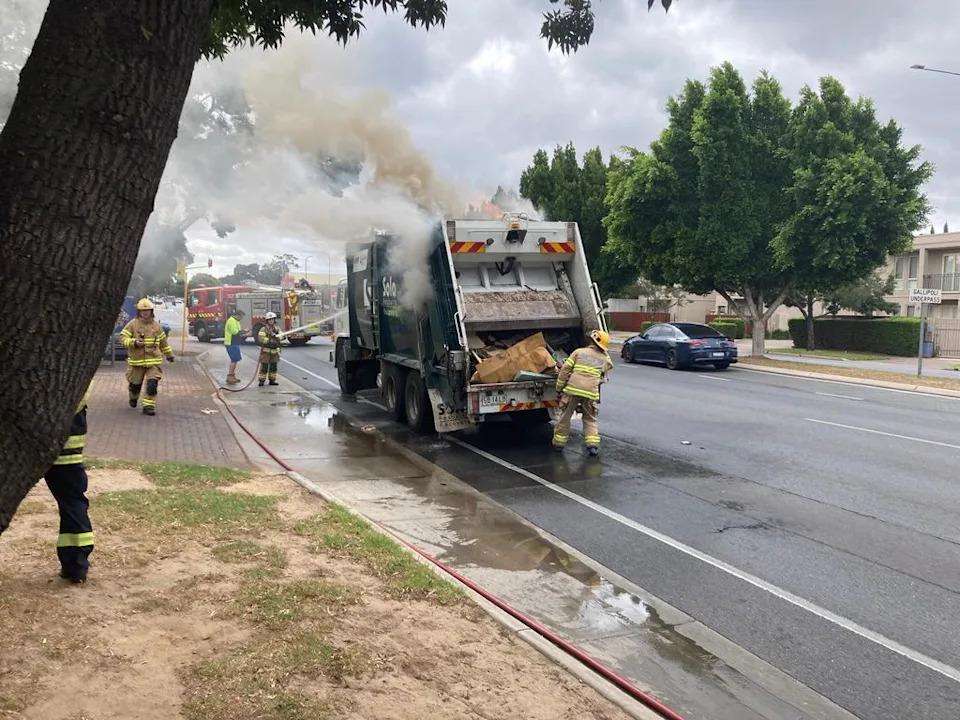
A garbage truck caught fire in Surry Hills after a discarded e-bike battery ignited inside the vehicle, prompting firefighters to issue a fresh warning about the dangers of incorrectly disposing of lithium-ion batteries.
Fire and Rescue NSW reported that the incident occurred in Sydney’s inner east and involved a battery that had been placed in ordinary rubbish. Once inside the garbage truck, the damaged battery ignited and caused a fire.
Lithium-ion batteries can retain significant energy even after they are no longer being used. When batteries are crushed, damaged or exposed to heat, they can undergo a dangerous reaction that may result in intense fires.
Garbage trucks are particularly vulnerable because waste is compacted during collection. A battery hidden among household rubbish can be crushed by the truck’s machinery, potentially triggering a fire while the vehicle is operating on public roads.
The incident has renewed attention on the correct disposal of e-bike batteries and other rechargeable lithium-ion batteries. These batteries are increasingly common in electric bikes, scooters, power tools, laptops, phones and other household devices.
Firefighters are warning residents not to place lithium-ion batteries in normal household rubbish or recycling bins. Instead, batteries should be taken to appropriate battery-recycling or hazardous-waste collection facilities.
The problem is especially important for waste-management workers because fires can begin unexpectedly inside collection vehicles or waste facilities. Once a lithium-ion battery fire starts, it can be difficult to extinguish because damaged battery cells can continue producing heat.
Residents are also being encouraged to inspect batteries for signs of damage. Swelling, leaking, overheating or physical damage can indicate that a battery is unsafe and requires specialised handling.
The Surry Hills incident demonstrates how a single incorrectly discarded battery can create risks well beyond the household where it was used. A battery placed in general rubbish can potentially endanger waste workers, emergency responders, motorists and nearby residents.
Fire and Rescue NSW has continued to warn the public about lithium-ion battery fires as the use of rechargeable devices increases.
For Sydney residents, the message is straightforward: do not put e-bike batteries or other lithium-ion batteries into general rubbish or recycling bins. Correct disposal helps reduce the risk of fires in garbage trucks, recycling facilities and waste-processing sites.
The incident also highlights the importance of recycling batteries through dedicated collection services. Proper disposal allows valuable battery materials to be recovered while reducing the chance of fires during waste collection and processing.
This is a fresh Sydney news report published on 12 August 2026, and it is separate from the Sydney stories already covered.
BatteriesBatteryFireLithium-IonCollection
A garbage truck caught fire in Surry Hills after a discarded e-bike battery ignited inside the vehicle, prompting firefighters to issue a fresh warning about the dangers of incorrectly disposing of lithium-ion batteries.
Fire and Rescue NSW reported that the incident occurred in Sydney’s inner east and involved a battery that had been placed in ordinary rubbish. Once inside the garbage truck, the damaged battery ignited and caused a fire.
Lithium-ion batteries can retain significant energy even after they are no longer being used. When batteries are crushed, damaged or exposed to heat, they can undergo a dangerous reaction that may result in intense fires.
Garbage trucks are particularly vulnerable because waste is compacted during collection. A battery hidden among household rubbish can be crushed by the truck’s machinery, potentially triggering a fire while the vehicle is operating on public roads.
The incident has renewed attention on the correct disposal of e-bike batteries and other rechargeable lithium-ion batteries. These batteries are increasingly common in electric bikes, scooters, power tools, laptops, phones and other household devices.
Firefighters are warning residents not to place lithium-ion batteries in normal household rubbish or recycling bins. Instead, batteries should be taken to appropriate battery-recycling or hazardous-waste collection facilities.
The problem is especially important for waste-management workers because fires can begin unexpectedly inside collection vehicles or waste facilities. Once a lithium-ion battery fire starts, it can be difficult to extinguish because damaged battery cells can continue producing heat.
Residents are also being encouraged to inspect batteries for signs of damage. Swelling, leaking, overheating or physical damage can indicate that a battery is unsafe and requires specialised handling.
The Surry Hills incident demonstrates how a single incorrectly discarded battery can create risks well beyond the household where it was used. A battery placed in general rubbish can potentially endanger waste workers, emergency responders, motorists and nearby residents.
Fire and Rescue NSW has continued to warn the public about lithium-ion battery fires as the use of rechargeable devices increases.
For Sydney residents, the message is straightforward: do not put e-bike batteries or other lithium-ion batteries into general rubbish or recycling bins. Correct disposal helps reduce the risk of fires in garbage trucks, recycling facilities and waste-processing sites.
The incident also highlights the importance of recycling batteries through dedicated collection services. Proper disposal allows valuable battery materials to be recovered while reducing the chance of fires during waste collection and processing.
This is a fresh Sydney news report published on 12 August 2026, and it is separate from the Sydney stories already covered.
Severe weather in Melbourne has caused flight disruptions from Brisbane, with at least one flight cancelled and other services delayed as passengers tra...
Passengers travelling through Sydney Airport on September 24 are being warned to allow extra time as separate strikes involving airport security and gro...
A British traveller was left behind at a remote South Australian roadside stop after her Greyhound bus departed during a scheduled overnight break near...
Recent domestic violence-related deaths in New South Wales have highlighted concerns about gaps in identifying alleged perpetrators before serious viole...
Australian health experts are warning that cat bites and scratches can cause severe infections, with hospitalisations from cat-related injuries nearly t...
A parliamentary petition calling for specialist endometriosis education in NSW public high schools has attracted more than 1,700 signatures, as health a...
A firearms expert has told a court that a gun presented as evidence in the murder investigation involving two Australian brothers and their American fri...
Australian tennis player Talia Gibson has reached her first WTA Tour-level singles final at the Singapore Open after Tatiana Prozorova withdrew from the...
Severe weather in Melbourne has caused flight disruptions from Brisbane, with at least one flight cancelled and other services delayed as passengers tra...
A new Tasmanian sports academy is creating education and career pathways as the state’s professional sporting sector expands with the Tasmania Devils, J...
New evidence indicates autonomous Open AI agents attempted to access information from several Australian government and public-sector websites, expanding...