Safety note: Admin approval is an initial review, not a guarantee that every detail is correct. Check important or urgent claims with official sources and report anything inaccurate or unsafe.
Source and credit: Contributor's own report
Homelessness in Perth Is Growing Beyond Visible Street Camps, Workers Warn - Perth, WA
Smart summary
Rising rents and living costs are pushing more people, including working families and older Australians, towards homelessness, according to Western Australian support services.
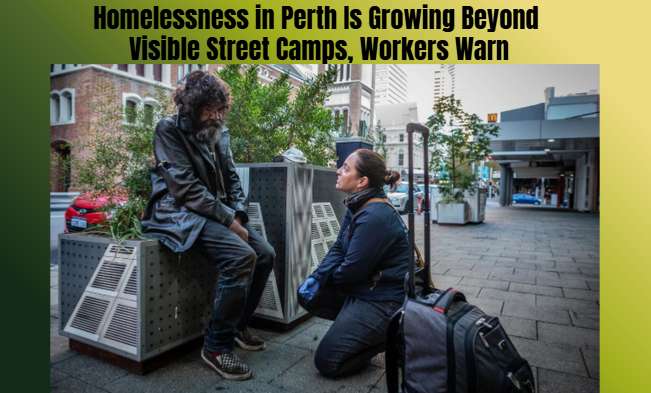
Homelessness is becoming a broader challenge across Perth, with support services reporting that people from increasingly diverse backgrounds are struggling to secure stable accommodation. A homelessness camp recently cleared in Rockingham, south of Perth, has drawn attention to a problem that service providers say extends well beyond visible groups sleeping outdoors.
The camp along Memorial Drive in Rockingham was home to about 45 people before authorities moved residents on at the end of September. However, homelessness workers say relocating people does not resolve the underlying reasons they have lost their homes. Many continue to need emergency accommodation, financial assistance and long-term housing options.
Brett McCaul, an outreach team leader with the Salvation Army in Western Australia, said demand for assistance was increasing and the people seeking help came from a wider range of backgrounds than in previous years. This includes dual-income families who are struggling to afford basic living costs despite having jobs. Support organisations say rising rents, family and domestic violence, and increasing everyday expenses are contributing to housing insecurity. In Perth’s northern suburbs, a St Vincent de Paul service in Joondalup reported a 36 per cent increase in demand over the preceding year. Volunteers have encountered people who have maintained employment for decades but are now finding it difficult to pay for necessities.
The problem also affects older Australians. Neil Clifford-Mills, 66, said he had lived in his car before sleeping on a park bench in Inglewood. He struggled to find accommodation after he could no longer stay with a friend. Although he received government income support, suitable housing remained difficult to secure. He eventually received a temporary accommodation offer after his circumstances were shared through local radio.
For some people, the options available are limited by their individual circumstances. Libby Sweeney, who has been without stable accommodation for about two-and-a-half years, sleeps rough with her two dogs. She said she was unwilling to give them up, even though keeping pets makes it harder to find accommodation that will accept her.
Housing advocates say these experiences demonstrate why responses must extend beyond clearing camps. People may need affordable long-term rentals, crisis accommodation, transitional housing, support for domestic violence survivors and services that allow them to remain connected to their communities.
Western Australia’s state budget included an additional $91.1 million for homelessness services, according to the state government. However, local service providers say shortages remain, particularly for adults who need accommodation outside the central Perth area. Some organisations report that they lack suitable crisis and transitional options for people over 25.
The challenge now is ensuring that funding translates into accommodation people can actually access. Without suitable housing, moving people from visible camps may simply shift the problem elsewhere.
PeopleAccommodationHousingHomelessnessPerth
Homelessness is becoming a broader challenge across Perth, with support services reporting that people from increasingly diverse backgrounds are struggling to secure stable accommodation. A homelessness camp recently cleared in Rockingham, south of Perth, has drawn attention to a problem that service providers say extends well beyond visible groups sleeping outdoors.
The camp along Memorial Drive in Rockingham was home to about 45 people before authorities moved residents on at the end of September. However, homelessness workers say relocating people does not resolve the underlying reasons they have lost their homes. Many continue to need emergency accommodation, financial assistance and long-term housing options.
Brett McCaul, an outreach team leader with the Salvation Army in Western Australia, said demand for assistance was increasing and the people seeking help came from a wider range of backgrounds than in previous years. This includes dual-income families who are struggling to afford basic living costs despite having jobs. Support organisations say rising rents, family and domestic violence, and increasing everyday expenses are contributing to housing insecurity. In Perth’s northern suburbs, a St Vincent de Paul service in Joondalup reported a 36 per cent increase in demand over the preceding year. Volunteers have encountered people who have maintained employment for decades but are now finding it difficult to pay for necessities.
The problem also affects older Australians. Neil Clifford-Mills, 66, said he had lived in his car before sleeping on a park bench in Inglewood. He struggled to find accommodation after he could no longer stay with a friend. Although he received government income support, suitable housing remained difficult to secure. He eventually received a temporary accommodation offer after his circumstances were shared through local radio.
For some people, the options available are limited by their individual circumstances. Libby Sweeney, who has been without stable accommodation for about two-and-a-half years, sleeps rough with her two dogs. She said she was unwilling to give them up, even though keeping pets makes it harder to find accommodation that will accept her.
Housing advocates say these experiences demonstrate why responses must extend beyond clearing camps. People may need affordable long-term rentals, crisis accommodation, transitional housing, support for domestic violence survivors and services that allow them to remain connected to their communities.
Western Australia’s state budget included an additional $91.1 million for homelessness services, according to the state government. However, local service providers say shortages remain, particularly for adults who need accommodation outside the central Perth area. Some organisations report that they lack suitable crisis and transitional options for people over 25.
The challenge now is ensuring that funding translates into accommodation people can actually access. Without suitable housing, moving people from visible camps may simply shift the problem elsewhere.
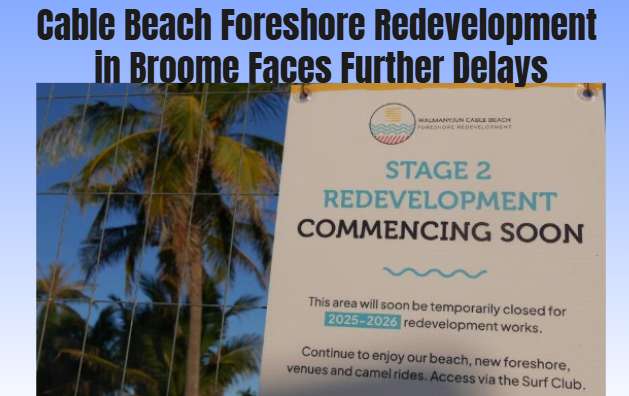
The planned opening of Broome’s multi-million-dollar Cable Beach foreshore redevelopment has been pushed back to 2027, leaving local residents and busin...
Land Forces 2026 opens in Perth for the first time, bringing international defence organisations, Australian industry and heightened security measures t...
Regional councils are calling on the Australian Government to establish a $200 million funding program to help maintain regional airports, after a surve...
Australian golfing champion Graham Marsh has returned to his birthplace for the WA PGA Championship, reflecting on the distinctive desert course he help...
A Mexican judge has convicted three men over the 2024 killings of Australian brothers Jake and Callum Robinson and their American friend Carter Rhoad. S...
The planned opening of Broome’s multi-million-dollar Cable Beach foreshore redevelopment has been pushed back to 2027, leaving local residents and busin...
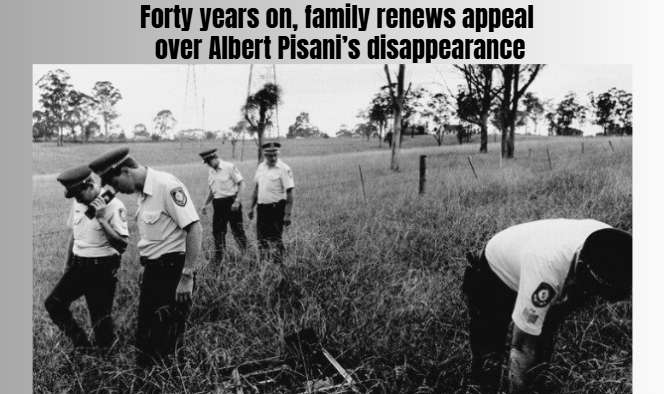
Victoria Police are renewing their appeal for information about the disappearance and suspected killing of Gippsland father Albert Pisani, whose remains...
Australian golfing champion Graham Marsh has returned to his birthplace for the WA PGA Championship, reflecting on the distinctive desert course he help...
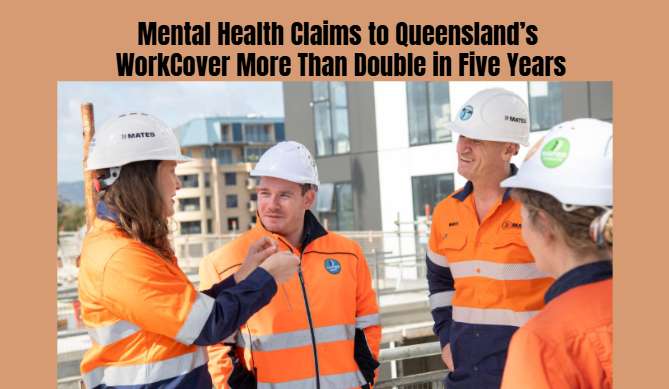
Queensland recorded 4,110 accepted mental injury compensation claims in the latest financial year, a 108 per cent increase since 2021–22, raising questi...
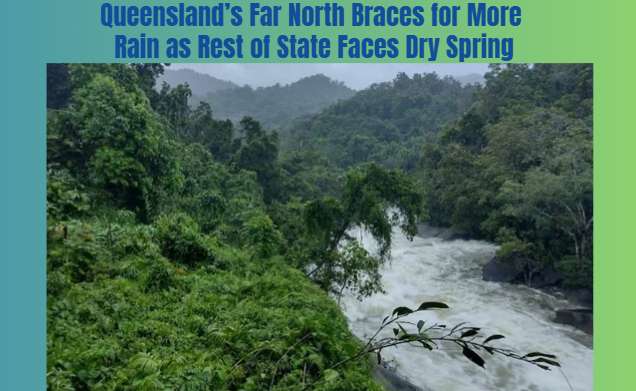
Unseasonably wet, cool conditions are expected to continue in Far North Queensland through spring, while much of the state faces below-average rainfall...