Safety note: Admin approval is an initial review, not a guarantee that every detail is correct. Check important or urgent claims with official sources and report anything inaccurate or unsafe.
Source and credit: Contributor's own report
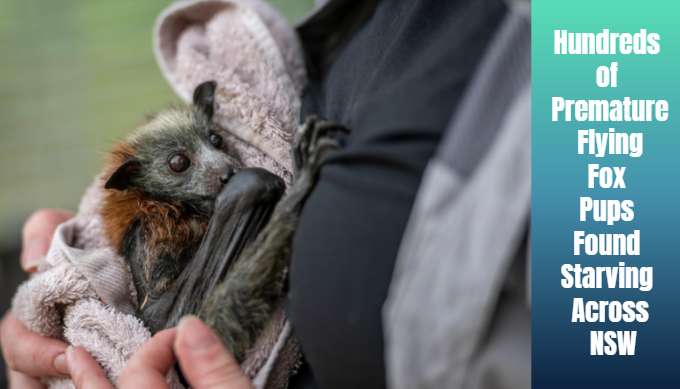
Hundreds of Premature Flying Fox Pups Found Starving Across NSW - Illawarra, NSW
Smart summary
Wildlife rescuers are struggling to care for unusually large numbers of underweight baby flying foxes born prematurely, while the cause of the suspected starvation event remains unknown.
Wildlife rescue organisations across New South Wales are facing an unusual influx of premature and severely underweight flying fox pups, raising concerns about the health of grey-headed flying fox populations during the spring birthing season.
Since late September, wildlife rescue groups have received more than 460 reports involving malnourished grey-headed flying foxes in what is being described as a suspected starvation event. Volunteers say the number of premature births and sick animals arriving for care is far greater than they would normally expect at this time of year.
On the NSW South Coast, volunteers have been responding to reports from the Shoalhaven region, where sick, deceased and prematurely born pups have been found at roosting sites and residential properties. Some newborns have been discovered weighing less than half the expected healthy birth weight.
A newborn flying fox would normally weigh approximately 80 to 90 grams, according to wildlife carers quoted in the report. One premature pup weighed just 38 grams. Animals born at such low weights face serious challenges surviving outside the womb and may require intensive care.
For Australian Wildlife Needing Aid NSW, known as FAWNA, estimates that approximately 95 per cent of prematurely born pups entering care may die. This reflects the severity of the situation facing rescuers, although the final mortality rate will not be known until the current crisis has passed.
Wildlife Rescue South Coast has also reported a substantial increase in calls. Its volunteers have been caring for dozens of premature flying foxes while responding to reports across a wide geographical area. Some pups need feeding every two hours, around the clock, creating significant pressure on a relatively small team of trained carers.
Handling flying foxes requires appropriate training and precautions because of the risk of diseases, including Australian bat lyssavirus. The cost of the required vaccination can limit the number of volunteers available to respond to emergencies. Rescue groups say staffing shortages, long travel distances and the volume of calls are making the response particularly difficult.
Scientists and wildlife carers are still investigating what caused the apparent starvation event. A possible explanation is a temporary shortage of suitable food, but authorities have not confirmed the cause. Testing of flying fox carcasses recovered in the Illawarra reportedly found that the animals were severely emaciated when they died.
Grey-headed flying foxes play an important role in Australian ecosystems by pollinating flowering trees and dispersing seeds. A significant decline in their population could have consequences beyond the immediate loss of individual animals.
Wildlife rescuers are continuing to provide emergency care and document cases, but the full scale of the event remains uncertain. Authorities and specialists will need more information to establish what triggered the premature births and whether food availability, environmental conditions or other factors contributed.
The immediate priority is caring for surviving pups and supporting wildlife volunteers. The cause of the event remains unconfirmed, and the final number of affected animals is not yet known.
FlyingWildlifePrematurePupsAnimals
Wildlife rescue organisations across New South Wales are facing an unusual influx of premature and severely underweight flying fox pups, raising concerns about the health of grey-headed flying fox populations during the spring birthing season.
Since late September, wildlife rescue groups have received more than 460 reports involving malnourished grey-headed flying foxes in what is being described as a suspected starvation event. Volunteers say the number of premature births and sick animals arriving for care is far greater than they would normally expect at this time of year.
On the NSW South Coast, volunteers have been responding to reports from the Shoalhaven region, where sick, deceased and prematurely born pups have been found at roosting sites and residential properties. Some newborns have been discovered weighing less than half the expected healthy birth weight.
A newborn flying fox would normally weigh approximately 80 to 90 grams, according to wildlife carers quoted in the report. One premature pup weighed just 38 grams. Animals born at such low weights face serious challenges surviving outside the womb and may require intensive care.
For Australian Wildlife Needing Aid NSW, known as FAWNA, estimates that approximately 95 per cent of prematurely born pups entering care may die. This reflects the severity of the situation facing rescuers, although the final mortality rate will not be known until the current crisis has passed.
Wildlife Rescue South Coast has also reported a substantial increase in calls. Its volunteers have been caring for dozens of premature flying foxes while responding to reports across a wide geographical area. Some pups need feeding every two hours, around the clock, creating significant pressure on a relatively small team of trained carers.
Handling flying foxes requires appropriate training and precautions because of the risk of diseases, including Australian bat lyssavirus. The cost of the required vaccination can limit the number of volunteers available to respond to emergencies. Rescue groups say staffing shortages, long travel distances and the volume of calls are making the response particularly difficult.
Scientists and wildlife carers are still investigating what caused the apparent starvation event. A possible explanation is a temporary shortage of suitable food, but authorities have not confirmed the cause. Testing of flying fox carcasses recovered in the Illawarra reportedly found that the animals were severely emaciated when they died.
Grey-headed flying foxes play an important role in Australian ecosystems by pollinating flowering trees and dispersing seeds. A significant decline in their population could have consequences beyond the immediate loss of individual animals.
Wildlife rescuers are continuing to provide emergency care and document cases, but the full scale of the event remains uncertain. Authorities and specialists will need more information to establish what triggered the premature births and whether food availability, environmental conditions or other factors contributed.
The immediate priority is caring for surviving pups and supporting wildlife volunteers. The cause of the event remains unconfirmed, and the final number of affected animals is not yet known.
A Queensland Police Service annual report shows the service failed to meet its targets for public perceptions of honesty, trust, fairness and profession...
Bathurst bellringers are preparing to gather to celebrate a historic tradition dating back to 17th-century England, bringing together a community dedica...
Changes to Australia’s working holiday visa program have raised concerns among tourism and hospitality businesses in Far North Queensland, where backpac...
Bluebottles measuring up to three times the usual size have been washing onto Gold Coast beaches earlier than expected, prompting questions from scienti...
George Town, Tasmania · Technology News · 10 Oct 2026
Tasmania’s environmental regulator is seeking to participate in a tribunal appeal after concerns that a proposed AI data centre could use hundreds of di...
Nine earthquakes have shaken Victoria’s Gippsland region over a short period, prompting seismologists to explain the likelihood of further aftershocks a...
A 39-year-old man has been charged over an alleged vehicle attack following a fatal shooting in northern New South Wales in December 2025. Police allege...
A Western Australian farmer says a series of suspected dog attacks has killed or forced the euthanasia of about 80 sheep over five months, with authorit...
Rising rents and living costs are pushing more people, including working families and older Australians, towards homelessness, according to Western Aust...
Unseasonably wet, cool conditions are expected to continue in Far North Queensland through spring, while much of the state faces below-average rainfall...
A Mexican judge has convicted three men over the 2024 killings of Australian brothers Jake and Callum Robinson and their American friend Carter Rhoad. S...
Social media, outdoor activities and a generation of young anglers are helping make recreational fishing popular again, but the industry is concerned ab...