Safety note: Admin approval is an initial review, not a guarantee that every detail is correct. Check important or urgent claims with official sources and report anything inaccurate or unsafe.
Source and credit: Contributor's own report
Inside Twiggy Forrest’s $7 billion charity: Ambition, big ideas and questions over long-term impact - Perth, WA
Smart summary
Andrew “Twiggy” Forrest’s Minderoo Foundation has become one of Australia’s largest philanthropic organisations, backing major projects focused on inequality, modern slavery, oceans, climate and community issues. The...
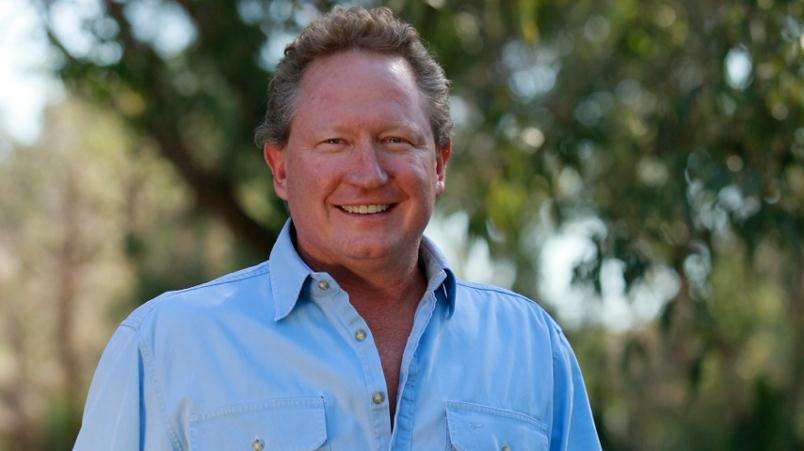
Australian billionaire Andrew “Twiggy” Forrest has built one of the country’s largest philanthropic organisations through the Minderoo Foundation, a charity with billions of dollars in assets and a mission to address some of the world’s biggest social and environmental challenges.
Founded by Andrew and Nicola Forrest, Minderoo has focused on issues including modern slavery, gender equality, Indigenous communities, ocean protection, early childhood development and environmental challenges. The foundation describes its purpose as working towards a “fair future” by tackling inequality and protecting natural ecosystems.
The foundation’s scale has made it a major force in Australian philanthropy. After a large donation of Fortescue shares by the Forrest family, Minderoo’s endowment grew to around $7 billion, giving it the ability to fund long-term projects and respond to major issues.
One of Minderoo’s major areas of work has been modern slavery and supply chain transparency. The organisation has invested in projects designed to improve worker protections and increase visibility across global supply chains, including support for technology-based solutions that track labour conditions and risks.
The foundation has also supported environmental initiatives, including ocean protection projects and research aimed at understanding large-scale ecological challenges. Minderoo says its approach is to combine research, partnerships and advocacy to create measurable change.
However, the size and style of Forrest’s philanthropy has also generated criticism and discussion. The article examines concerns from some former partners and observers who question whether some initiatives have moved on quickly when priorities changed, or whether ambitious announcements always translated into lasting outcomes.
Supporters argue that tackling major global problems requires bold experimentation and that not every project will succeed. They say Minderoo’s willingness to invest significant resources into difficult issues allows it to attempt solutions that governments and smaller organisations may struggle to fund.
Minderoo has defended its approach, saying its work is driven by evidence, partnerships and the need to respond to complex challenges. The organisation’s recent impact reporting highlights continued investment across communities, gender equality and environmental programs.
The debate around Minderoo reflects a broader conversation about the role of billionaire philanthropy. Large private foundations can provide significant funding for social causes, scientific research and environmental protection, but they also raise questions about accountability, priorities and how success should be judged.
For Forrest, philanthropy has become a central part of his public identity alongside his business career. Through Minderoo, he continues to pursue large-scale projects aimed at influencing issues ranging from climate change and inequality to global supply chains and community wellbeing.
MinderooForrestEnvironmentalChallengesFoundation
Australian billionaire Andrew “Twiggy” Forrest has built one of the country’s largest philanthropic organisations through the Minderoo Foundation, a charity with billions of dollars in assets and a mission to address some of the world’s biggest social and environmental challenges.
Founded by Andrew and Nicola Forrest, Minderoo has focused on issues including modern slavery, gender equality, Indigenous communities, ocean protection, early childhood development and environmental challenges. The foundation describes its purpose as working towards a “fair future” by tackling inequality and protecting natural ecosystems.
The foundation’s scale has made it a major force in Australian philanthropy. After a large donation of Fortescue shares by the Forrest family, Minderoo’s endowment grew to around $7 billion, giving it the ability to fund long-term projects and respond to major issues.
One of Minderoo’s major areas of work has been modern slavery and supply chain transparency. The organisation has invested in projects designed to improve worker protections and increase visibility across global supply chains, including support for technology-based solutions that track labour conditions and risks.
The foundation has also supported environmental initiatives, including ocean protection projects and research aimed at understanding large-scale ecological challenges. Minderoo says its approach is to combine research, partnerships and advocacy to create measurable change.
However, the size and style of Forrest’s philanthropy has also generated criticism and discussion. The article examines concerns from some former partners and observers who question whether some initiatives have moved on quickly when priorities changed, or whether ambitious announcements always translated into lasting outcomes.
Supporters argue that tackling major global problems requires bold experimentation and that not every project will succeed. They say Minderoo’s willingness to invest significant resources into difficult issues allows it to attempt solutions that governments and smaller organisations may struggle to fund.
Minderoo has defended its approach, saying its work is driven by evidence, partnerships and the need to respond to complex challenges. The organisation’s recent impact reporting highlights continued investment across communities, gender equality and environmental programs.
The debate around Minderoo reflects a broader conversation about the role of billionaire philanthropy. Large private foundations can provide significant funding for social causes, scientific research and environmental protection, but they also raise questions about accountability, priorities and how success should be judged.
For Forrest, philanthropy has become a central part of his public identity alongside his business career. Through Minderoo, he continues to pursue large-scale projects aimed at influencing issues ranging from climate change and inequality to global supply chains and community wellbeing.
Cairns Regional Council has unanimously voted to seek $400,000 in Queensland Government funding for a program designed to connect local businesses with the region’s growing film...
Albury New South Wales · Business News · 17 Sep 2026
An Australian artificial intelligence company has purchased the former Visy paper mill site at Ettamogah, north of Albury, in a significant local business The company, Sharon AI...
A new multi-million-dollar poultry-processing facility has officially opened near Tamworth, bringing major investment and new employment opportunities t...
Two teenagers have appeared in a Perth court after allegedly breaking into a crocodile enclosure and attacking the 400-kilogram reptile with a metal pole.
Cairns Regional Council has unanimously voted to seek $400,000 in Queensland Government funding for a program designed to connect local businesses with the region’s growing film...
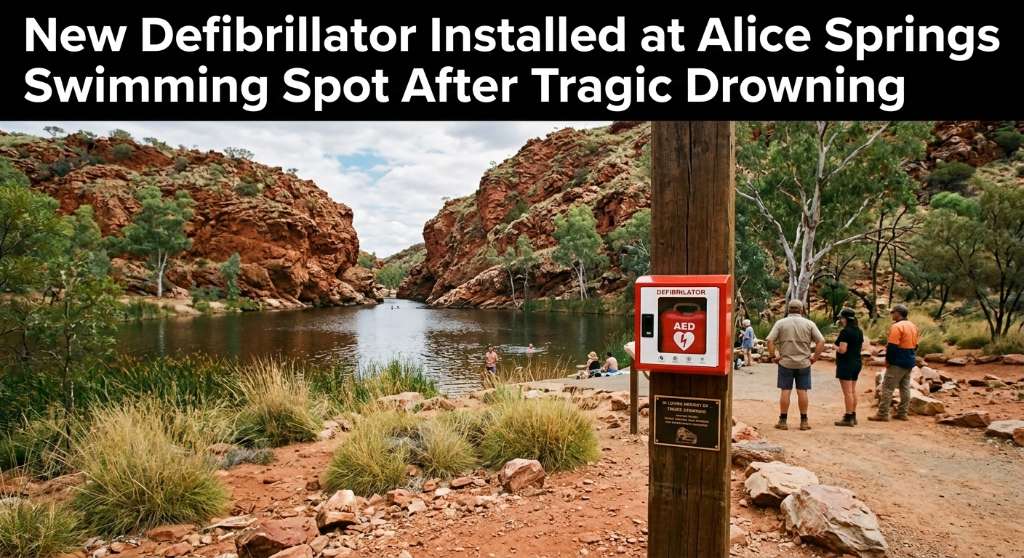
An automated external defibrillator and memorial plaque have been installed at Ellery Creek Big Hole following the death of disability advocate Ellen Fr...
Queensland firefighters spent several hours monitoring a significant grass fire at Mary Kinross Park in Bargara, near Bundaberg, after the blaze broke out on Wednesday evening....