Safety note: Admin approval is an initial review, not a guarantee that every detail is correct. Check important or urgent claims with official sources and report anything inaccurate or unsafe.
Source and credit: Contributor's own report
Jewish human rights lawyer tells royal commission she was targeted with abuse after Bondi attack - Sydney, NSW
Smart summary
A Jewish human rights lawyer has told the Royal Commission into Antisemitism and Social Cohesion that she received a wave of online abuse after speaking publicly about the Bondi terrorist attack, warning that hostilit...
A Jewish human rights lawyer has described receiving a surge of online abuse after speaking publicly following the 2025 Bondi terrorist attack, telling the Royal Commission into Antisemitism and Social Cohesion that the experience has had a chilling effect on public debate.
Giving evidence before the commission, Sarah Schwartz, co-founder of the Jewish Council of Australia, said she was subjected to harassment and intimidation after expressing her views on the aftermath of the Bondi attack and broader issues relating to antisemitism and social cohesion. She told the inquiry that the abuse demonstrated how difficult it had become for some Jewish Australians to participate in public discussion without becoming targets of online hostility.
Schwartz said the reaction she received highlighted the increasingly polarised environment surrounding discussions about antisemitism, Israel and the war in Gaza. According to her evidence, she was labelled a traitor and received abusive messages after advocating for approaches that promoted dialogue rather than division.
The commission also heard concerns that political and public responses following the Bondi terrorist attack risked unfairly portraying entire communities. Schwartz argued that broad narratives linking Palestinians or Muslims to extremist violence were harmful and undermined efforts to strengthen social cohesion. She said combating antisemitism should not come at the expense of other minority communities or public debate.
Her evidence formed part of the commission's examination of how antisemitism is experienced in Australia, both offline and online. The inquiry is considering the prevalence of antisemitic behaviour, the effectiveness of government responses and broader measures aimed at strengthening community cohesion following the Bondi terrorist attack. The commission was established by the Australian Government in January 2026 and is scheduled to deliver its final report later this year.
The hearings have also focused on the role of social media in amplifying hate speech. Witnesses have described coordinated online harassment campaigns, while experts have explained how extremist groups increasingly use coded language, symbols, memes and altered spellings to avoid automated moderation systems. Those tactics make identifying and removing harmful content more difficult for digital platforms.
Schwartz stressed that many Jewish Australians hold diverse political views and should not be treated as a single group with identical opinions. She said criticism of governments or international conflicts should be distinguished from antisemitism, while emphasising that genuine antisemitic abuse remains a serious problem requiring effective responses.
The Royal Commission is expected to continue hearing evidence from community leaders, researchers, victims and government agencies over coming months before making recommendations on countering antisemitism, addressing online extremism and promoting social cohesion across Australia.
AntisemitismCommissionAttackBondiCohesion
A Jewish human rights lawyer has described receiving a surge of online abuse after speaking publicly following the 2025 Bondi terrorist attack, telling the Royal Commission into Antisemitism and Social Cohesion that the experience has had a chilling effect on public debate.
Giving evidence before the commission, Sarah Schwartz, co-founder of the Jewish Council of Australia, said she was subjected to harassment and intimidation after expressing her views on the aftermath of the Bondi attack and broader issues relating to antisemitism and social cohesion. She told the inquiry that the abuse demonstrated how difficult it had become for some Jewish Australians to participate in public discussion without becoming targets of online hostility.
Schwartz said the reaction she received highlighted the increasingly polarised environment surrounding discussions about antisemitism, Israel and the war in Gaza. According to her evidence, she was labelled a traitor and received abusive messages after advocating for approaches that promoted dialogue rather than division.
The commission also heard concerns that political and public responses following the Bondi terrorist attack risked unfairly portraying entire communities. Schwartz argued that broad narratives linking Palestinians or Muslims to extremist violence were harmful and undermined efforts to strengthen social cohesion. She said combating antisemitism should not come at the expense of other minority communities or public debate.
Her evidence formed part of the commission's examination of how antisemitism is experienced in Australia, both offline and online. The inquiry is considering the prevalence of antisemitic behaviour, the effectiveness of government responses and broader measures aimed at strengthening community cohesion following the Bondi terrorist attack. The commission was established by the Australian Government in January 2026 and is scheduled to deliver its final report later this year.
The hearings have also focused on the role of social media in amplifying hate speech. Witnesses have described coordinated online harassment campaigns, while experts have explained how extremist groups increasingly use coded language, symbols, memes and altered spellings to avoid automated moderation systems. Those tactics make identifying and removing harmful content more difficult for digital platforms.
Schwartz stressed that many Jewish Australians hold diverse political views and should not be treated as a single group with identical opinions. She said criticism of governments or international conflicts should be distinguished from antisemitism, while emphasising that genuine antisemitic abuse remains a serious problem requiring effective responses.
The Royal Commission is expected to continue hearing evidence from community leaders, researchers, victims and government agencies over coming months before making recommendations on countering antisemitism, addressing online extremism and promoting social cohesion across Australia.
A Chinese private processor has purchased 68,000 tonnes of new-season Australian canola for shipment in March, marking the first known private-sector pu...
Darwin Northern Territory · Other News · 01 Sep 2026
A scenic hike through Butterfly Gorge in the Northern Territory turned into a frightening experience when a buffalo charged at two hikers. ABC Darwin reported the story today, 1...
Coffs Harbour New South Wales · Other News · 01 Sep 2026
A Safe Work NSW inspection blitz across the Coffs Harbour region has uncovered dozens of workplace-safety issues in the horticulture industry. The operation followed concerns ab...
Armidale Regional Council will replace an ageing cast-iron water main in Ampol and Miller Streets with a modern system, with construction scheduled to b...
Sydney Chinatown institution Emperor’s Garden has reached an agreement to repay more than $1 million in tax debt, with discussions now underway about re...
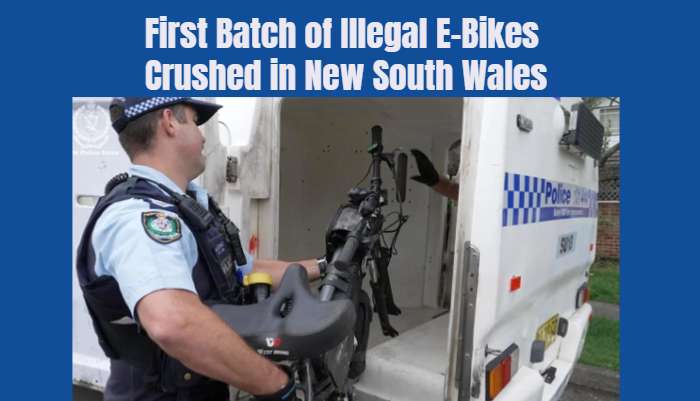
Authorities have crushed 23 confiscated electric bikes in Blacktown under new laws targeting non-compliant e-bikes, following a joint enforcement operat...
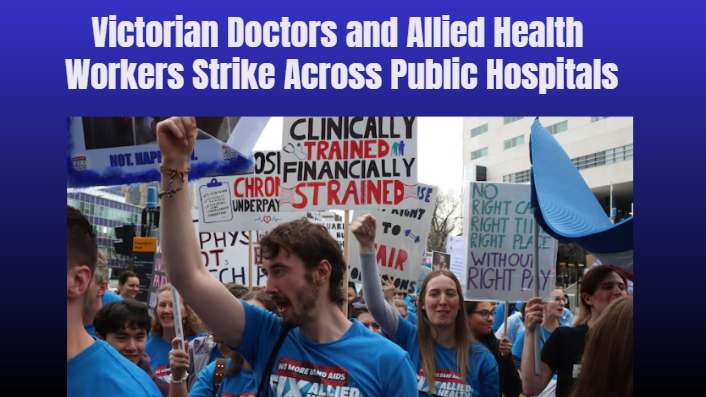
Thousands of Victorian doctors and allied health professionals have begun industrial action over stalled negotiations on pay and working conditions, wit...