Veteran Researcher Reports Potential Sighting of Migaloo off Mid North Coast
By Neha Maurya · Published 24 Jun 2026 · Updated 24 Jun 2026
Port Macquarie, NSW · New South Wales News
Safety note: Admin approval is an initial review, not a guarantee that every detail is correct. Check important or urgent claims with official sources and report anything inaccurate or unsafe.
Source and credit: Contributor's own report
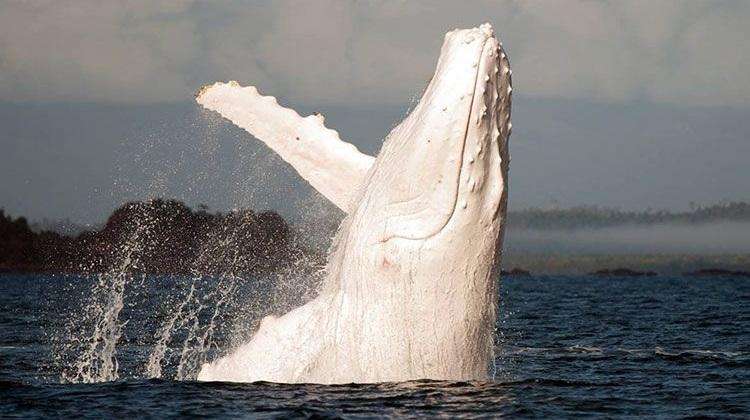
A humpback whale breaching in the ocean, representing the annual migration season.
Smart summary
Renowned whale researcher Leigh Mansfield has reported a possible sighting of the iconic white humpback whale, Migaloo, during the current migration season.
Excitement has swept across the NSW Mid North Coast after respected whale researcher and spotter Leigh Mansfield reported what he believes could be a sighting of the legendary white humpback whale Migaloo. Mansfield said he was "about 90 per cent sure" the whale he observed was the famous albino humpback, though he stopped short of making a definitive identification because no conclusive photographs were obtained.
Migaloo is one of the world's most recognised whales and the only confirmed albino humpback whale regularly recorded along Australia's east coast migration route. First sighted near Byron Bay in 1991, the whale has attracted enormous public interest whenever it appears during annual migrations between Antarctic feeding grounds and warmer northern breeding waters.
According to Mansfield, the whale displayed characteristics consistent with Migaloo's distinctive white appearance. However, whale experts remain cautious because several other predominantly white humpback whales have been documented in Australian waters over recent years. Some of these whales have varying degrees of pigmentation, making visual identification difficult unless clear photographs of the animal's body or tail flukes are captured.
The sighting generated considerable excitement among whale watchers, researchers, and local residents, many of whom gathered along coastal vantage points hoping to catch a glimpse of the rare marine giant. Despite extensive observation efforts, the whale reportedly spent long periods underwater, limiting opportunities to obtain the photographic evidence needed for official confirmation.
Marine researchers stress that positive identification of Migaloo generally requires high-quality images because several white or partially white humpback whales now travel along Australia's east coast. Tail markings, body pigmentation patterns, and other identifying features are often used to distinguish individual whales.
Mansfield has long been associated with whale monitoring and conservation efforts on the Mid North Coast and has contributed to research documenting Migaloo's movements throughout Australian and New Zealand waters. His observations are therefore regarded as highly credible within the whale research community.
The possible sighting comes amid renewed public interest in rare white whales following several reports of unusual humpback sightings around Australia in recent years. Scientists note that long gaps between confirmed Migaloo sightings are not necessarily unusual, as migration routes can vary and the whale may travel far offshore, reducing opportunities for observation.
While confirmation remains pending, Mansfield's assessment has renewed hope among marine enthusiasts that Migaloo continues to migrate along Australia's coastline. Researchers and wildlife authorities are encouraging members of the public to report any sightings and, where safe and lawful, capture photographs that could assist with identification.
WhaleMigalooHumpbackWhalesWhite
Excitement has swept across the NSW Mid North Coast after respected whale researcher and spotter Leigh Mansfield reported what he believes could be a sighting of the legendary white humpback whale Migaloo. Mansfield said he was "about 90 per cent sure" the whale he observed was the famous albino humpback, though he stopped short of making a definitive identification because no conclusive photographs were obtained.
Migaloo is one of the world's most recognised whales and the only confirmed albino humpback whale regularly recorded along Australia's east coast migration route. First sighted near Byron Bay in 1991, the whale has attracted enormous public interest whenever it appears during annual migrations between Antarctic feeding grounds and warmer northern breeding waters.
According to Mansfield, the whale displayed characteristics consistent with Migaloo's distinctive white appearance. However, whale experts remain cautious because several other predominantly white humpback whales have been documented in Australian waters over recent years. Some of these whales have varying degrees of pigmentation, making visual identification difficult unless clear photographs of the animal's body or tail flukes are captured.
The sighting generated considerable excitement among whale watchers, researchers, and local residents, many of whom gathered along coastal vantage points hoping to catch a glimpse of the rare marine giant. Despite extensive observation efforts, the whale reportedly spent long periods underwater, limiting opportunities to obtain the photographic evidence needed for official confirmation.
Marine researchers stress that positive identification of Migaloo generally requires high-quality images because several white or partially white humpback whales now travel along Australia's east coast. Tail markings, body pigmentation patterns, and other identifying features are often used to distinguish individual whales.
Mansfield has long been associated with whale monitoring and conservation efforts on the Mid North Coast and has contributed to research documenting Migaloo's movements throughout Australian and New Zealand waters. His observations are therefore regarded as highly credible within the whale research community.
The possible sighting comes amid renewed public interest in rare white whales following several reports of unusual humpback sightings around Australia in recent years. Scientists note that long gaps between confirmed Migaloo sightings are not necessarily unusual, as migration routes can vary and the whale may travel far offshore, reducing opportunities for observation.
While confirmation remains pending, Mansfield's assessment has renewed hope among marine enthusiasts that Migaloo continues to migrate along Australia's coastline. Researchers and wildlife authorities are encouraging members of the public to report any sightings and, where safe and lawful, capture photographs that could assist with identification.
A Chinese private processor has purchased 68,000 tonnes of new-season Australian canola for shipment in March, marking the first known private-sector pu...
Darwin Northern Territory · Other News · 01 Sep 2026
A scenic hike through Butterfly Gorge in the Northern Territory turned into a frightening experience when a buffalo charged at two hikers. ABC Darwin reported the story today, 1...
Coffs Harbour New South Wales · Other News · 01 Sep 2026
A Safe Work NSW inspection blitz across the Coffs Harbour region has uncovered dozens of workplace-safety issues in the horticulture industry. The operation followed concerns ab...
A Sydney patient says he spent 23 hours waiting on a chair at Westmead Hospital's emergency department, while new figures show continuing pressure on th...
Multiple Rural Fire Service trucks were damaged after a planned hazard reduction burn at Wedderburn in Sydney's south-west escaped containment on Saturday.
Recent domestic violence-related deaths in New South Wales have highlighted concerns about gaps in identifying alleged perpetrators before serious viole...
Australian health experts are warning that cat bites and scratches can cause severe infections, with hospitalisations from cat-related injuries nearly t...
A Sydney patient says he spent 23 hours waiting on a chair at Westmead Hospital's emergency department, while new figures show continuing pressure on th...
Three people, including a 14-year-old girl, have died following a multi-vehicle collision on the Western Highway near Ledcourt in Victoria's north-west.
A 50-year-old man has died after being struck by a vehicle in Fernvale, west of Brisbane, with police launching a homicide investigation and arresting a...
Multiple Rural Fire Service trucks were damaged after a planned hazard reduction burn at Wedderburn in Sydney's south-west escaped containment on Saturday.