Safety note: Admin approval is an initial review, not a guarantee that every detail is correct. Check important or urgent claims with official sources and report anything inaccurate or unsafe.
Source and credit: Contributor's own report
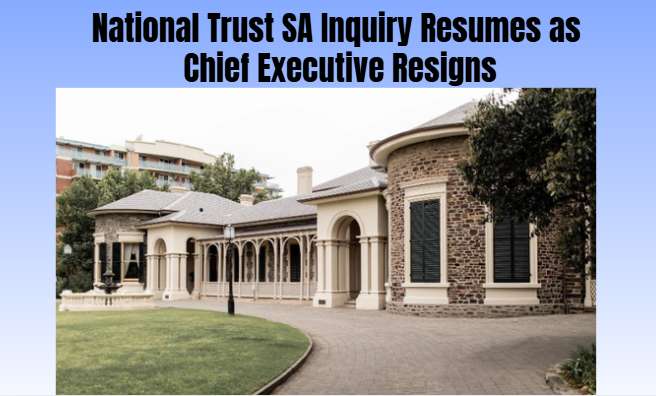
National Trust SA Inquiry Resumes as Chief Executive Resigns - Adelaide, SA
Smart summary
Nicolette Di Lernia steps down as a parliamentary inquiry examines governance, volunteer disputes and the management of South Australia's historic heritage properties.
The parliamentary inquiry into the National Trust of South Australia is resuming as the organisation's chief executive, Nicolette Di Lernia, resigns from her position, marking a significant development in the scrutiny of the state's heritage organisation.
Di Lernia's resignation was announced on Monday, 12 October 2026, shortly before she was expected to appear before the parliamentary inquiry. The hearing is examining concerns about the organisation's governance, internal disputes and management of historically significant properties across South Australia.
The National Trust of South Australia is responsible for preserving and managing more than 80 historic sites around the state. Its properties contribute to the preservation of South Australia's architectural, cultural and social history and provide opportunities for public education and tourism.
The inquiry was established following months of disagreements within the organisation. A major point of contention involved the Trust's Moonta branch, whose leadership was stood down in February. The dispute contributed to the closure of several heritage sites in the region, raising concerns among volunteers and local communities about the future of important historic attractions.
The inquiry followed a motion introduced by opposition member Nicola Centofanti in June, which received unanimous support in the state's upper house. The parliamentary process aims to examine the circumstances surrounding the disputes and assess the organisation's management and operations.
Di Lernia had previously been unavailable to provide evidence at earlier hearings. Her appearance was therefore expected to be an important part of the inquiry's efforts to understand the events that led to the internal conflict.
Following the resignation announcement, the Trust's council is expected to oversee its operational and administrative responsibilities until a replacement is appointed through a national recruitment campaign. The leadership transition comes as questions remain about the organisation's management, relationships with volunteers and the future of its heritage assets. The council's temporary oversight is intended to maintain operations while the recruitment process takes place.
The dispute has highlighted the challenges faced by heritage organisations that depend on volunteers, donations, community participation and careful management of historic buildings. Maintaining these sites can require substantial resources, specialist knowledge and cooperation between central management and local branches.
For communities such as Moonta, the closure of heritage attractions can affect tourism, local businesses and access to places that help tell the story of the region's past. Residents and volunteers have an interest in ensuring that historic properties remain accessible and appropriately maintained.
The parliamentary inquiry provides an opportunity to examine the organisation's governance arrangements and determine whether changes are needed. Its findings could influence future oversight, decision-making and the relationship between the Trust's leadership and its volunteers.
The immediate priority is to ensure continuity in the management of the organisation while the investigation proceeds and a permanent chief executive is sought.
No final conclusions about responsibility for the disputes should be drawn before the inquiry has completed its work. The findings and any recommendations will help clarify the circumstances behind the controversy and the steps needed to strengthen the organisation.
The case remains an important development for heritage preservation in South Australia, particularly for communities that rely on the National Trust to protect historic sites for future generations.
OrganisationInquiryTrustHeritageManagement
The parliamentary inquiry into the National Trust of South Australia is resuming as the organisation's chief executive, Nicolette Di Lernia, resigns from her position, marking a significant development in the scrutiny of the state's heritage organisation.
Di Lernia's resignation was announced on Monday, 12 October 2026, shortly before she was expected to appear before the parliamentary inquiry. The hearing is examining concerns about the organisation's governance, internal disputes and management of historically significant properties across South Australia.
The National Trust of South Australia is responsible for preserving and managing more than 80 historic sites around the state. Its properties contribute to the preservation of South Australia's architectural, cultural and social history and provide opportunities for public education and tourism.
The inquiry was established following months of disagreements within the organisation. A major point of contention involved the Trust's Moonta branch, whose leadership was stood down in February. The dispute contributed to the closure of several heritage sites in the region, raising concerns among volunteers and local communities about the future of important historic attractions.
The inquiry followed a motion introduced by opposition member Nicola Centofanti in June, which received unanimous support in the state's upper house. The parliamentary process aims to examine the circumstances surrounding the disputes and assess the organisation's management and operations.
Di Lernia had previously been unavailable to provide evidence at earlier hearings. Her appearance was therefore expected to be an important part of the inquiry's efforts to understand the events that led to the internal conflict.
Following the resignation announcement, the Trust's council is expected to oversee its operational and administrative responsibilities until a replacement is appointed through a national recruitment campaign. The leadership transition comes as questions remain about the organisation's management, relationships with volunteers and the future of its heritage assets. The council's temporary oversight is intended to maintain operations while the recruitment process takes place.
The dispute has highlighted the challenges faced by heritage organisations that depend on volunteers, donations, community participation and careful management of historic buildings. Maintaining these sites can require substantial resources, specialist knowledge and cooperation between central management and local branches.
For communities such as Moonta, the closure of heritage attractions can affect tourism, local businesses and access to places that help tell the story of the region's past. Residents and volunteers have an interest in ensuring that historic properties remain accessible and appropriately maintained.
The parliamentary inquiry provides an opportunity to examine the organisation's governance arrangements and determine whether changes are needed. Its findings could influence future oversight, decision-making and the relationship between the Trust's leadership and its volunteers.
The immediate priority is to ensure continuity in the management of the organisation while the investigation proceeds and a permanent chief executive is sought.
No final conclusions about responsibility for the disputes should be drawn before the inquiry has completed its work. The findings and any recommendations will help clarify the circumstances behind the controversy and the steps needed to strengthen the organisation.
The case remains an important development for heritage preservation in South Australia, particularly for communities that rely on the National Trust to protect historic sites for future generations.
Labor drops a controversial ministerial-power provision as proposed digital safety legislation advances, while the Greens demand stronger protections ag...
Darwin City Council plans to lead a business delegation to China and Vietnam in December, with approximately $18,000 in ratepayer funding drawing critic...
The federal government will fund a temporary extension of credit card payments to the Australian Taxation Office, giving small businesses and taxpayers...
The New South Wales government has taken control of the planning process for a proposed public plaza outside Sydney Town Hall, raising concerns that the...
Adelaide runner Izzi Batt-Doyle clocked 2 hours, 20 minutes and 38 seconds to set a new Australian women’s marathon record, finishing sixth in the Chica...
Large hailstones and damaging winds battered Adelaide, prompting more than 100 emergency assistance calls as fallen trees blocked streets and struck veh...
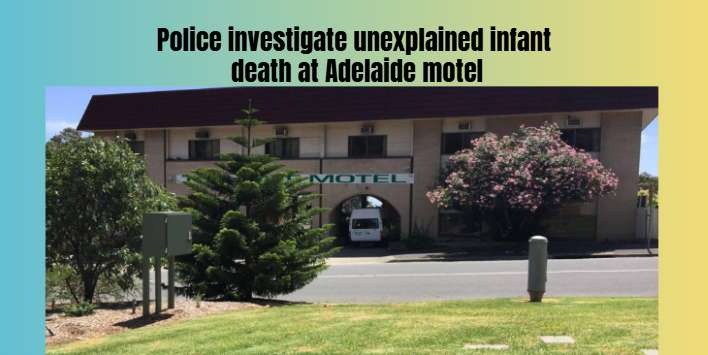
South Australian Police are investigating an infant’s unexplained death at the Tollgate Motel in Glen Osmond, with crime-scene investigators and Eastern...
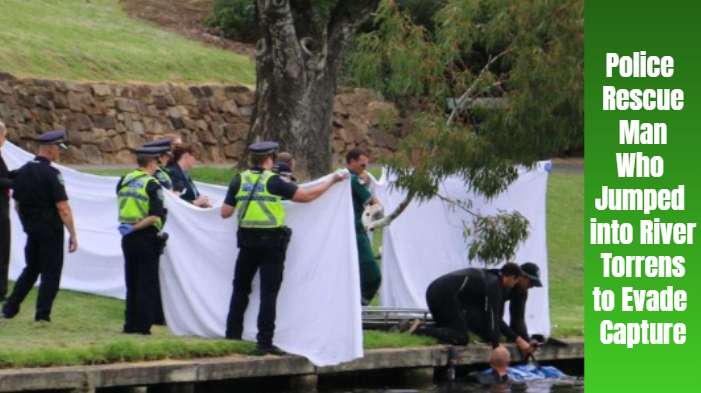
Three South Australian police officers entered the river to rescue a 22-year-old man who was struggling in the water after fleeing officers responding t...
Two people were seriously injured when a four-wheel-drive vehicle crashed through the front of a café in Shearwater, near Devonport. Police are investig...
Adelaide runner Izzi Batt-Doyle clocked 2 hours, 20 minutes and 38 seconds to set a new Australian women’s marathon record, finishing sixth in the Chica...
Police are investigating a suspicious death in Alpurrurulam, near the Queensland border, as detectives and forensic officers travel to the remote commun...
Queensland Rail reopened the affected tracks early Monday after a freight train derailed near Marlborough, while rail safety investigators examine the c...